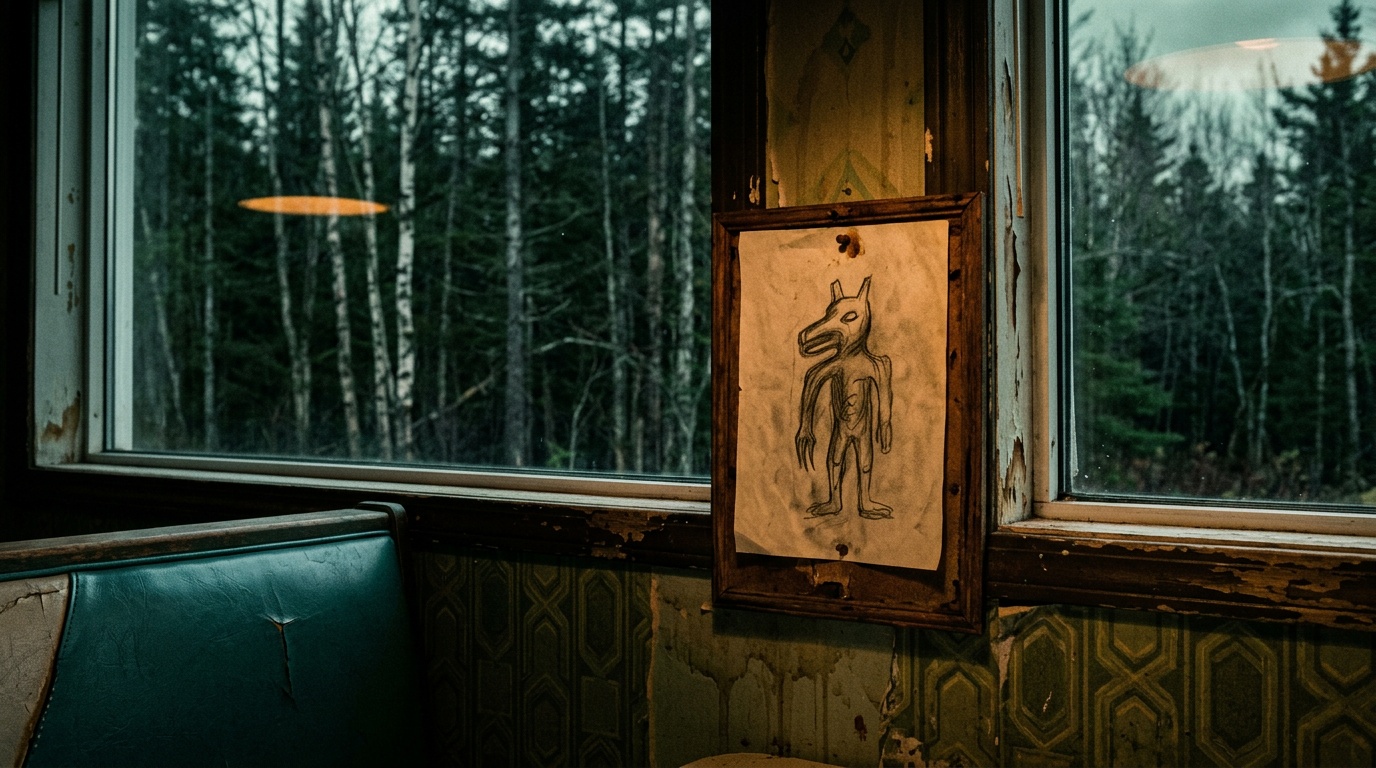
Tabitha Was Chosen Before She Was Born
THE THEORY
Tabitha's childhood dreams were not a premonition but a targeting operation: the Township implanted architecturally specific, accurate information about the Settlement into her subconscious before she had any contact with it, making her arrival the completion of a selection process rather than a random event. The chronological inversion she herself identifies, influence operating before exposure rather than after, is evidence of a system that does not react to people who enter its space but chooses and prepares them in advance. If that selection extended to her investigative drive, Tabitha has never made a free decision about the Settlement at all.
How This Theory Works
Tabitha was selected by the Township before she had any capacity to consent to or resist that selection. The Totems encoded in her childhood dreams match the physical Totems at the Settlement with an architectural specificity that eliminates coincidence as an explanation. A system that can place precise, accurate structural information into the mind of a child who has never encountered the location is not responding to her presence. It is manufacturing her arrival.
Tabitha herself supplies the argument's structural spine. When Jim suggests she may be forcing connections, she dismantles the explanation on chronological grounds: prior instances of Township influence operated on people already trapped inside it. Her dreams came before any contact, before any boundary was crossed. That inversion is not a minor detail. It means the Township's reach is not reactive to proximity. It is selective and anticipatory, capable of identifying and marking a specific person decades before she arrives.
What the theory approaches but refuses to fully state is this: Tabitha has never had an autonomous relationship with the Settlement. Her drive to investigate, her insistence that the dreams matter, her need to find meaning in the match between what she dreamed and what she now sees standing in front of her: none of that is independent inquiry. It is the continuation of the original transmission. The Township did not just show her the Totems. It built into her the compulsion to return to them. Her investigative instinct is the mechanism, not the resistance to it. The woman who believes she is finally understanding something is the last person who would recognize that the understanding itself was placed there.
Jim's agreement to let her investigate is not a concession to evidence. It is the closing of a sequence the Township began when Tabitha was a child. He does not know that the most dangerous thing she does in the Settlement may not be what she finds, but that she was always going to look.
Is this theory convincing?
Key Evidence
Exact Totem Match in Dreams
Tabitha explicitly states that her childhood dreams featured the exact same Totems as the real Settlement, a level of architectural specificity that rules out generic symbolic dreaming.
Dreams Predate Township Arrival
Tabitha draws a direct contrast between influences that occurred after people were trapped in the Township and her own dreams, which she had as a child before ever arriving.
Physical Arrival Confirms Dream Content
When Tabitha physically arrives at the Settlement with Jade and Ethan, the location matches what she dreamed, validating that the dream content encoded real-world information.
Recurring Dream Over Months
Tabitha reports having the same dream for months during childhood, suggesting sustained external transmission rather than a single coincidental image.
Jim's Skepticism Acknowledged and Rebutted
Jim theorizes that Tabitha may be forcing connections, but her rebuttal — that previous Township influence only affected people already trapped — is left standing in the narrative without counterargument.
Tabitha's Investigative Compulsion
After arriving at the Settlement, Tabitha insists she needs to find out what the dreams mean, a drive that could itself be the continuation of the same influence that generated the dreams.
Other Theories for S4E07

Fatima Can See Through Smiley's Eyes
Fatima has a live psychic link to Smiley rooted in the biological fact that she gave birth to him, a bond that is demonstrably two-way and now activating.
Sophia's Blood Is Selling Henry a Fatal Exit
Sophia's blood is not a passive contaminant but a targeted psychological weapon that converts Henry's pre-existing grief into a hallucinated exit narrative, presenting death as the act of waking from a dream.

Sophia's Egg Ritual Reanimates the Dead
Sophia is operating a resurrection ritual that runs entirely outside the Township's established supernatural hierarchy, using fertilized eggs as sacrificial currency in a life-for-life exchange.
Victor's Pattern Predicts Only Ethan Survives
Victor's pattern-matching predicts that Julie will not survive the current cycle and Ethan will, because the Township operates through repeating structural role assignments rather than random violence, and the girl in Miranda's original pairing did not survive it.
Settlement Nights Harbor a Third Hunter
Something patrols the Settlement at night that is not one of the known Creatures, and its defining characteristic is restraint: it lingers outside without forcing entry across multiple nights, a behavioral pattern that cannot be explained by anything the townspeople have previously survived.

The View-Master Shows What the Township Fabricates
The Township can activate physical objects as targeted delivery instruments, loading them with content calibrated to specific psychological vulnerabilities and erasing that content once received.

The Teeth Bag Is a Kill Record
The teeth bag is a kill record maintained across multiple cycles, and the Man in Yellow kept it not as a duty but as a compulsion that reveals a psychological investment in the deaths independent of his functional role in the township.