
The Boy in White Is Running Out of Time
THE THEORY
The Boy in White is aging because the reset mechanism that ended prior cycles has failed, making this cycle categorically different from every one Victor survived. His deepening voice and the town's newly shifting seasons are the same disruption through different channels: time has resumed inside the township. If he is the cycle's living clock rather than a neutral observer, his warnings about running out of time are a description of his own condition.
How This Theory Works
The Boy in White's aging body is the most direct evidence that this cycle is not being reset. In every prior cycle Victor witnessed, the Boy in White appeared as a child at the start and the town's massacre marked the end, after which everything returned to its prior state. The fact that the Boy in White is now visibly older, his voice having dropped across seasons, means the reset mechanism that would have returned him to childhood has not fired. Something is preventing the cycle from closing.
Kenny's observation that the seasons have changed inside the township provides independent confirmation that time is now moving. These two phenomena, the Boy in White aging and the trees changing season, are almost certainly the same underlying disruption expressing itself through different channels. The precise mechanism the show must eventually account for is this: what determines the Boy in White's age at cycle start, and whether that originating force is the same one now failing to trigger the reset. If aging is the symptom, the broken reset is the disease, and the show has not identified what broke it or whether the break was deliberate.
The most uncomfortable implication is directional. If the Boy in White ages as the cycle's living clock, his warnings stop being cryptic encouragement once you accept that he is describing his own condition rather than the protagonists' progress. 'Time is running out' is not a figure of speech if he is the figure. He is not neutral. He is expiring.
Is this theory convincing?
Key Evidence
Boy in White's Voice Has Dropped
Viewers note that the Boy in White's voice has audibly deepened compared to his earliest appearances, indicating physical maturation across seasons rather than a static presentation.
Kenny Confirms Seasonal Change
Kenny tells Sophia that the trees changing season is a new phenomenon, estimating it began around the time his father and the Pratts were killed, which aligns with the disruption of whatever force maintained the town's stasis.
Victor's Childhood Memory of Boy
Victor's recollections establish that the Boy in White appeared as a young child decades ago during the massacre Victor survived, creating a baseline against which current aging can be measured.
Boy's Warning About Remaining Time
The Boy in White has stated that 'they're so close' and that 'time is running out,' language that reads differently if he is himself the measure of remaining time rather than a neutral observer.
Cycle Reset Logic From Prior Seasons
The pattern of previous cycles ending in massacres and apparent resets established an expectation that the Boy in White would return to childhood at each new cycle, making his continued aging a structural deviation.
Other Theories for S4E03

Victor Has Met the Man in Yellow Before
Victor has a prior suppressed encounter with the Man in Yellow that he buried so thoroughly he convinced himself it never happened.

The Lake of Tears Is Already Real
The Lake of Tears is a real location inside the Township that Victor knows and refuses to approach, and Jade has already been placed in contact with it before being recruited to find it.

Jade's Suppressed Knowledge Needs a Key
Jade already holds the critical knowledge about the township and requires a psychedelic mechanism to retrieve it, and the show is positioning the township itself as the force making that mechanism available.

Ethan's Storybooks Are a Township Field Manual
Ethan's storybooks contain actionable rules about the Township specific enough to instruct someone in controlling story-walking, which is why Julie treats their retrieval as worth serious physical danger.

Two Cars, One Breaking Point
The dual-car arrival of the Matthews family and Jade did not merely coincide with the Township's escalating danger but likely caused it by violating a configuration-sensitive intake logic the Township enforces.
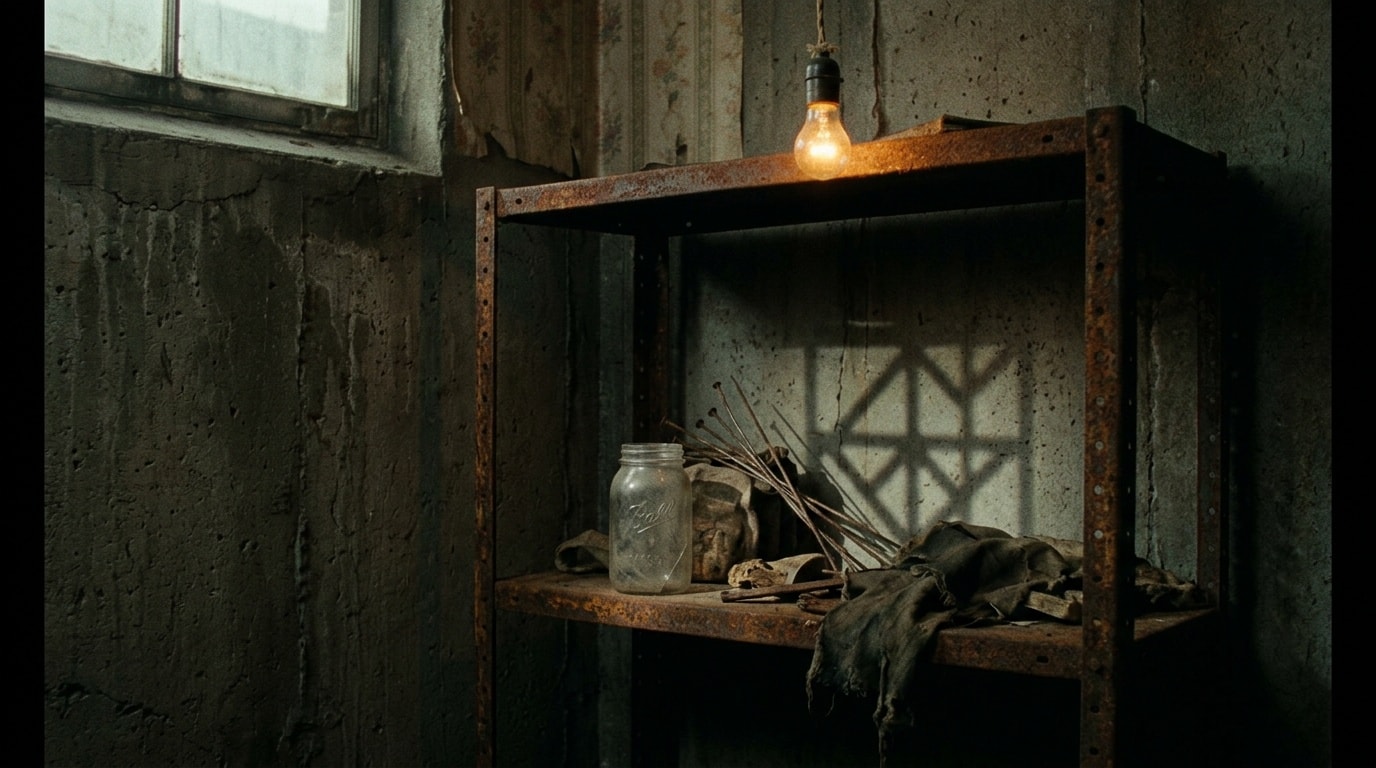
Acosta's Crime Scene Eye Unlocks Colony House Secrets
The Colony House basement contains overlooked cross-arrival evidence that only a trained investigator would recognize, because the survivors have been filtering objects through their own assumptions about utility for years.

Tabitha's Drawing Encodes Pre-Arrival Knowledge
Tabitha's childhood lighthouse drawing encodes accurate pre-arrival knowledge of a real Township location, meaning the Township was operating on her consciousness long before she arrived.

Sophia's Bible Lesson Targets Tabitha
Sophia uses the Achan parable to convert the township's ambient suspicion about the Matthews into a structured theological accusation, giving the community a moral framework to hold Tabitha responsible for their collective suffering.