
Sophia's Bible Lesson Targets Tabitha
THE THEORY
Sophia uses the Achan parable to convert the township's ambient suspicion about the Matthews into a structured theological accusation, giving the community a moral framework to hold Tabitha responsible for their collective suffering. The sermon functions as an indictment with plausible deniability: it names no one, which means no one can refute it. If the framing holds, the township gains a repeatable rationale for action against Tabitha that feels like scripture rather than scapegoating.
How This Theory Works
Sophia's Achan sermon is a theological indictment with plausible deniability. The story she selects is precise: Achan violated a sacred prohibition, and because of that single hidden act, an entire community bore collective punishment. Delivered unprompted at a funeral, where grief has already stripped the room of its defenses, the parable does not need to name Tabitha. The structure names her.
The accusation lands. Julie reacts with immediate anger. Kenny stammers when pressed on whether he seeded the idea. Boyd and Kenny move to defuse the confrontation rather than dismiss Sophia's framing as absurd. That is not a community encountering a strange claim. That is a community recognizing one that was already circulating without a name.
Sophia did not invent the suspicion. Kenny's own timeline places the deterioration of conditions around the Matthews' arrival. What Sophia did was theologize ambient resentment into a structured moral verdict. The Achan framework converts a pattern of worsening luck into a legible sin requiring a legible sinner. Once that framework is in the room, the community has a repeatable rationale for whatever comes next. Tabitha's digging, her pursuit of the lighthouse, her repeated defiance of the township's instincts all retroactively become evidence for a case that is now theological rather than merely social. A theological verdict is harder to argue against than a grudge, and Sophia has ensured the township no longer needs to hold a grudge. They can hold a conviction.
Is this theory convincing?
Key Evidence
Achan Speech at the Funeral
At the Church, Sophia explains that the biblical Achan caused the Israelites to suffer after he offended God, delivering the parable in a communal grief setting where it functions as an implicit accusation against a rule-breaker.
Julie's Immediate Angry Response
Julie angrily confronts Sophia for insinuating that it is her family's fault that things have gotten bad in the Township, confirming the community decoded the Achan comparison as a direct accusation.
Kenny's Stammering Non-Denial
When Julie demands to know if Kenny told Sophia her family was responsible, Kenny stammers that he did not mean it that way, suggesting the suspicion already existed in the community before Sophia named it.
Timing of Worsening Conditions
Kenny estimates that conditions in the Township deteriorated around the time his father and the Pratts were killed, followed shortly by the Matthews and Jade arriving in two separate cars, giving Sophia's Achan framing a factual substrate within community memory.
Scapegoat Structure of the Parable
The Achan story requires collective punishment caused by a single transgressor's hidden sin, a structure that maps precisely onto Tabitha's repeated rule-breaking through forbidden digging and pursuit of the lighthouse.
Other Theories for S4E03

Victor Has Met the Man in Yellow Before
Victor has a prior suppressed encounter with the Man in Yellow that he buried so thoroughly he convinced himself it never happened.

The Lake of Tears Is Already Real
The Lake of Tears is a real location inside the Township that Victor knows and refuses to approach, and Jade has already been placed in contact with it before being recruited to find it.

Jade's Suppressed Knowledge Needs a Key
Jade already holds the critical knowledge about the township and requires a psychedelic mechanism to retrieve it, and the show is positioning the township itself as the force making that mechanism available.

Ethan's Storybooks Are a Township Field Manual
Ethan's storybooks contain actionable rules about the Township specific enough to instruct someone in controlling story-walking, which is why Julie treats their retrieval as worth serious physical danger.

Two Cars, One Breaking Point
The dual-car arrival of the Matthews family and Jade did not merely coincide with the Township's escalating danger but likely caused it by violating a configuration-sensitive intake logic the Township enforces.

Tabitha's Drawing Encodes Pre-Arrival Knowledge
Tabitha's childhood lighthouse drawing encodes accurate pre-arrival knowledge of a real Township location, meaning the Township was operating on her consciousness long before she arrived.
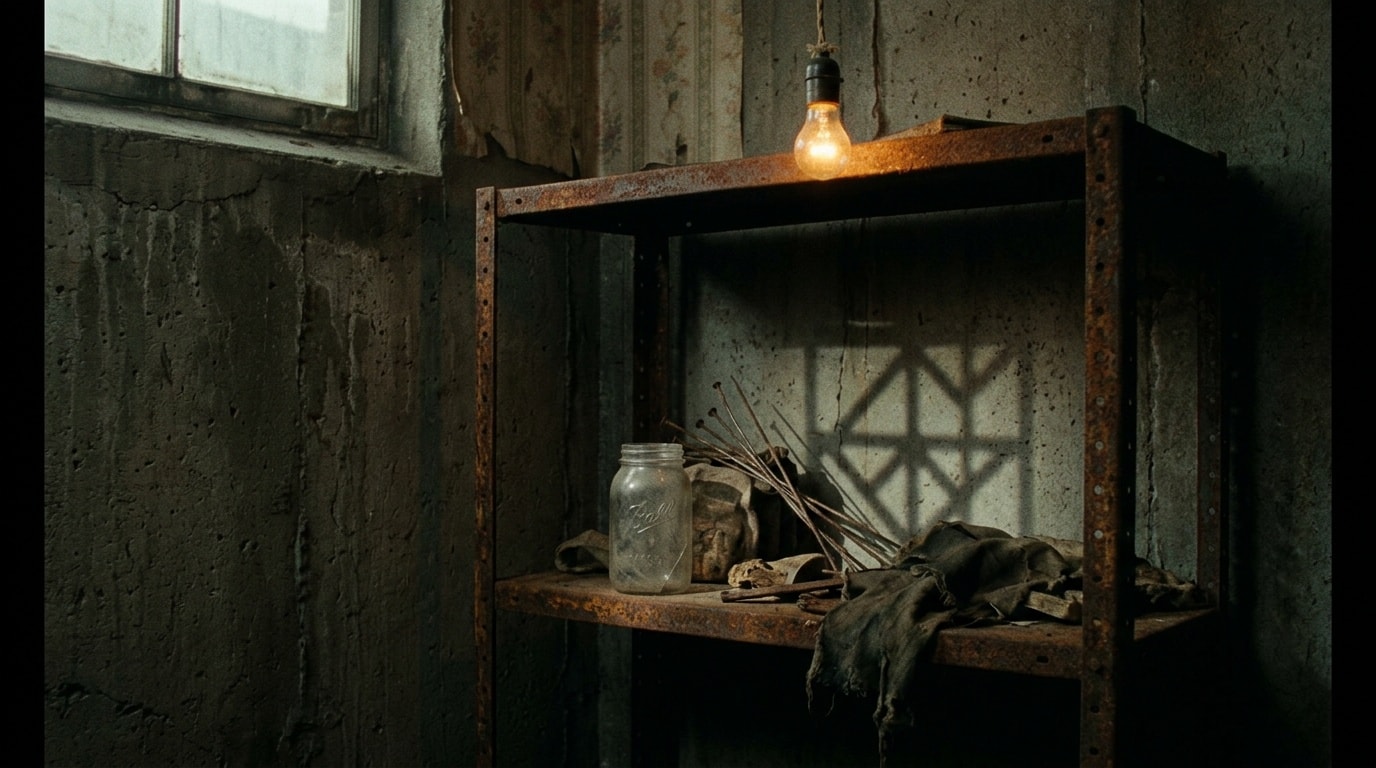
Acosta's Crime Scene Eye Unlocks Colony House Secrets
The Colony House basement contains overlooked cross-arrival evidence that only a trained investigator would recognize, because the survivors have been filtering objects through their own assumptions about utility for years.

Boyd Sees Abby Every Time He Looks at Acosta
Boyd's drive to recruit Acosta rather than confine or ignore her is not strategic calculation but a guilt-driven compulsion to rewrite his failure with Abby through a woman who mirrors her exactly.