
Boyd Sees Abby Every Time He Looks at Acosta
THE THEORY
Boyd's drive to recruit Acosta rather than confine or ignore her is not strategic calculation but a guilt-driven compulsion to rewrite his failure with Abby through a woman who mirrors her exactly. The show has confirmed the nightmares, the admission, and the recruitment, but not the deeper claim: Boyd does not want to save Acosta for her sake but for his own absolution, which means the rescue itself is the threat.
How This Theory Works
Boyd is not helping Acosta because she is useful. He is helping her because she is a second chance he does not believe he deserves, and the distortion that produces is not a side effect of his grief but its primary function. His own words confirm the transference: he tells Acosta she reminds him of someone he could have helped but did not. What the show has not confirmed is the harder claim -- that Boyd does not want to save Acosta so much as he wants to be absolved by her survival. The distinction matters because absolution requires the other person to live on his terms, which is precisely what destroyed Abby.
The structural parallel the show has built is not incidental. Abby refused to accept the reality of the Township and broke under the weight of it. Acosta is refusing in the same register, demanding an exit that does not exist. Boyd recognized the echo himself. What the show declines to answer is whether his recognition represents insight or a trap. If he is drawn to Acosta precisely because she mirrors Abby's resistance, then his drive to recruit her is not an attempt to prevent the same outcome but to re-enter the same scenario with a different ending -- one that restores his self-image rather than hers.
The nightmares are the sharpest piece of evidence. They are not processing old grief in isolation. They are actively informing how Boyd reads the woman in front of him the next morning. His offer to Acosta -- a task in exchange for the bullet she wants -- replicates the structure of his failure with Abby: he is trying to give her a reason to live rather than confronting the possibility that his need to save her is the problem. Boyd has converted his guilt into a rescue compulsion, and the compulsion is now a leadership liability the Township cannot afford. Every decision he makes about Acosta is not a decision about Acosta at all.
Is this theory convincing?
Key Evidence
Boyd Admits Acosta Resembles Abby
Boyd explicitly tells Acosta she reminds him of someone he could have helped but did not, making the transference not just inferred but partially spoken aloud.
Nightmares Precede Acosta Confrontation
Boyd is shown suffering nightmares about killing Abby overnight, and the very next scene has him approaching Acosta in her cell, structurally linking the two women in the episode's own sequencing.
Acosta Mirrors Abby's Denial
Both Abby and Acosta refuse to accept the Township's reality and seek escape from it, with Acosta demanding either departure or death, paralleling Abby's psychological collapse under the same pressure.
Boyd Recruits Rather Than Disciplines
Despite Acosta's theft of the ambulance and repeated demands to leave or die, Boyd responds by offering her a task and a future negotiation, a response inconsistent with pure strategic logic.
Shared Profile Between Two Women
Acosta and Abby share surface characteristics including gender, physical type, and backgrounds in authority roles, providing the raw material for Boyd's psychological projection.
Other Theories for S4E03

Victor Has Met the Man in Yellow Before
Victor has a prior suppressed encounter with the Man in Yellow that he buried so thoroughly he convinced himself it never happened.

The Lake of Tears Is Already Real
The Lake of Tears is a real location inside the Township that Victor knows and refuses to approach, and Jade has already been placed in contact with it before being recruited to find it.

Jade's Suppressed Knowledge Needs a Key
Jade already holds the critical knowledge about the township and requires a psychedelic mechanism to retrieve it, and the show is positioning the township itself as the force making that mechanism available.

Ethan's Storybooks Are a Township Field Manual
Ethan's storybooks contain actionable rules about the Township specific enough to instruct someone in controlling story-walking, which is why Julie treats their retrieval as worth serious physical danger.

Two Cars, One Breaking Point
The dual-car arrival of the Matthews family and Jade did not merely coincide with the Township's escalating danger but likely caused it by violating a configuration-sensitive intake logic the Township enforces.

Tabitha's Drawing Encodes Pre-Arrival Knowledge
Tabitha's childhood lighthouse drawing encodes accurate pre-arrival knowledge of a real Township location, meaning the Township was operating on her consciousness long before she arrived.
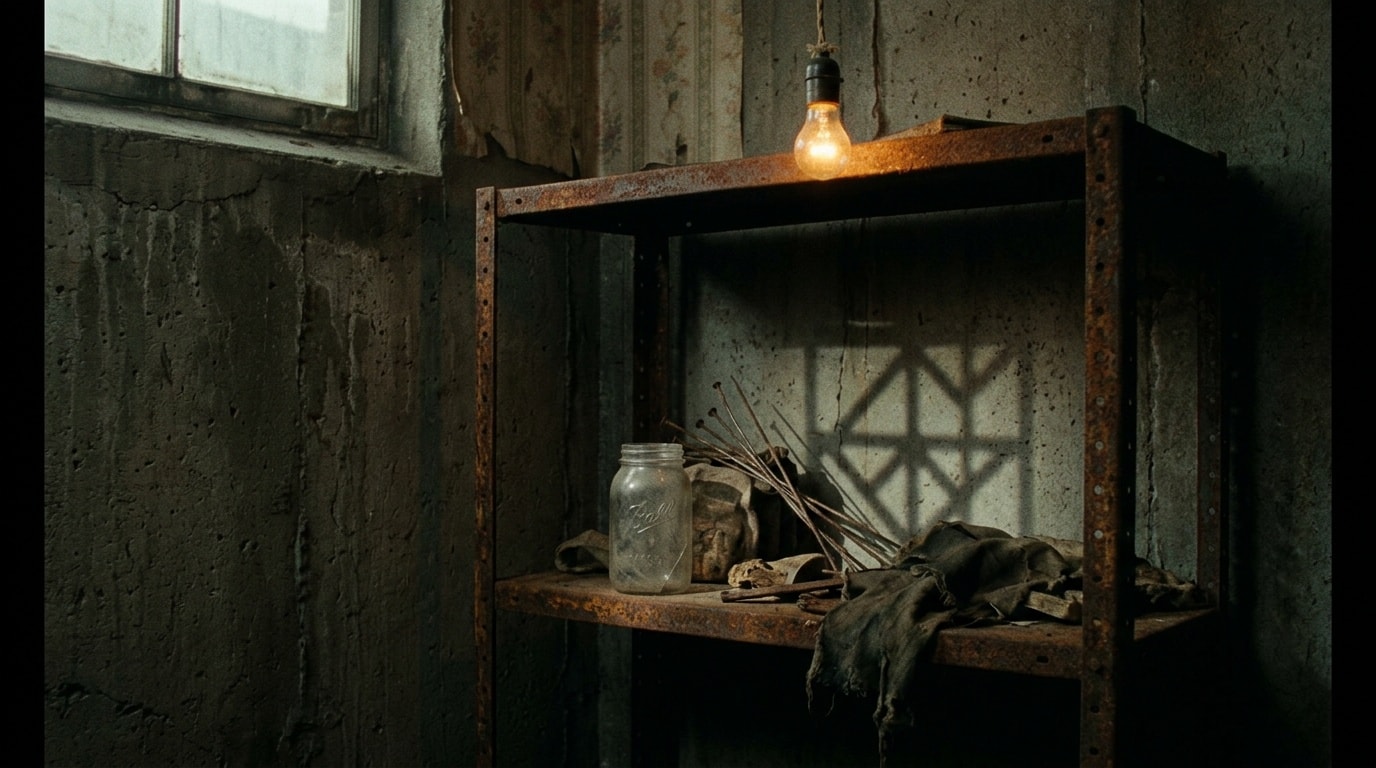
Acosta's Crime Scene Eye Unlocks Colony House Secrets
The Colony House basement contains overlooked cross-arrival evidence that only a trained investigator would recognize, because the survivors have been filtering objects through their own assumptions about utility for years.

Sophia's Bible Lesson Targets Tabitha
Sophia uses the Achan parable to convert the township's ambient suspicion about the Matthews into a structured theological accusation, giving the community a moral framework to hold Tabitha responsible for their collective suffering.