
Sophia's Hidden Smile Betrays the Enemy
THE THEORY
Sophia is the Man in Yellow operating in a chosen human form, using the township's instinct to protect a grieving child as cover for a deliberate infiltration calibrated to suppress the one witness who could recognize it. The concealed smile over Dune's body is not a slip but evidence of sustained performance, and the form itself was selected because Julie, the only resident who saw the entity kill, would seek comfort from Sophia rather than fear her. The community has not merely accepted a dangerous adversary into its most trusted spaces; it has been recruited into managing the single threat to the disguise.
How This Theory Works
The Man in Yellow is already inside the township, wearing the face of a pastor's daughter, and the community is actively helping it map every vulnerability it came to exploit. The smile Sophia hides while kneeling over Dune's body is the argument's sharpest piece of evidence: not ambiguous body language, not nervous relief, but a concealed expression of satisfaction that has no innocent explanation consistent with everything else established about her situation. The show frames the moment as deliberately private, isolating it from Kenny's line of sight. It is the mask slipping.
The specific form chosen matters. A young woman who has just lost her father and arrived injured activates every protective instinct the community has. Kenny becomes her guardian immediately. Boyd is described to her as the glue holding everything together. Sara takes her to the storage room, the repository of every prior inhabitant's belongings. Within a single episode, Sophia has been given unsupervised access to three of the township's most significant people and spaces without suspicion. The form is not random. It is a precise instrument calibrated to the township's psychology, not to the entity's convenience.
The storage room scene adds a second layer. Sophia lingers near a ballet trophy in a way Sara notices and the narrative frames as significant. The Man in Yellow has been established as an entity with deep knowledge of the township's history and inhabitants. A reaction to a specific object in a room full of artifacts belonging to the dead is not sentimentality. It is recognition. The entity behind Sophia's face is cataloguing what the township's residents are showing it freely, and they are showing it everything.
This cataloguing behavior points toward the implication the theory has not yet pressed: Julie. The Man in Yellow cannot adopt a form Julie would immediately connect to the killer she watched take Jim. Sophia is precisely the kind of figure Julie would be drawn toward rather than frightened by, a young woman, recently bereaved, positioned as someone who needs comfort rather than someone who delivers threat. If the storage room scene is the entity reading accumulated history and identifying weakness, then Julie's knowledge represents a specific operational problem that Sophia's form elegantly solves. The township is not being infiltrated at random. It is being managed according to a calculation about which resident poses the greatest risk to the disguise holding, and the community's own protective instincts are the mechanism of its undoing.
Is this theory convincing?
Key Evidence
Sophia Smiles Over Dune's Body
In the Clinic, Sophia kneels and performs the gestures of prayer over Dune's corpse, then privately smiles to herself in a moment the camera deliberately isolates from Kenny's line of sight.
Fake Tears, Hidden Expression
Multiple observers note that Sophia produces tears visibly while praying, but her concealed facial expression is one of satisfaction rather than grief, suggesting a performance rather than an authentic emotional response.
Ballet Trophy Recognition in Storage Room
In the Diner storage room, Sophia's attention catches on a ballet trophy in a way Sara notices, suggesting a response to a specific object that goes beyond the curiosity of a newcomer.
Chosen Form Disarms All Suspicion
Sophia's role as an injured, grieving pastor's daughter activates the township's protective instincts so completely that she is given unsupervised access to the Clinic, the Sheriff, and the storage room within her first full day in town.
Man in Yellow Cannot Enter in True Form
Prior episode logic established that the Man in Yellow told the priest he could not enter the township in his true form because its inhabitants would recognize him, making a human disguise a necessary operational requirement.
Julie as Potential Threat to Any Disguise
Julie witnessed the Man in Yellow kill Jim, meaning any disguise that Julie could eventually identify or connect to the entity must be someone Julie would not immediately associate with the killer she saw.
Performance Designed to Lower Guard
Sophia's consistent behavior throughout the episode follows a pattern of performed vulnerability, including manufactured grief, careful questions about town structure, and expressions of innocence, suggesting a constructed role rather than authentic response.
Other Theories for S4E02
The Township's Two-Step Recruitment Protocol: Dead Jim Briefs Ethan, the System Clears His Path
The Township operates a coordinated recruitment protocol visible in Ethan's exit from the Sheriff's Station: a dead intermediary delivers a completed operational mission to a living child, and the Township's hidden system then engineers a physical distraction to remove every obstacle standing between that child and his departure.
Julie Is the Agent Who Locks Jim's Death Into the Loop
Julie's entry into the Dungeon ruins is a deliberate attempt to reach the one death she has never witnessed: the original, unwitnessed killing that precedes every version of Jim's death she has already seen as a returning future self.

Boyd Is Using Tillie's Death as a Weapon
Boyd is using his knowledge of Tillie's death not to protect the town but to position Elgin as a scapegoat for something Boyd was directly involved in, weaponizing institutional authority to ensure that if the secret breaks, it breaks on Elgin alone.

The Township Kills to Teach: Jim's Death as Symbolic Curriculum Delivered to a Pre-Selected Student
The Township's controlling intelligence staged Jim's death not as punishment or predation but as a symbolic lesson, structured around the Hanged Man archetype and annotated with a written caption, delivered to a recipient it designated before the killing occurred.
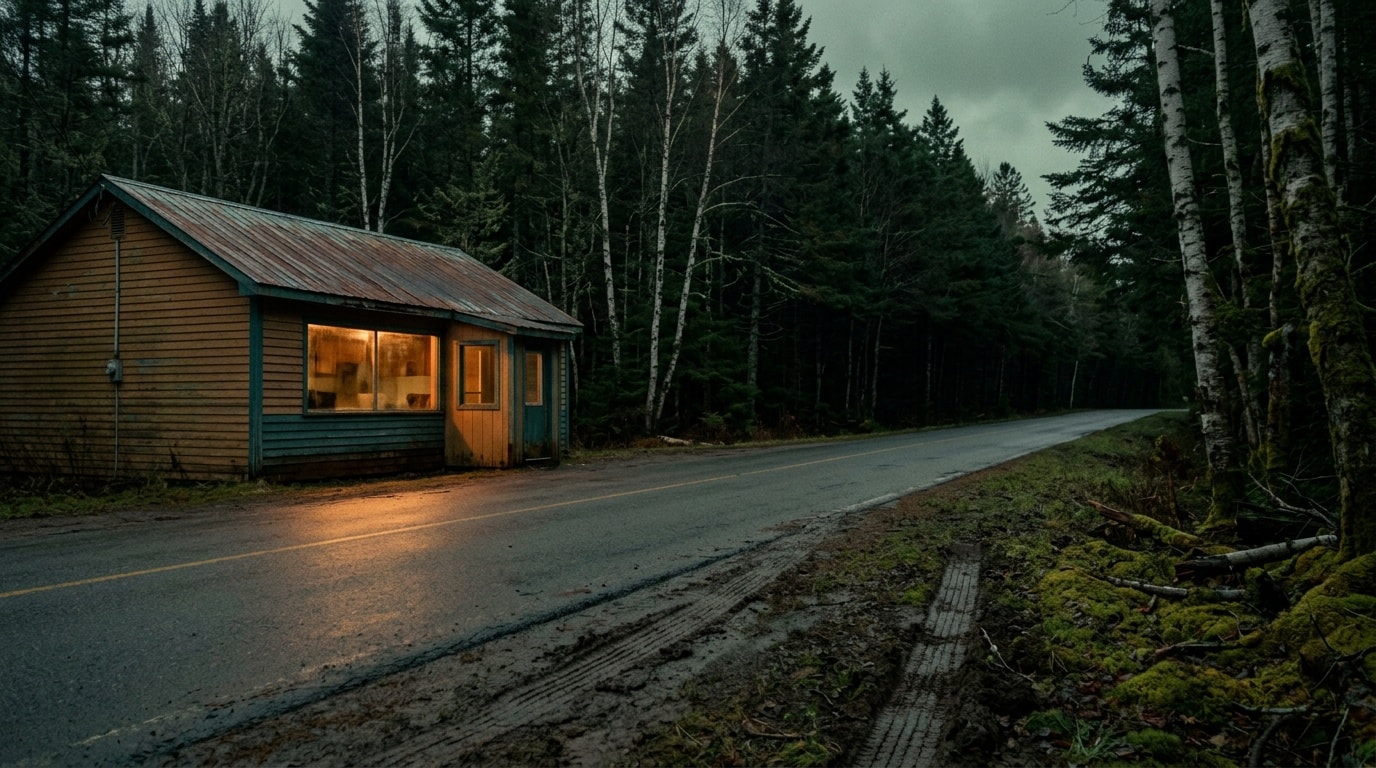
The Loop Has a Gap Acosta Found
Acosta has identified a structural flaw in the township's road: the ambulance she arrived in stopped at a fixed point, which is only possible if the road has an open end rather than a closed loop.

Acosta's Ambulance Run Is a Controlled Experiment
Acosta is running a controlled experiment, not fleeing blindly.

Acosta Thinks Innocence Unlocks the Exit
Acosta believes guilt is the mechanism of the town's hold, not its roads or creatures, and that her own moral innocence exempts her from the trap that keeps everyone else.