The Township's Intake System: The Camera Was the Instrument, the Room Is the Site, and Elgin Has Already Complied
THE THEORY
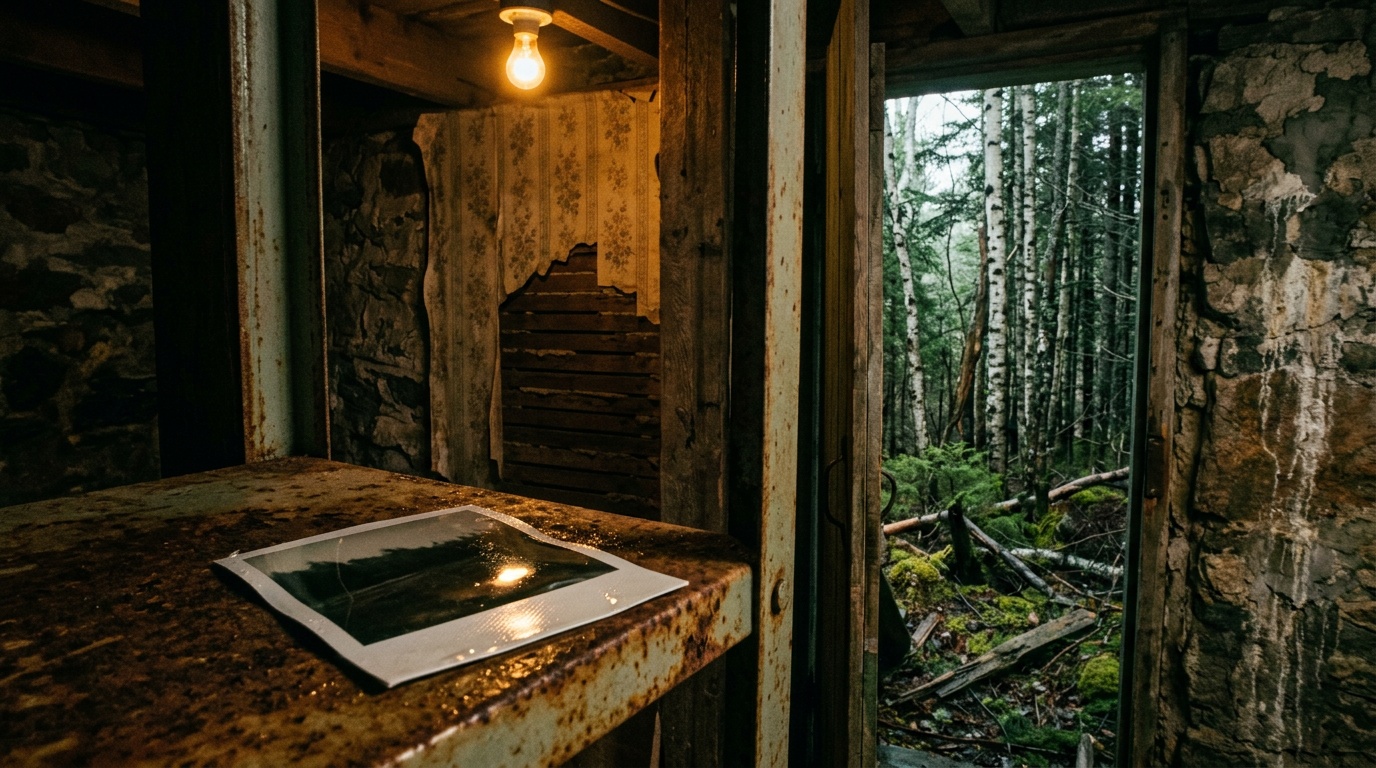
The spontaneous Polaroid photograph was not a malfunction but a precision routing event, delivering Elgin through an exact discovery sequence to a hidden room that functions as the Township's active transformation chamber. The room's deliberate concealment architecture, the tended skeleton inside it, and the Kimono Woman's anticipatory appearance at the moment of discovery together constitute a structured intake sequence: not old history accidentally surfaced, but a system operating in the present with Elgin as its current subject. His silence after the discovery is not a character beat; it is the first act of compliance with terms he has not yet been told.
How This Theory Works
A malfunctioning camera produces noise. The Polaroid in the Root Cellar produced an address. Before Elgin touched it, the device printed a precise, unambiguous image of the Root Cellar's exterior doors (not blur, not overexposure, not an accidental partial frame), and Elgin followed that image downstairs without deviation: he located the interior doors, heard knocking from within the wall, moved the cabinet, and entered a hidden room containing a decayed skeleton. Every step in that sequence was initiated by the photograph. The Township's system did not wait for curiosity or accident to bring him there. It generated a prompt, issued it through an object already in his possession, and the route worked without a single error. The distinction between a sign and a mechanism is important here: a sign invites interpretation; a mechanism produces a result. The photograph produced a result.
The substitution of the camera for direct contact is the design logic made visible. The Kimono Woman can manifest; she proves this by appearing in the hidden room at the exact moment Elgin turns from the skeleton. She was capable of leading him there herself and chose not to. That choice reveals the system's preference: direct contact would have allowed Elgin to refuse, or at least to register refusal as a category. An oblique sign, a photograph that looks like a coincidence, requires him to choose to follow it. By the time the Kimono Woman appears, Elgin has already completed everything the system needed him to do, and her question, whether this is really where it happens, is not a reaction to his arrival. It is a verification. She is confirming that the sequence concluded as expected, that the location carries a specific function she already knows, and that Elgin has passed from curious resident into someone who has seen what he was meant to see. Her question presupposes her own prior knowledge of the room's purpose. She is not learning alongside him. She is checking him off.
The room itself testifies to its own function through three pieces of physical evidence that resist any interpretation other than organized confinement. The cabinet was positioned flush against a second entrance, a configuration requiring deliberate effort, not settling or drift. An overturned cot sits inside, a detail inconsistent with voluntary habitation or peaceful death and consistent with a struggle or a final involuntary collapse. A blanket covers the skeleton, meaning someone returned to the room after the occupant died and made an active choice about how to leave it. These three gestures, concealed threshold, disordered cot, tended body, are not the residue of neglect. They are curation. Someone managed this space, and the management continued after the death it contained. The sharpest ambiguity is the blanket: it is either an act of grief performed by someone working against the Township's wishes, or an act of maintenance performed by someone working on them. Neither possibility allows accident, and what they share is more important than what divides them. In both cases, someone with knowledge of the room's contents made a deliberate choice to keep those contents invisible. The double-layered concealment structure, doors concealed behind cabinet concealed behind sealed entrance, is the physical grammar of institutional secrecy.
The Kimono Woman's binding to specific sites throughout the Township, and the clustering of her appearances around locations where the Township's control has been exercised and hidden, is consistent with an entity whose nature was fixed at a particular bounded location. The hidden room is the most probable candidate for that location. Read against the Township's broader containment record, the room belongs to a recognizable series: Victor was held in the Box for years, a concealed space the Township controlled access to and needed kept quiet. The skeleton in the Root Cellar was held somewhere less survivable and covered rather than retrieved. The difference between those two outcomes is not random; it suggests the Township's containment logic has gradations, some subjects preserved and eventually surfaced, others interred and managed in silence. The Kimono Woman may represent a third outcome: someone whose confinement in this room did not end in either survival or simple death but in the kind of bounded, site-anchored persistence that the Township has learned to work with. That would make the room not a burial site but a production site, and it would make Elgin's guided arrival not an education in history but an enrollment in a continuing practice.
Elgin has told no one. The show has established information-sharing between residents as a baseline survival behavior, which means silence is not neutral. His concealment of the Kimono Woman's prior communications predates this discovery, and the pattern now includes the skeleton, the hidden room, the camera's targeting, and her anticipatory question. That accumulation is not incidental; it is structural separation. He has been folded out of the community's survival logic and into the Township's, and his silence is not the suppression of a secret but the ratification of terms. The first act of a functionary is discretion, and Elgin is already performing it. He has not been told what he agreed to, but the behavior of compliance has begun. The camera was the intake instrument. The room was the process site. His silence is the system's confirmation that the sequence completed.
Is this theory convincing?
Key Evidence
Camera Prints Unprompted Room Photo
The polaroid camera spontaneously printed a photo of the Root Cellar doors before Elgin descended, suggesting the Township's system directed him specifically to the location.
Knocking Behind Sealed Cabinet
After closing the cabinet doors, Elgin heard knocking from behind them, prompting him to move the cabinet and discover the hidden room, indicating the space was not accidentally concealed.
Overturned Cot in Hidden Room
The hidden room contained an overturned cot, a detail inconsistent with voluntary habitation and consistent with a struggle or forced confinement.
Skeleton Covered With Blanket
The decayed skeletal remains inside the room had been covered with a blanket, indicating someone deliberately concealed the body after death rather than leaving the space undisturbed.
Double-Layered Concealment Structure
The room was hidden behind both a set of doors leading to a cabinet and the cabinet itself positioned over a second entrance, a configuration that required active effort to construct.
Parallel to Victor's Containment Box
The hidden room's function mirrors the Box used to confine Victor for years, suggesting the Township has a repeated practice of isolating specific individuals in concealed spaces.
Kimono Woman Appears at Discovery
The Kimono Woman appeared in the Root Cellar as Elgin confronted the skeleton, and Elgin asked her directly whether this is where it happens, implying the location carries significance within the Township's operative logic.
Other Theories for S3E07
Tabitha Was Targeted Before She Was Born
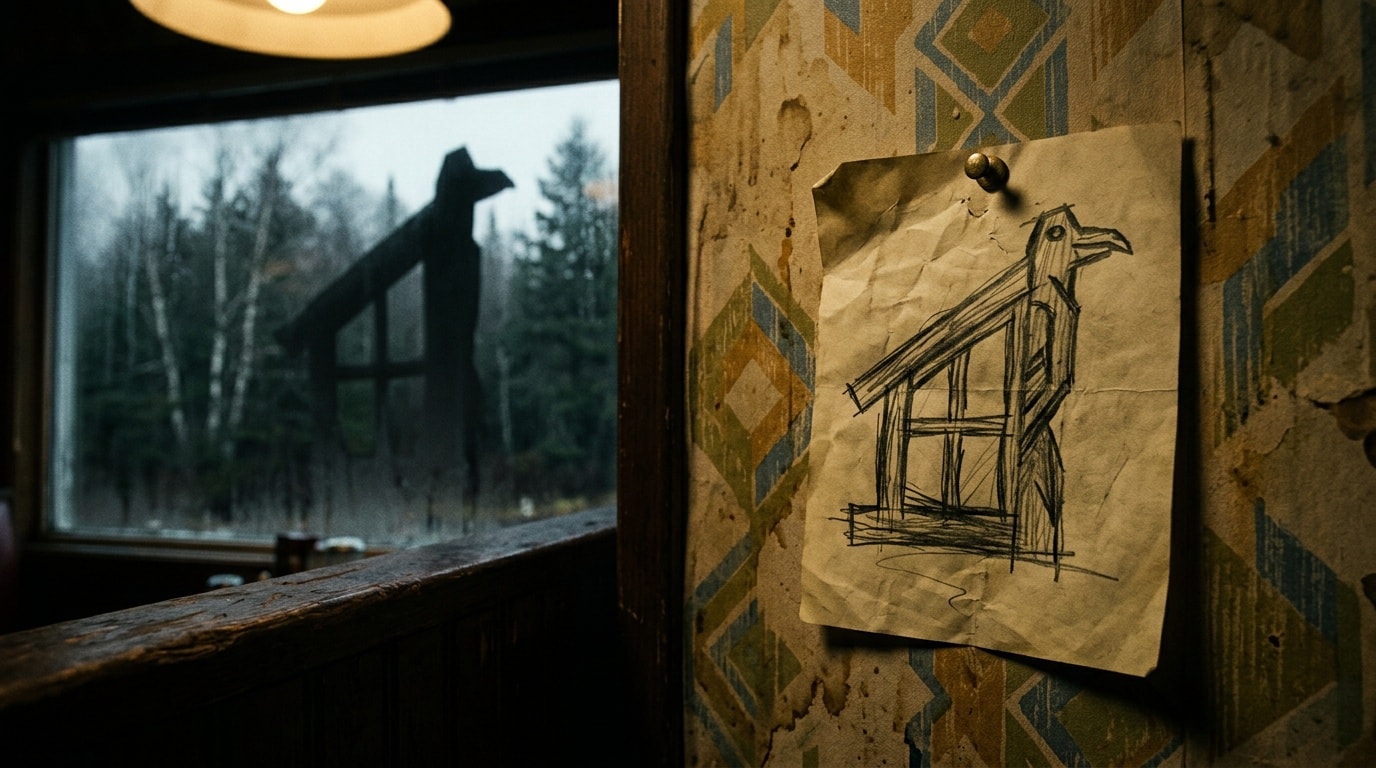
The Township encoded exact physical details of the Settlement into Tabitha's childhood dreams before she had any proximity to the boundary, meaning her arrival was not an accident but the completion of a preparation process that began in her childhood.
The Township Cultivates Fatima as a Vector; the Town Completes the Trap
The Township is colonizing Fatima on two simultaneous registers (biological gestation and psychological identification), engineering a subject who will tend the invasion as though it belongs to her.
Jasper the Doll Carries Real Supernatural Knowledge
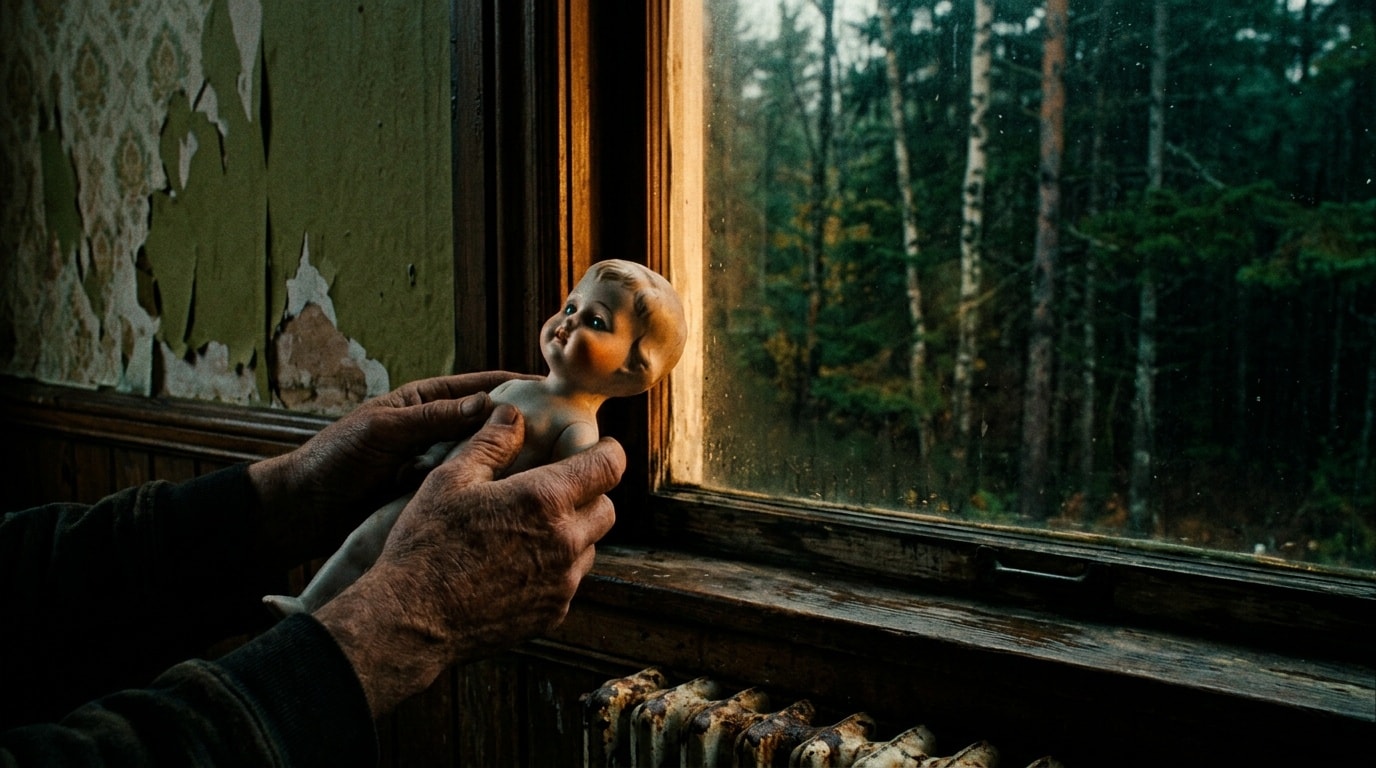
Victor's behavior around Jasper is not the onset of delusion but the resumption of a prior relationship with a doll he has reason to believe already communicated with him during his decades alone in the Township.
Tabitha's Childhood Dreams Hide a Dark Secret
Tabitha is Eloise, Victor's sister who survived the Township massacre as a child and was raised outside with her identity suppressed and replaced.