
The Township Cultivates Fatima as a Vector; the Town Completes the Trap
THE THEORY
The Township is colonizing Fatima on two simultaneous registers (biological gestation and psychological identification), engineering a subject who will tend the invasion as though it belongs to her. Donna's push to relocate Fatima under Boyd's authority is not a protective intervention but a structural completion of that project: isolation makes Fatima easier to cultivate from the inside and harder to reach from the outside. The control masquerading as care is the Township's alibi as much as Donna's.
How This Theory Works
Fatima is not failing psychologically, and she is not simply under attack. She is being used as a host, and the mechanism of use is the body's own architecture of gestation: its evolved disposition to protect, nourish, and subordinate the self to what it carries. Boyd names the two possibilities himself: something physical like the worms beneath his skin, or a psychological infiltration like what the Township inflicted on his wife and Sarah. What neither framing addresses is that these may not be alternatives at all. They appear to be the same process running on parallel timelines, one biological and one psychological, each engineered to reinforce the other until the distinction between invasion and identity collapses entirely.
Fatima's own testimony is the sharpest evidence in the show and the most systematically avoided. She does not say she feels pregnant. She says whatever is inside her is making her eat, and that it is getting stronger over time. That is the language of an entity on its own developmental schedule: a thing with wants, with increasing capacity, with forward momentum, not a condition that fluctuates with emotional state. The blank ultrasound does not contradict this; it confirms the pattern. Boyd's worms were undetectable by external observation and yet undeniably present and directive. A blank scan combined with escalating physical compulsion maps directly onto that structure: the Township's infiltrations do not leave evidence visible to instruments calibrated for the world they are invading. Donna's immediate invocation of Abby the moment Boyd describes Fatima's symptoms is not incidental. It is pattern recognition. The Township reaches inside people and reshapes them from within, and it does not stop when the acute encounter ends.
Kristi's psychosomatic diagnosis, delivered inside a Township that has demonstrated it can rewrite memory, behavior, and bodily sensation, is not the softer explanation. It is the more dangerous one. A psychosomatic pregnancy means the Township has achieved penetration deep enough to override basic biological reality, producing cravings, physical sensation, and behavioral compulsion from pure psychological installation. Kristi's admission that she does not know how to help is not a failure of medical knowledge; it is a recognition that no available framework treats this situation as one in which help is a coherent intervention. The infiltration does not announce itself as foreign. It works by making the host a willing carrier, reshaping desire and perception until resistance feels like self-betrayal. Fatima's own words to Ellis, that if the baby is not real, then she is changing, are not a concession. They are a claim about irreversibility, and about investment. She has accepted that the transformation is the point. She reports the entity's growing strength in language that carries undercurrents of commitment rather than horror.
This is precisely where Donna's intervention enters, and where its structural function becomes visible. Donna does not want Fatima treated. She wants Fatima moved. The distinction is the theory's fulcrum. Donna frames both the supernatural and psychological possibilities as equivalent grounds for separation; she does not distinguish between them because the distinction does not serve her argument. What matters is proximity to potential harm, not the nature of that harm. This is not a caregiver's reasoning; it is an administrator's, and it uses Boyd's protective instincts as its instrument. Boyd did not arrive at the decision to relocate Fatima and Ellis. Donna steered him there, and he followed. The community's most consequential protective judgment was made by the person with the most institutional stake in Colony House's stability, before any genuine diagnostic effort had been exhausted.
The structural consequence is where the theory achieves its sharpest edge. Boyd has now relocated Fatima to a building where, in the same episode, he stripped Acosta of her ammunition and barred her return without his permission. The Sheriff's Office is not a safe house. It is the space Boyd uses to contain people whose behavior he cannot fully predict or allow to operate freely in the community. Fatima is now inside that same logic, and Donna put her there. Isolated under Boyd's authority, Fatima is easier to tend from the inside: whatever the Township has planted in her continues its developmental schedule undisturbed. She is also harder to reach from the outside, where Ellis or Mari or Kristi might have offered something resembling genuine witness. Mari's explicit parallel between her own Township violation and Fatima's condition is the show's most direct acknowledgment that what happens to a person in that space does not end when the acute encounter does. The Township does not need Fatima defeated. It needs her invested. And the town, through Donna's architecture and Boyd's compliance, has now arranged conditions that serve that investment perfectly. The relocation will not be revisited as a mistake. It will be cited as foresight, with the Township's alibi and Donna's converging into a single, self-confirming act of control.
Is this theory convincing?
Key Evidence
Boyd Names the Worm Parallel
Boyd tells Donna that the two possibilities for Fatima's condition are that there is something inside her like the worms beneath his skin, or that the Township has gotten to her psychologically, explicitly linking her case to his own prior supernatural infection.
Fatima Describes Being Compelled
Fatima tells Ellis she is not eating garbage because she is afraid or broken, but because whatever is inside her is making her, and that its cravings and her resulting anger are getting stronger over time.
Kristi's Psychosomatic Diagnosis Caveat
Kristi tells Fatima that were they anywhere else she would diagnose a psychosomatic pregnancy, but she explicitly does not rule out that Fatima may have been genuinely pregnant, leaving the supernatural origin open.
Donna's Reference to Abby
When Boyd describes Fatima's two possible conditions, Donna immediately notes the similarity to Abby, invoking the Township's established pattern of psychologically or physically infiltrating residents.
Blank Ultrasound With Physical Symptoms
Medical examination finds no visible evidence of pregnancy, yet Fatima continues to experience escalating physical cravings and behavioral changes she attributes to something growing inside her, mirroring how Boyd's worms were undetectable by external observation.
Entity's Strength Increasing Over Time
Fatima tells Ellis that whatever is inside her is getting stronger, including the intensity of the cravings and her anger, suggesting an entity on its own developmental timeline rather than a static psychological condition.
Kristi Admits She Cannot Help
When Boyd asks Kristi to help with Fatima's condition, Kristi says she does not know how, implying the situation falls outside any medical framework she can apply, consistent with a genuinely supernatural origin.
Other Theories for S3E07
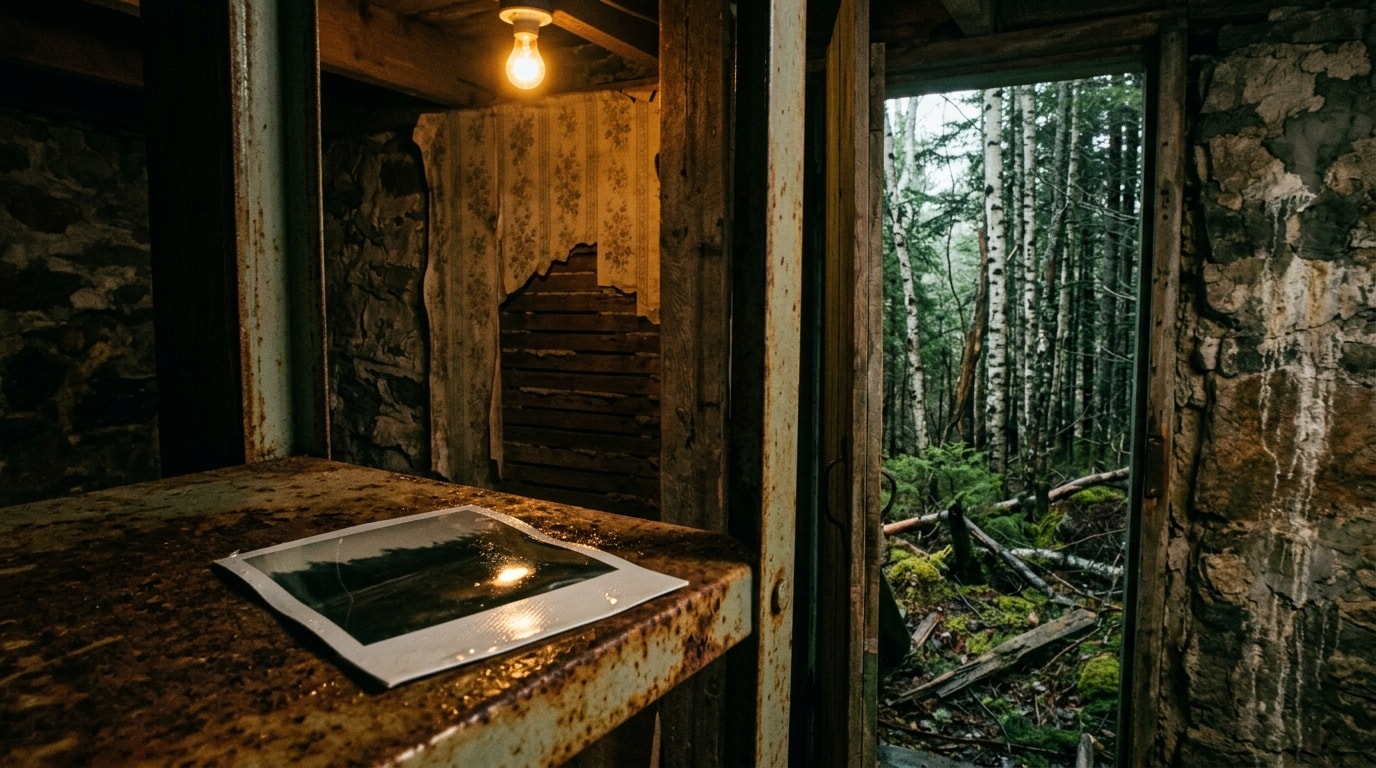
The Township's Intake System: The Camera Was the Instrument, the Room Is the Site, and Elgin Has Already Complied
The spontaneous Polaroid photograph was not a malfunction but a precision routing event, delivering Elgin through an exact discovery sequence to a hidden room that functions as the Township's active transformation chamber.
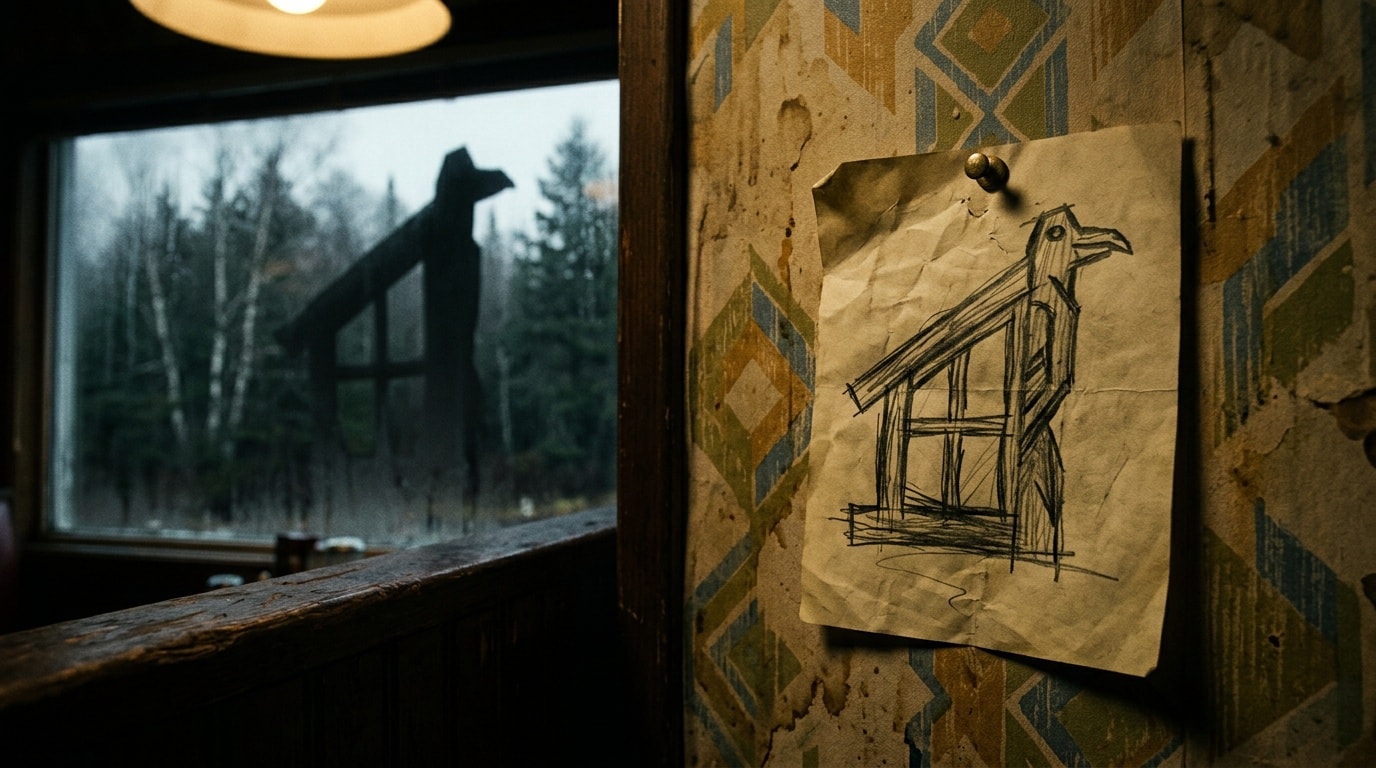
Tabitha Was Targeted Before She Was Born
The Township encoded exact physical details of the Settlement into Tabitha's childhood dreams before she had any proximity to the boundary, meaning her arrival was not an accident but the completion of a preparation process that began in her childhood.

Jasper the Doll Carries Real Supernatural Knowledge
Victor's behavior around Jasper is not the onset of delusion but the resumption of a prior relationship with a doll he has reason to believe already communicated with him during his decades alone in the Township.

Tabitha's Childhood Dreams Hide a Dark Secret
Tabitha is Eloise, Victor's sister who survived the Township massacre as a child and was raised outside with her identity suppressed and replaced.