
Ethan Sees Everyone Playing Assigned Roles
THE THEORY
Ethan's certainty about Victor's safety and separate role is not optimism but structural knowledge: he understands the town as a coordinated quest in which each person holds a specific function, and deviation from that function rather than lack of ingenuity is what keeps adults trapped. The theory's hardest claim is that self-directed problem-solving is not a path to escape but the precise behavior the system penalizes. Whether Ethan perceives this structure because children are less cognitively resistant to it, or because something in the town communicates it selectively to them, remains the central unresolved question.
How This Theory Works
Ethan does not hope Victor is safe. He already knows it, because Victor is doing his part of the quest while the radio tower is theirs. This is not childlike comfort-seeking. It is a structural claim: separate actors, separate functions, one coordinated framework operating whether or not any individual resident understands or consents to it.
What demands attention is the specificity of the language. Ethan assigns Victor a role. He assigns the radio tower work a parallel role. The framing implies coordination without coordinators, a structure that precedes any decision the characters have made. Ethan opens the same episode by narrating his own story about trying to return home, using his toys as stand-ins. The quest frame is not situational. It is the consistent lens through which he reads everything happening around him.
The sharpest pressure the theory can apply is this: if Ethan's framework is accurate rather than naive, then every adult who has attempted self-directed escape was not failing to solve the puzzle but failing to recognize they were assigned a specific position within a system that does not reward improvisation. Tom's bar full of people who once had clever ideas is not a record of escape being impossible. It is a record of people who stepped outside their function and disqualified themselves from whatever mechanism the quest requires. Ethan's certainty does not merely contrast with adult doubt. It diagnoses what that doubt costs. The gap between children's calm and adults' cognitive fracture in this town stops looking like innocence versus experience and starts looking like alignment versus resistance to a structure that is already running.
Is this theory convincing?
Key Evidence
Ethan Names Victor's Separate Role
Ethan tells Jim that Victor has to do his part of the quest now, while the radio tower is their part, explicitly dividing the residents into separate task-holders within a larger structure.
Ethan's Unprompted Certainty About Victor
When Jim assures Ethan that Victor is okay, Ethan replies that he already knows this, indicating he does not need reassurance because his understanding of the quest framework already accounts for Victor's safety.
Opening Story About Returning Home
Ethan opens the episode by telling his own story with his toys about trying to return home, establishing that the quest framework is a consistent lens through which he interprets the town's situation.
Children Versus Adults' Understanding
Ethan's calm certainty about the quest structure contrasts sharply with adult characters like Tom, who doubts that any clever idea will ever lead to escape, suggesting the children may perceive the town's logic differently.
Radio Tower as 'Their Part'
Ethan describes the radio tower effort not as a plan or an attempt, but as the group's specific assigned part of the quest, framing collective action as role fulfillment within a predetermined structure.
Victor's Deliberate Separation Implied
Ethan's statement that Victor must complete his part elsewhere implies that Victor's absence from the group is purposeful rather than accidental, suggesting roles in the quest may require geographic or functional separation.
Other Theories for S1E10

Fromville Runs a Two-Phase Predation Architecture, and Tom Is Its Finished Product
Fromville operates a closed predation system with two interlocking phases: a pre-arrival intelligence layer that profiles, cross-references, and positions structural pieces before first contact, feeding into a personalized hope-collapse-despair cycle calibrated to each resident's specific psychological wound.
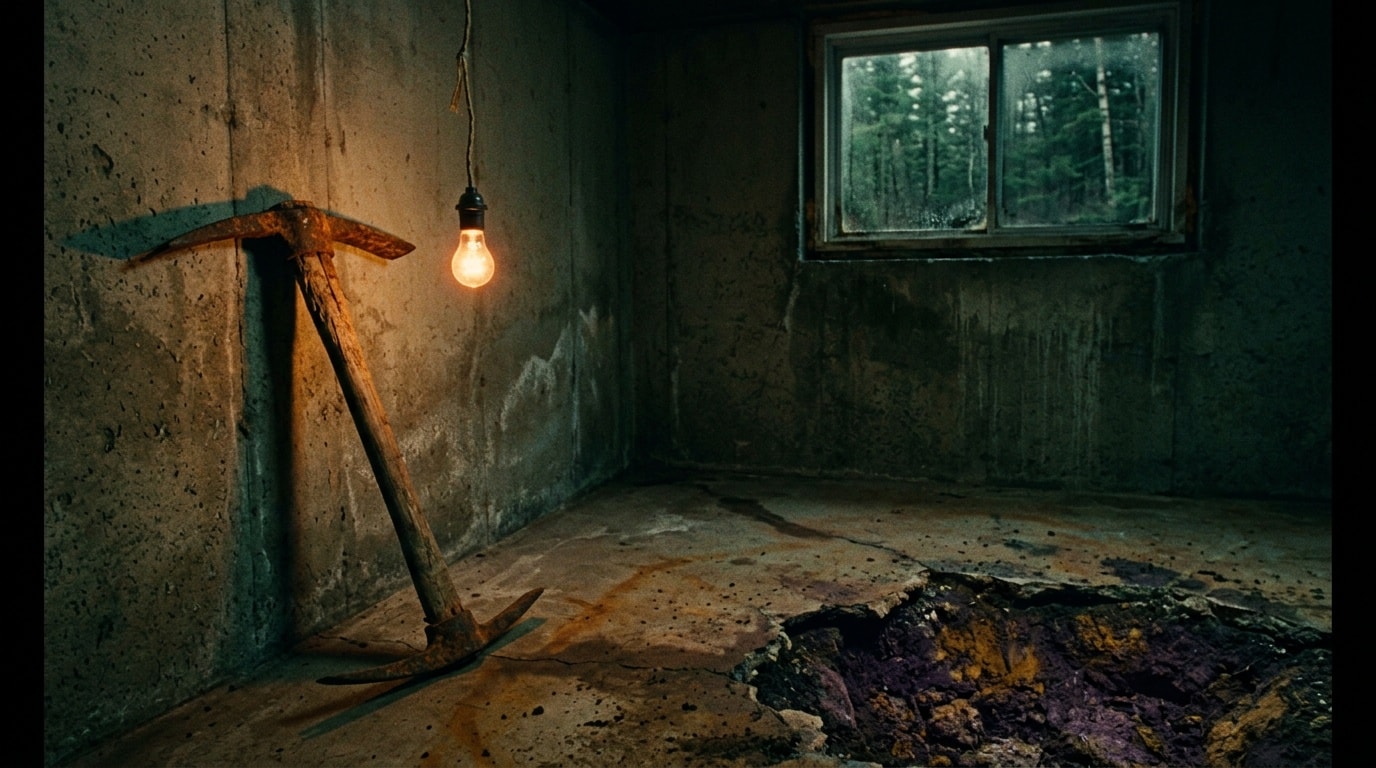
Tabitha's Pickax Points Toward Hidden Discovery
Tabitha's excavation beneath the basement floor is building toward a discovery the town's designed system does not want made.

The Boy in White Runs a System of Selective Disclosure, Not a Rescue Operation
The town operates a hidden communication layer that identifies specific individuals (Victor, Ethan, Sara, Boyd) as cognitively or experientially receptive targets, then uses the boy in white to deliver precisely calibrated information to each one.

Dead Residents Warn the Living Through Signals
The voices contacting the townspeople through radio and forest phenomena are the dead, but their capacity to warn is not independent -- it is a function the town permits and shapes.

The Storm Arrives When the Signal Does
The town actively destroys escape infrastructure at the precise moment it becomes functional, which means the system was designed not merely to trap but to deny the conditions under which escape becomes possible.