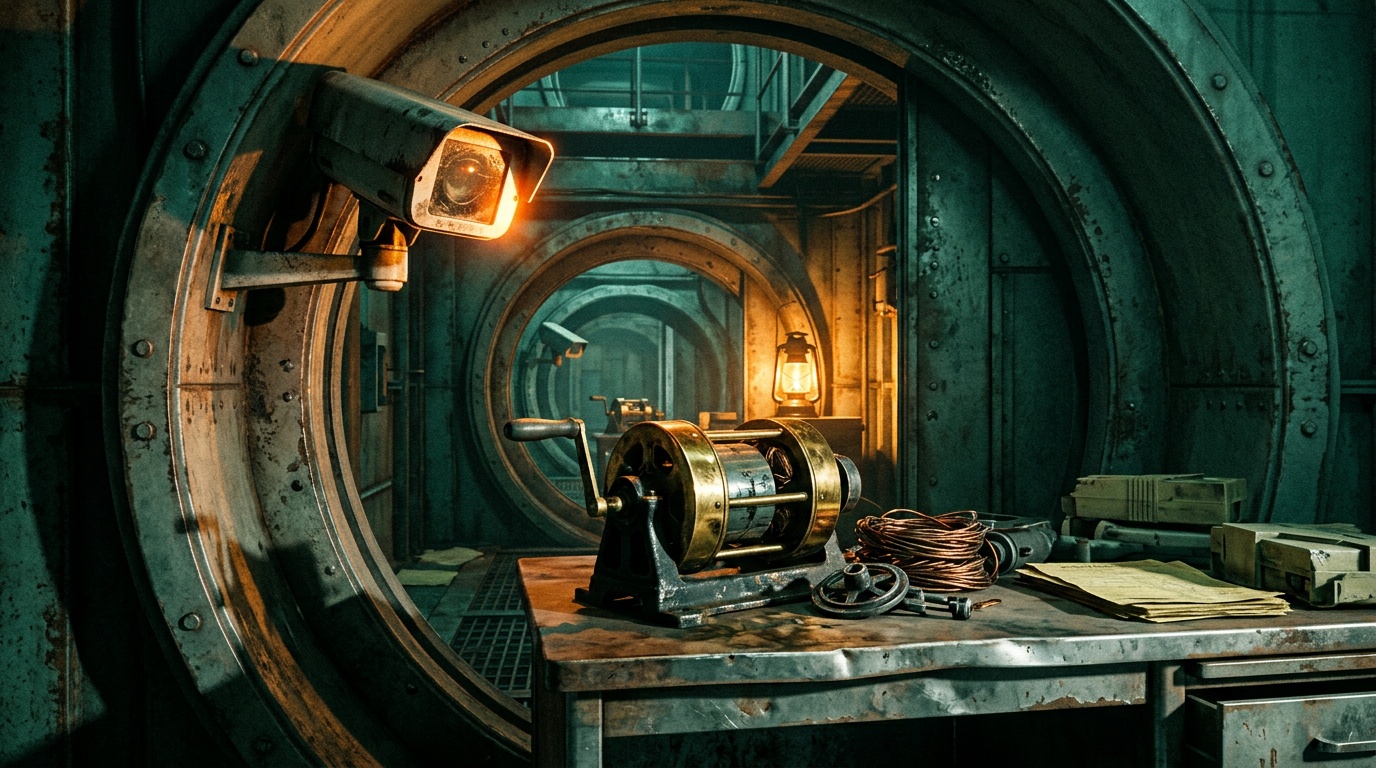
Juliette's Camera Revelation Seeds Future Uprising
THE THEORY
Lukas will be the one to trigger collective uprising, not Juliette, because Juliette transferred rebellion-grade knowledge to someone the surveillance system had no reason to monitor before it was too late to stop the transfer. His own warning that disclosure would cause chaos is the show's clearest signal that this outcome is being constructed, not avoided. The sharpest unconfirmed claim is that Lukas, carrying knowledge he cannot shed and an implication he cannot escape, will eventually release what he knows precisely because he has no history as a dissident and therefore no profile Judicial can move against in advance.
How This Theory Works
Lukas, not Juliette, is the uprising's future catalyst, and the show has already told the audience exactly why. By planting the camera revelation with an ordinary, previously uninvested citizen just before her own arrest, Juliette did not lose the thread of resistance. She made it impossible to contain.
When Lukas warns that publicly disclosing the cameras would cause chaos, the line is not a caution against the theory. It is the theory's proof of concept stated out loud. The Silo's own ordinary citizens understand, on instinct, that this knowledge is rebellion-grade. Lukas is not misreading the room. He is reading it exactly right, and the show wants the audience to sit with what that means.
His sequencing matters as much as his words. Lukas refuses to help, then leaves with Juliette anyway, and the Judicial raid arrives after the conversation is already over. The information escaped before the net closed. Lukas cannot unknow what he knows, and his flight collapses any remaining distance between passive witness and implicated party. The system had no reason to watch him before this moment. That is precisely the vulnerability Judicial cannot patch.
The theory does not require Juliette's return to pay off. It requires Lukas to eventually decide that understanding the cost of silence does not make silence the right choice. He knows what the cameras are, what they represent, and what announcing them would unleash. A man with no prior dissident history is harder to preemptively neutralize than any known agitator, which means the moment he decides silence is no longer acceptable, Judicial will have no playbook for stopping him before the damage is done.
Is this theory convincing?
Key Evidence
Juliette Names the Cameras to Lukas
Juliette tells Lukas that cameras and sensors exist throughout the Silo and that uncovering the truth is urgent, directly framing the surveillance system as the core injustice driving her investigation.
Lukas Warns of Chaos From Disclosure
Lukas explicitly warns that if the existence of the cameras were publicly announced it would cause chaos, confirming on screen that the surveillance revelation carries mass-uprising potential.
Lukas Refuses Then Flees With Juliette
Lukas initially refuses to help but leaves the apartment with Juliette just as a Judicial raiding team arrives, suggesting he is now implicated and cannot retreat into ignorance.
Juliette's Investigation Framed as Collective
Juliette tells Lukas that the hard drive may explain not just Allison Becker's cleaning but multiple murders, positioning her personal quest as a case that implicates the whole Silo's governance.
Other Theories for S1E08
Bernard and Sims Share the Same Shadow
IT and Judicial are a single fused apparatus sharing real-time intelligence and pre-assigning institutional roles before any enforcement action begins, meaning the procedural structures citizens might appeal to have never functioned as checks at all.
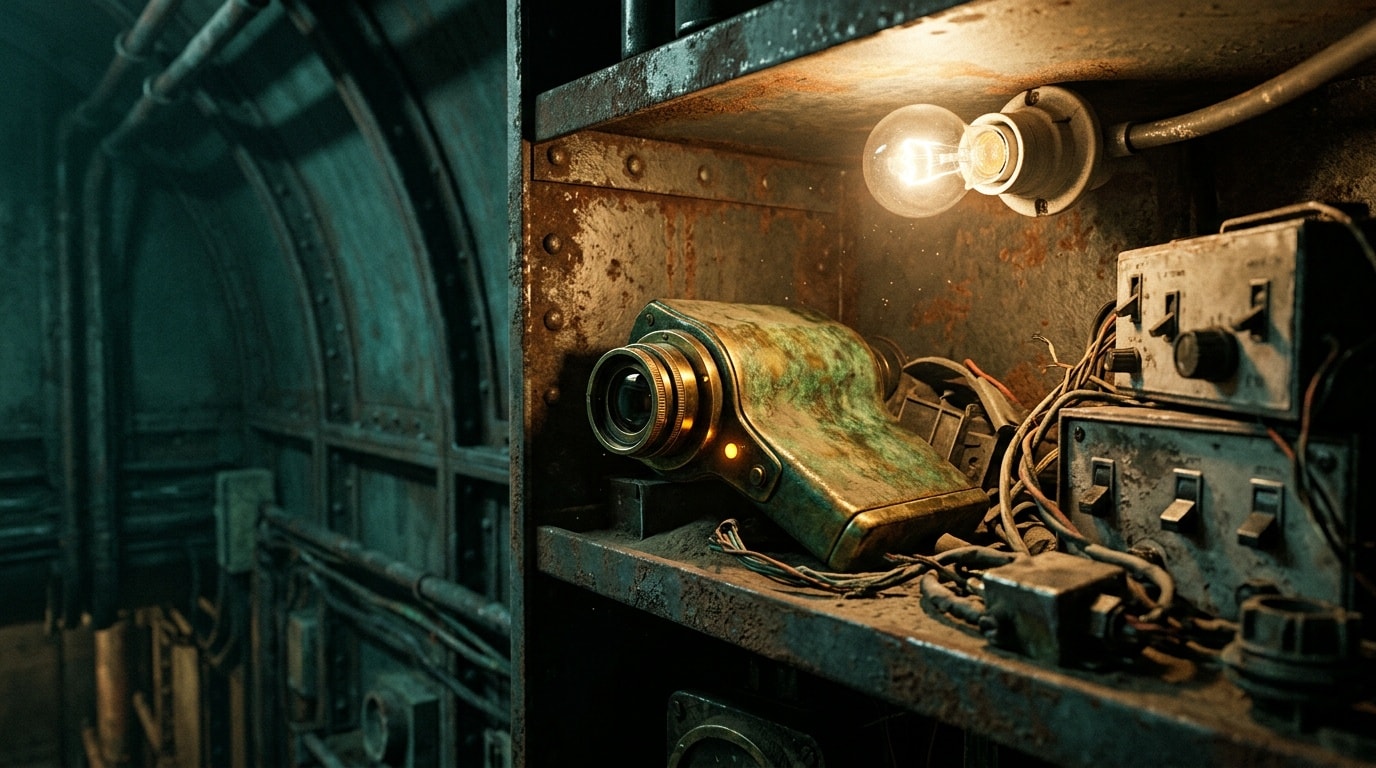
Lukas Knows: From Witness to Whistleblower
Lukas Kyle will be forced into active resistance not by courage but by the authorities' own miscalculation: the moment they threaten his mother to ensure his silence, they remove the only condition keeping him passive.
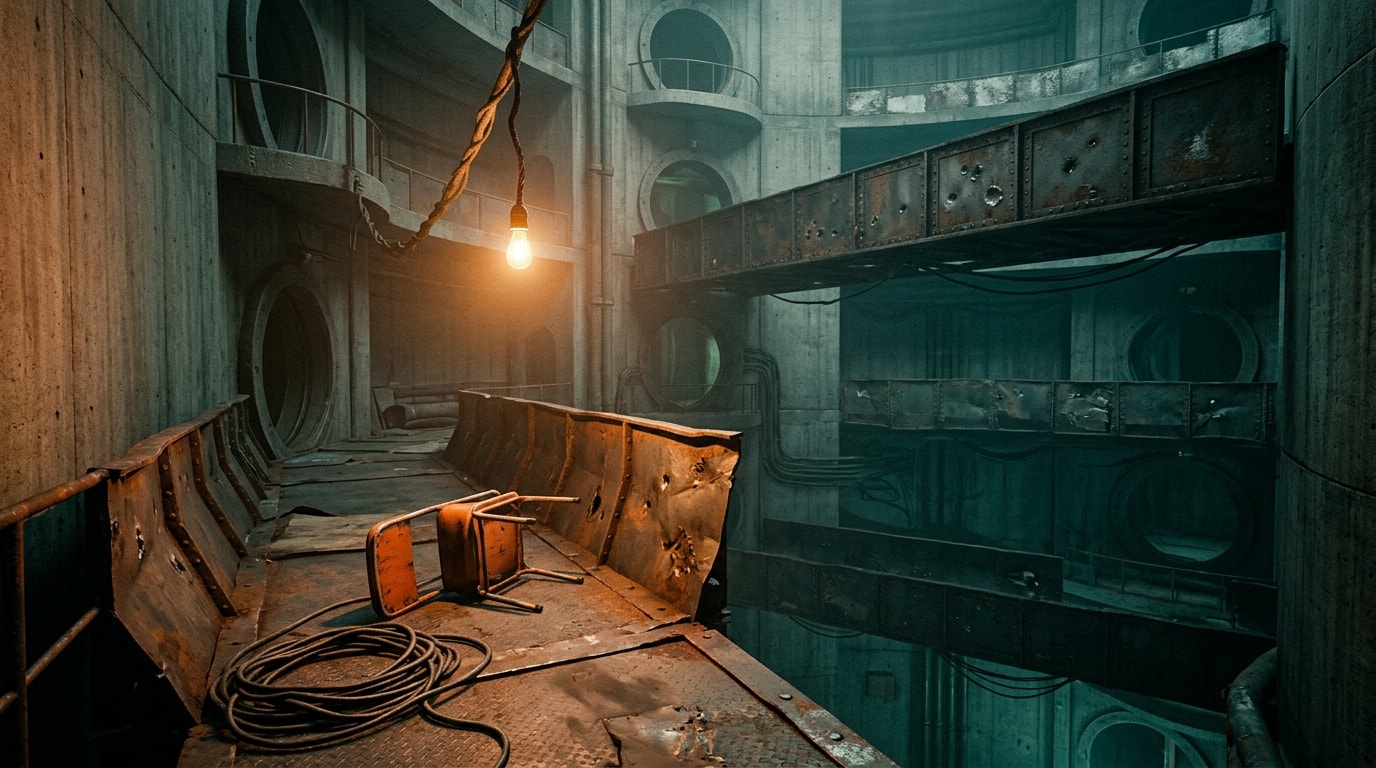
Juliette Lands on an Interior Bridge
Juliette survives her stairwell vault by landing on one of the bridge platforms connecting the silo's staircase to its outer rings, a survival built into the production design rather than inserted as a convenience.
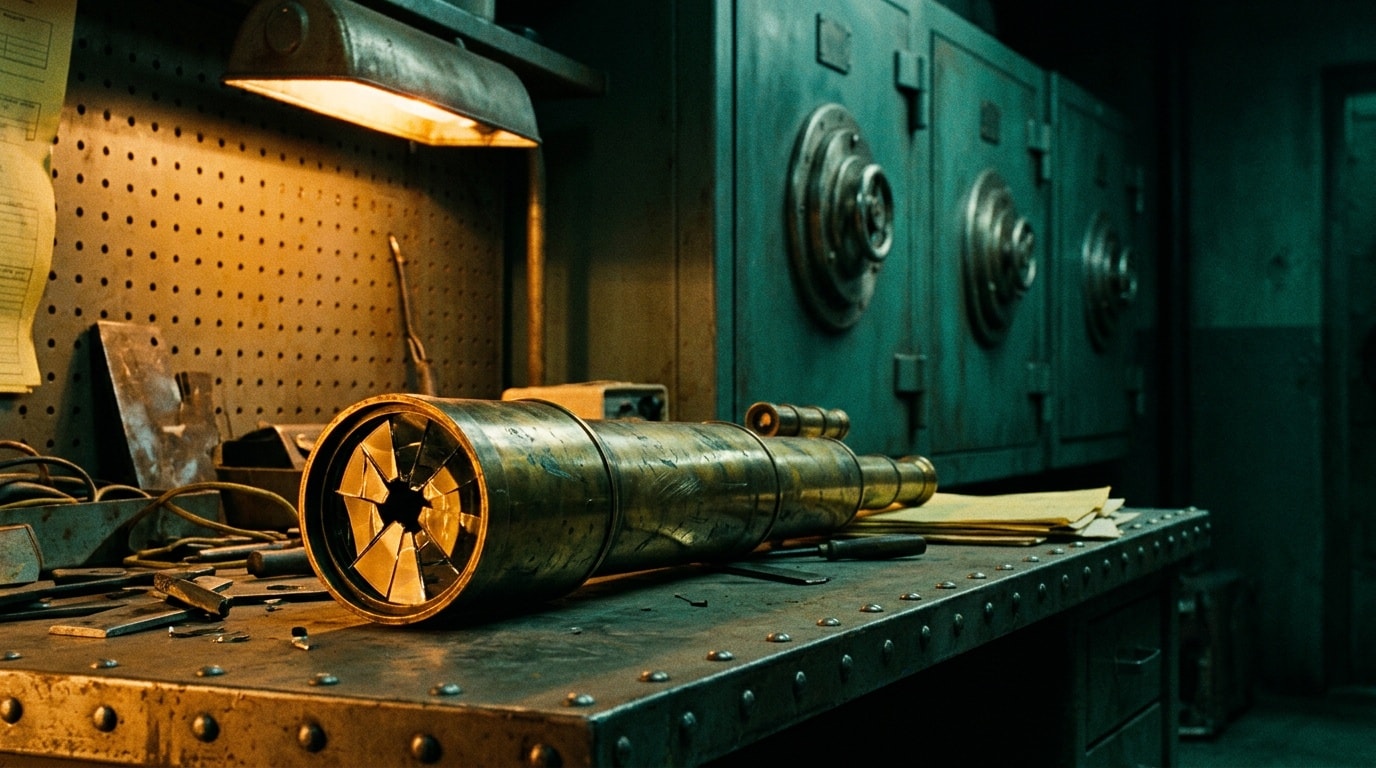
The Ban on Lenses Hides the Truth
The silo's prohibition on magnification technology is a designed suppression mechanism embedded at the point of original construction, not a rule that evolved in response to a threat.