Hannah Nichols: Curiosity as a Death Sentence
THE THEORY
The Silo's internal logic converts suppression into reproduction: by flagging Hannah Nichols as dangerous, permitting her to survive and bear children under observation, and then systematically destroying the conditions of her life, the system authored its own most dangerous investigator. Gloria's account connects Hannah's curiosity to the Flamekeeper suppression campaign, her collaboration with Anne Wilkins to the conspiracy at the center of Juliette's investigation, and her suicide to a system that decides who breaks and when. Juliette is not investigating the Silo despite her origins -- she is the Silo's own mechanism running past its intended endpoint.
How This Theory Works
The Silo did not destroy Hannah Nichols. It preserved her, and that preservation was the mechanism of control. Curious people attracted attention, and that attention had a cost -- but the system's deeper logic was not elimination. Gloria tells Juliette that Hannah carried the same curiosity as the Flamekeepers, even without formal membership. The distinction matters less than the consequence: the Silo identified Hannah as the kind of person who remembers, watched her, and then made a calculated decision to let her continue.
The connection between Hannah and Anne Wilkins tightens the logic. Anne was working with Hannah on something involving a magnifying device, and Gloria expresses surprise that Hannah was even allowed to have children. That surprise is the tell. It implies Hannah's reproductive access was a decision made above her, not a default -- that the same population control apparatus used as a weapon against the Flamekeepers was suspended, deliberately, in Hannah's case. The Silo did not suppress her the way it suppressed others. It kept her functional, kept her producing, and let the accumulated pressure do the work instead.
Gloria ends her account by asking Juliette whether she knows why her mother killed herself. The question lands without an answer, and that silence is the theory's load-bearing claim. It suggests the circumstances of Hannah's death connect to the Flamekeeper suppression campaign rather than to any private grief. The seizure Juliette witnesses in Gloria also produces a visible emotional response, with Pete noting she already knows what to do -- a response pointing toward Jacob and raising the possibility that the Silo's medical apparatus shaped his condition as well. If that is true, the system's reach into the Nichols family was not incidental. It was the instrument.
This is the claim the theory requires but resists stating directly: the Silo did not accidentally produce Juliette. It produced her on purpose, or at least permitted her production, because a woman it had already broken was a safer vessel for dangerous curiosity than a woman it had to silence. By letting Hannah live long enough to raise a daughter and then engineering the conditions of her collapse, the system converted Hannah's knowledge into grief and grief into a closed circuit. Juliette investigates. The Silo survives. Gloria's unanswered question is not an invitation to sympathy. It is a structural accusation: the apparatus that suppressed the Flamekeepers, weaponized reproduction, and authored Hannah's death also authored the investigator most likely to uncover all of it -- and may have calculated, correctly for decades, that a daughter finishing her mother's work would never recognize she was running inside the same machine that built her.
Is this theory convincing?
Key Evidence
Gloria Names Hannah's Curiosity
Gloria tells Juliette that Hannah had the same curiosity as the Flamekeepers, framing that trait as the quality that drew the Silo's attention rather than any formal membership in the group.
Hannah and Anne's Collaboration
Gloria reveals that Anne Wilkins was working with Hannah using a magnifying device, establishing a direct personal connection between Hannah and the mother of the man whose murder set the entire investigation in motion.
Gloria's Surprise at Hannah's Children
Gloria expresses surprise that Hannah was allowed to have children at all, suggesting Hannah was flagged as someone the powers in the Silo considered suppressing through the same reproductive control used against the Flamekeepers.
Gloria's Unanswered Question About Suicide
Gloria closes her account by asking Juliette if she knows why her mother killed herself, implying the death had a cause connected to the Flamekeeper conspiracy rather than being a private tragedy.
Juliette's Seizure Recognition
When Gloria has a seizure, Pete tells Juliette she knows what to do, and her reaction suggests prior experience with a family member's episodes, pointing toward Jacob and raising the possibility that the Nichols family's suffering was not unrelated to the Silo's interventions.
Other Theories for S1E07
Sims Watches Everyone, Answers to No One Visible
The surveillance apparatus Sims operates was never designed to serve governance.
Holston's Flowers Were a Surveillance Warning
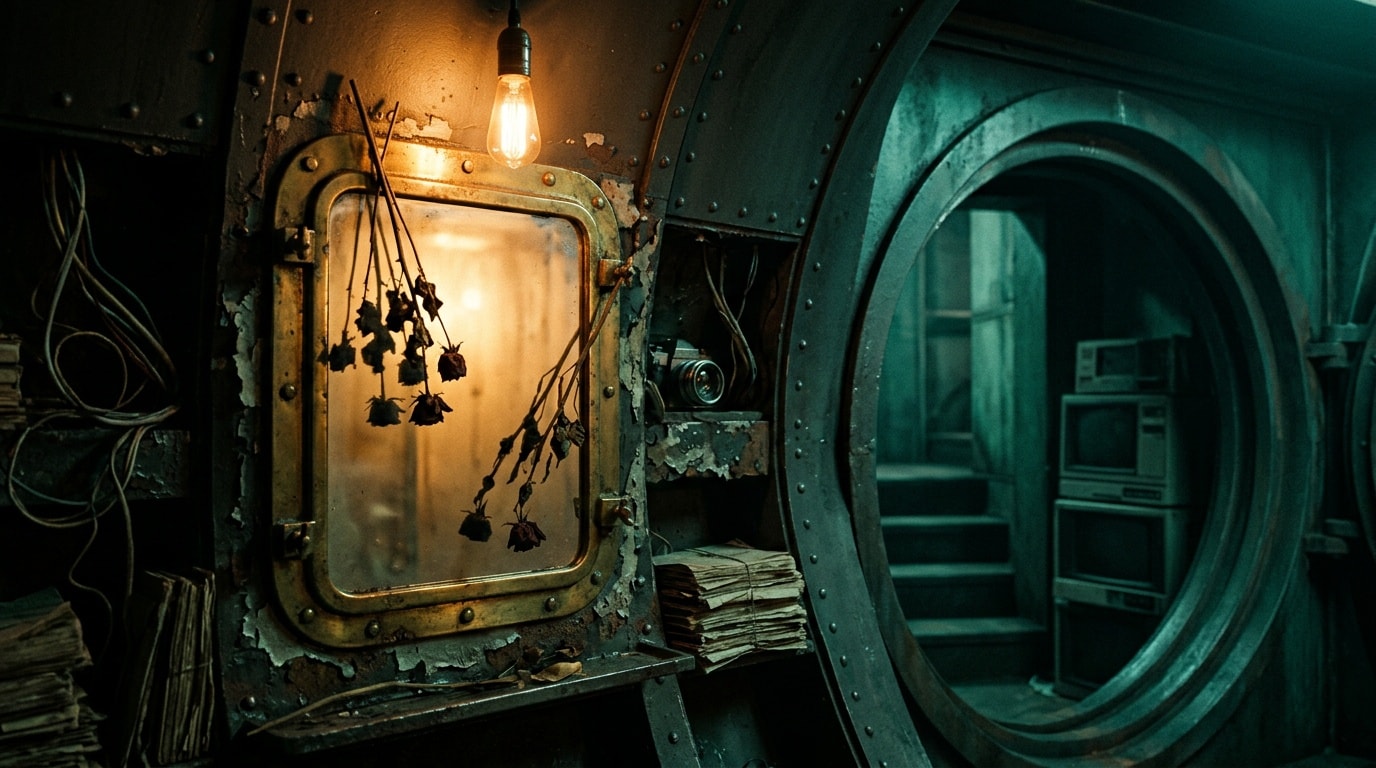
Holston placed a flower pot in front of Juliette's apartment mirror to block a hidden camera before going out to clean, and Maintenance removed it under cover of an accidental breakage the moment Juliette began investigating.
The Vase Was Never About the Vase
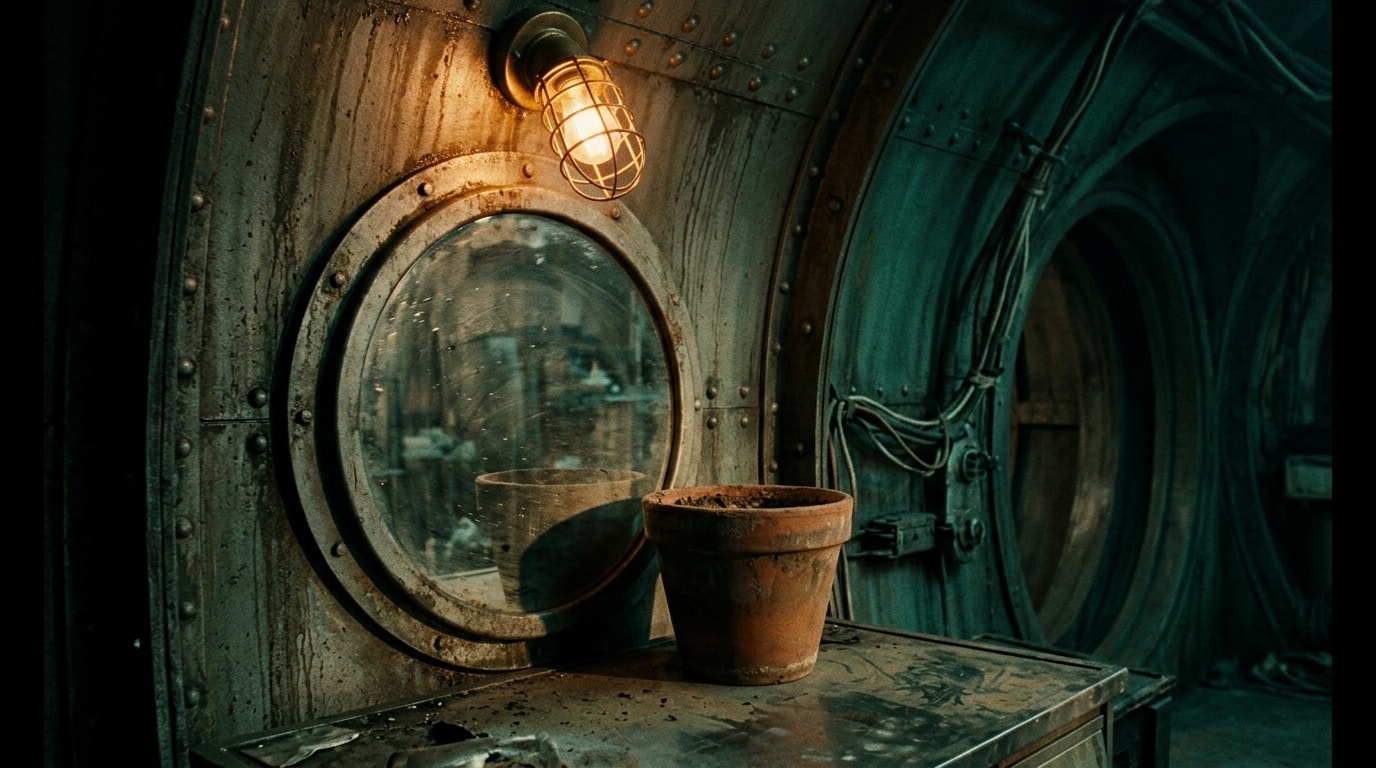
The Maintenance vase apology was a cover operation to remove a flower pot that Holston had deliberately placed to block a camera behind Juliette's mirror, and Juliette recognized what had happened.

The Book's Star Maps Point Outside
The constellation page in the Flamekeeper book is a functional reference system for interpreting observable outside phenomena, not a historical artifact.

Holston's Flowers Blocked the Watching Eyes
Holston used his final hours in the silo to systematically obscure surveillance cameras at the locations Juliette would need, and his walk to cleaning was the operational cover that made the interference pattern safe to leave behind.
Gloria's Beach Vision Hints at Suppressed Outside Knowledge
Some Silo residents carry suppressed experiential knowledge of the exterior world, and Gloria Hildebrandt's beach vision is the clearest evidence that the chemical suppression system was always dose-dependent and time-limited rather than absolute.