The Shadow Offer Was an Execution Protocol: How Judicial Designs Its Own Disappearances
THE THEORY
Sims did not eliminate Trumbull because Trumbull became a liability — he eliminated Trumbull because Trumbull had fulfilled his function, and the function was always designed to end this way. The Shadow offer was not a reward or improvised damage control but a precision instrument for bringing a managed asset into a killable position, trusting and facing away from the railing. This is not corruption within Judicial's governance architecture. It is that architecture operating as designed.
How This Theory Works
Sims does not discover that Trumbull committed murders. He reviews them. The language in the janitor's closet — recounting George Wilkins, Patrick Kennedy, and Marnes as performance failures, tallying them with the flat affect of a supervisor reading from a file — is not the register of a superior confronting a rogue subordinate. It is the register of a handler conducting a post-operational assessment. Sims knows every detail because he directed every detail. Trumbull was not an employee who went rogue. He was an instrument that was aimed, deployed, and is now being retired, and the closet scene is not a confrontation but the administrative portion of a termination that was scheduled before Trumbull arrived.
The planted evidence locates the institutional machinery underneath the individual relationship. Rat poison and the Jahns drawing placed in an apartment Kennedy had vacated a year before his wife's death: that is not a frame-up assembled in panic. It is a coordinated Judicial operation — one that failed technically when Kennedy's relocation was not accounted for, but that was paired with a structural countermeasure regardless. Billings was already steering every investigative resource toward Ralf Melby, a low-level gambler with no connection to Jahns or Marnes, before Juliette had found the wrong apartment. The misdirection was running parallel to the planted evidence, not in response to its exposure. Judicial does not react to disorder. It produces disorder in one channel while routing scrutiny into a dead end through another, and the two operations are synchronized from the beginning.
What neither operational detail fully names is the precise function of the Shadow offer — and that precision is where the theory hardens. Sims does not offer Trumbull elevation after condemning his failures as a way of softening the critique. He offers it as the mechanism of execution. Acceptance was the trigger. The moment Trumbull said yes, he confirmed his compliance one final time, bound himself to the institution in the only act of institutional faith remaining to him, and turned toward the future Sims had just described. The railing was already behind him. Sims had not improvised the geography of that closet. He had selected it. The offer transformed Trumbull's hope into the condition of his death, which means it was engineered to do exactly that — and which means Sims has done this before, knows the psychological architecture of a man who wants to be recognized, and knows how to use that architecture as a kill mechanism.
Judge Meadows declining to investigate Trumbull's motive is not incuriosity or administrative negligence. It is the institutional seal on a transaction she understood the terms of before Trumbull's body was identified. The replacements — Bernard, Billings — were selected before the bodies of Jahns and Marnes were found, which means the killings were not a response to a power vacuum but the method of creating one that had already been filled. Every authority figure not aligned with Judicial is removed and replaced with someone who is, and the replacements confirm the plan preceded the crisis. Trumbull's exposure via the wrong apartment did not trigger his elimination. It set the date for a terminus that was already on the calendar.
This is where the individual psychology of Sims — the handler who knows how to make a man turn his back on an edge — becomes inseparable from the institutional design that produced and requires him. Sims is not an aberration within Judicial. He is its most refined product. A governance structure that maintains invisibility by ensuring the people who carry out its directives are the first to disappear into them does not function without someone who can run that cycle without hesitation, without improvisation, and without leaving a seam. The silo was not built to protect its population from disorder. It was built to manage that population through the controlled production and resolution of disorder, and the management requires that the instruments of violence — the Trumbulls — be consumed before any chain of command becomes traceable upward. Trumbull's death is not an anomaly in that system. It is the system completing its own loop: the man who killed the Mayor of the Silo disappears into the same institutional machinery that aimed him, and the machinery becomes invisible again precisely because the most informed witness to its operation is gone.
Is this theory convincing?
Key Evidence
Sims Berates Trumbull for Two Failures
In the janitor's closet, Sims tells Trumbull he failed twice — once with George Wilkins and once with Patrick Kennedy — directly implying Trumbull was conducting operations on Sims' orders before this episode.
Trumbull Found at Planted Evidence Scene
Juliette discovers Trumbull at the apartment where rat poison and the Jahns drawing had been planted, connecting him physically to the frame-up operation targeting Kennedy.
Shadow Offer as Execution Setup
Sims offers Trumbull the Shadow position in the isolated janitor's closet and then immediately pushes him to his death over the railing, revealing the offer was a pretext to bring Trumbull into a killable position.
Judicial Deflects Investigation to Melby
Billings reveals that Judicial is directing suspicion toward low-level gambler Ralf Melby, a move Juliette correctly reads as an attempt to undermine her investigation and keep Trumbull's role invisible.
Wrong Apartment Exposes Entire Operation
Kennedy had moved after his wife's death, so the planted evidence sat in the wrong apartment — an error Juliette exploits to flush out Judicial's involvement and expose Trumbull directly.
Trumbull Attempts to Kill Juliette on Stairs
After being discovered at the apartment, Trumbull pursues Juliette down the Silo stairs and throws her over the railing, demonstrating he was operating as an active eliminator of threats rather than a passive plant.
Other Theories for S1E05
Judicial Planted Evidence in the Wrong Apartment
Judicial's frame-up of Patrick Kennedy collapsed because its surveillance records were stale enough that Trumbull planted evidence in an apartment Kennedy had vacated a year earlier, exposing the hard ceiling of the institution's actual reach.
Shadows: Silo's Hidden Enforcement Runs Through Janitors
The janitor class in the Silo is the institutional housing of a parallel enforcement structure that predates Sims and operates entirely outside Judicial and the Sheriff's Department.
Billings Is Judicial's Eyes Inside the Sheriff
Judicial's appointment of Billings is not an administrative imposition but the activation of a governance function the Pact was built to perform: converting the Sheriff Department's chain of command into a reporting structure for the institution it is supposed to check.

The Sky Is a Clock Someone Set
The lights Lukas Kyle has been charting follow a deliberate, organized circular orbit that cannot be explained by natural astronomical behavior, and the Pact's ban on high-level magnification exists to prevent residents from confirming exactly that.
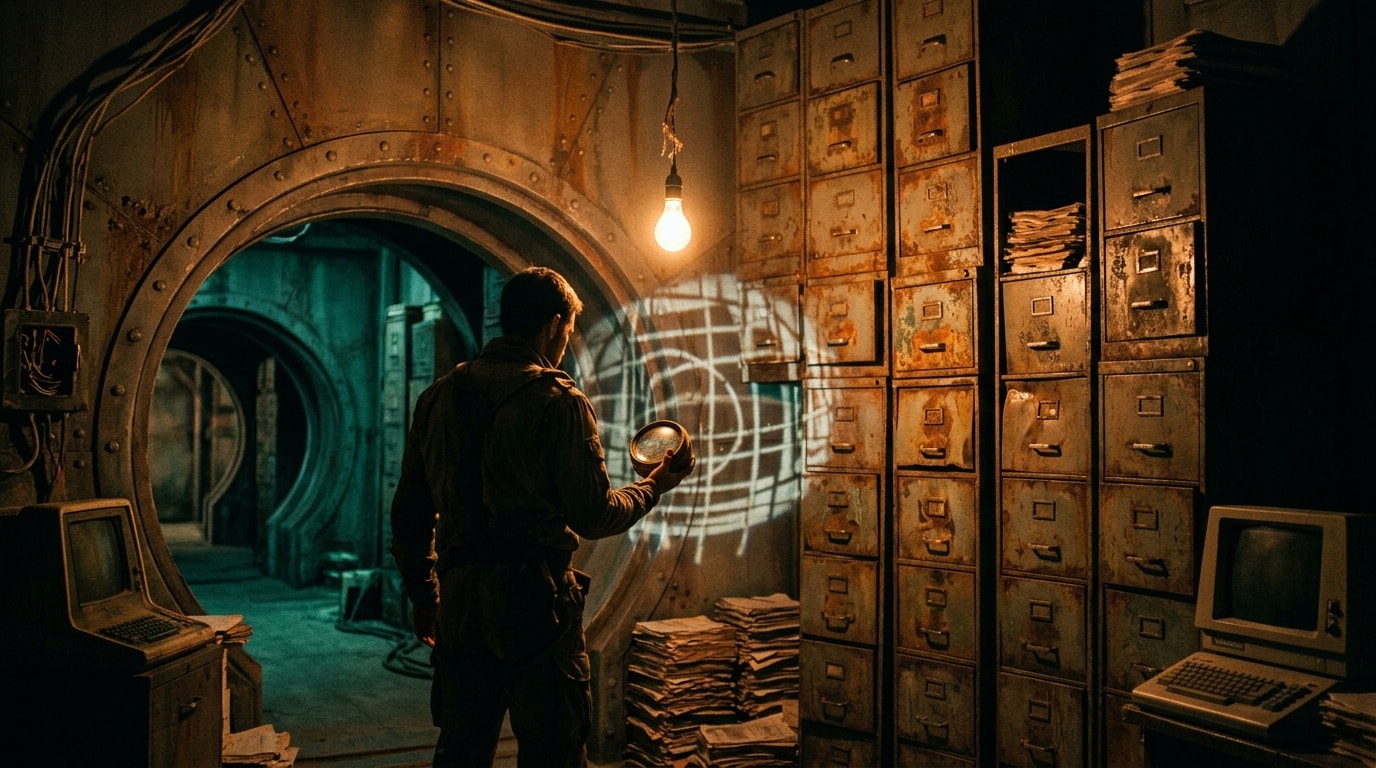
George's Hidden Relic as Juliette's Next Move
Juliette has retrieved a functional pre-Silo camera that Judicial does not know exists, and she intends to use that information gap as leverage rather than wait for Judicial to close it.
Bernard's Support Is a Strategic Leash
Bernard's pledge of support for Juliette is a co-option strategy, not a change of heart: he identified her as too capable to remove and too dangerous to leave unsupervised, so he made himself her patron instead.
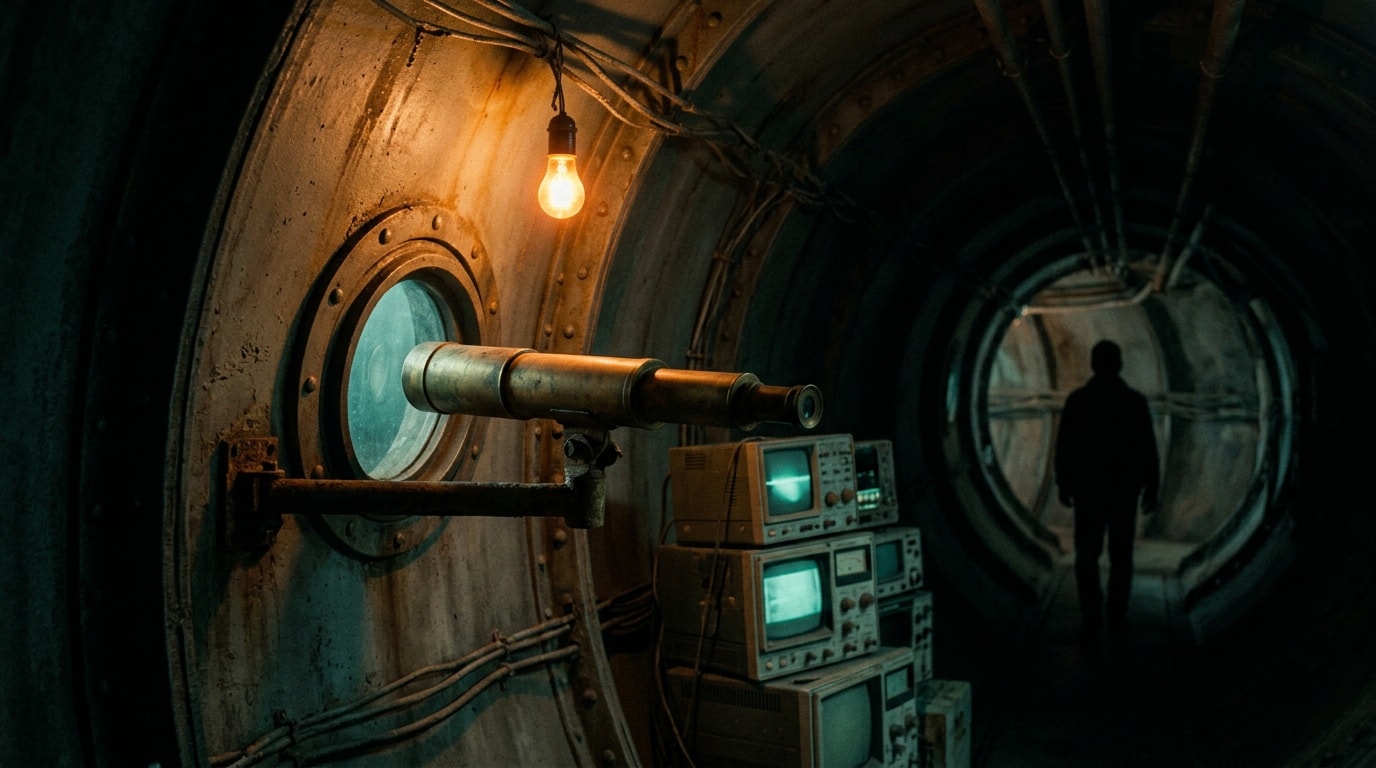
Stars Unknown: The Silo's Engineered Ignorance
The absence of stellar knowledge in the Silo is an engineered deletion, not cultural drift, designed to remove the cognitive vocabulary residents would need to identify the outside world as survivable.
Bernard Knew About Jahns and Marnes All Along
Bernard Holland possessed intelligence on the Jahns-Marnes relationship before anyone told him, and his 'always suspected' framing was a performance designed to conceal a surveillance-derived source.