George Wilkins Was Murdered for What He Knew
THE THEORY
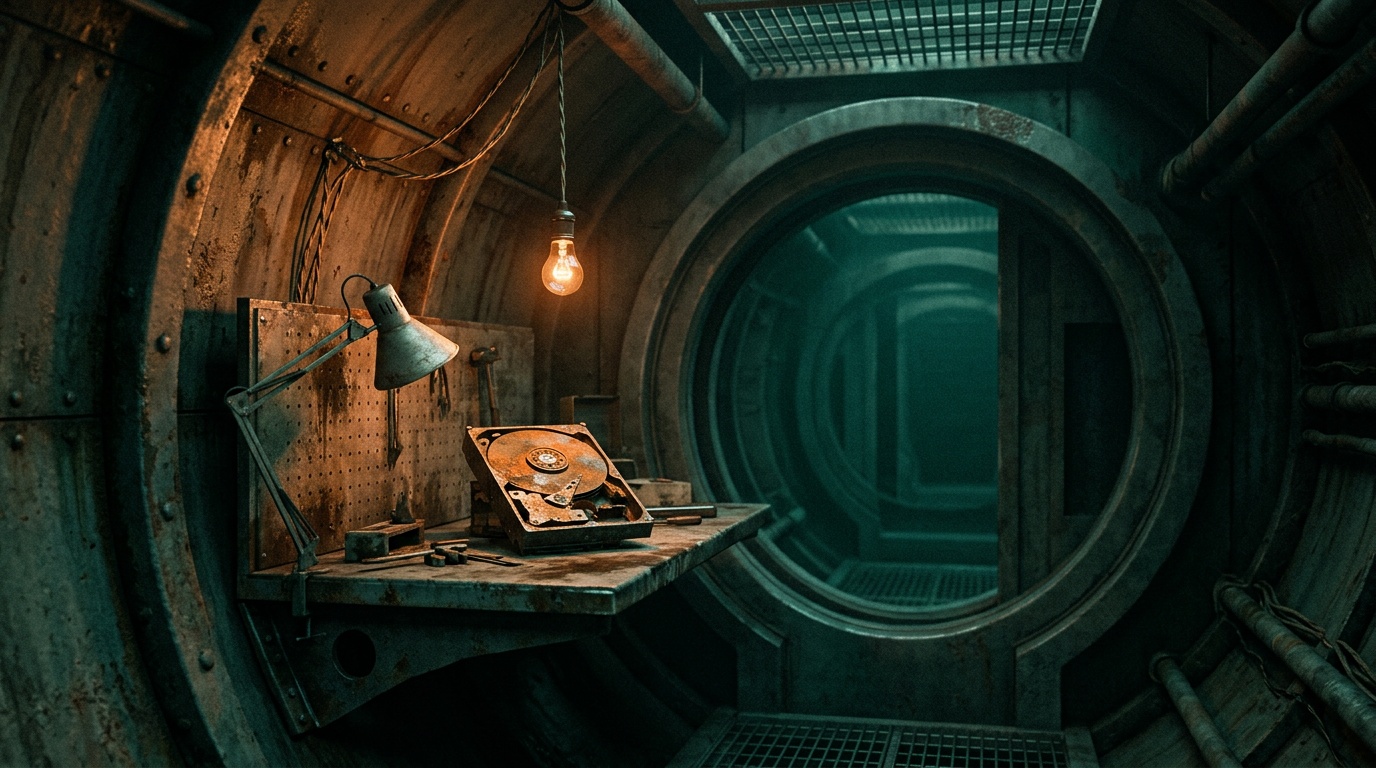
George Wilkins was killed because he held a pre-Rebellion hard drive containing evidence that the outside world may be habitable, evidence Judicial failed to recover before his death. The engineer who examined the scene calls it murder, not accident, and the two-year gap between Allison's exile and George's death points to a deliberate institutional act rather than a panicked response. If the drive was never found, his death was an incomplete erasure, and Juliette's investigation is now a second approach to the same suppressed evidence.
How This Theory Works
Someone with knowledge of what George Wilkins had seen on that hard drive decided he was a liability. George was the one who sought out Allison specifically, who had kept the drive hidden from Judicial, and who continued examining its files even after Allison left. That makes him the last known person with direct access to evidence that the outside world may be habitable. An engineer on site does not call his death ambiguous.
The engineer's judgment that George was murdered is the episode's sharpest unconfirmed claim. It does not come from Holston, who arrives hoping to investigate. It does not come from Marnes, who merely relays the information. It comes from someone with proximity to the scene, someone with no obvious stake in the narrative. That source matters. Judicial never found the hard drive during the original inquiry into Allison. George maintained to Judicial that Allison never returned to see him. If George kept the drive and kept exploring it, he would have accumulated more than Allison ever had. The people who wanted that information buried had every reason to act.
The structure of the silencing, if this reading holds, follows a consistent pattern. Allison is exiled publicly, her death made into spectacle, her claims discredited by the act of cleaning the sensor. George cannot be handled that way. He has no public accusation to punish. He simply disappears over a railing. The interval of two years is not incidental. It suggests patience and deliberateness, the hallmark of an institution managing information rather than reacting to a threat.
The mechanism the show has not resolved is specific: if Judicial ordered George killed because he still held the drive, they killed the person without recovering the object, meaning the drive did not die with him. Juliette's investigation into George's death is then, without her knowing it, a second approach to the same evidence Judicial has been trying to bury since Allison walked out to clean. The murder does not close the loop. It leaves it open, and whoever ordered the killing has now handed the loose end to exactly the kind of investigator who will follow it all the way down.
Is this theory convincing?
Key Evidence
Engineer Declares Death a Murder
An engineer at level 120 tells Deputy Hank and later Marnes that George Wilkins's death was murder, not an accident or suicide, providing the only direct third-party testimony on the cause of death.
Holston Refuses Accident Explanation
When Holston learns George went over a rail at level 120, he explicitly refuses to accept it as settled and wants to investigate whether it was an accident, suicide, or something else.
George's Access to Forbidden Hard Drive
George Wilkins had obtained a pre-Rebellion hard drive containing silo blueprints and a file appearing to show a green outside world, information Judicial was actively trying to suppress during Allison's inquiry.
Judicial Never Recovered the Drive
Despite pulling George in for questioning after Allison's public outburst, Judicial did not find the hard drive, meaning George still possessed classified evidence at the time of his death.
George Lied to Judicial About Allison
George told Judicial that Allison never returned to see him, which was false, demonstrating he was actively concealing his involvement with the forbidden information even under official questioning.
Two-Year Gap Before Death
George dies two years after Allison's exile, long after the immediate crisis had passed, suggesting a deliberate and patient act of elimination rather than a panicked response.
Other Theories for S1E01
The Outside World Is Green and Alive
The Silo's toxic wasteland display is actively maintained fabrication, not a passive sensor feed, and the logical endpoint of that maintenance structure is that the exile sentence functions as a disposal mechanism for potential witnesses rather than a punishment that incidentally uses a lethal environment.

Childbearing Status Is a Lie
The Silo's childbearing program is a generational eugenics operation that uses the appearance of reproductive access to identify ideologically dangerous citizens and ensure they never conceive, without their knowledge.
The Rebellion Story Is Official Propaganda
The Rebellion narrative is administered propaganda, constructed to assign permanent blame for the Silo's information blackout to a group that cannot contest it, while IT continues operating the same erasure under legal cover.
Gloria Recruits Dissidents Through Fertility Counseling
The Silo's fertility program functions as a population-sorting mechanism that targets intellectually curious or questioning citizens for reproductive denial while using the counseling relationship to accelerate their radicalization toward self-removal.
The Cleaning File Proves a Living World
The Jane Carmody file is not an anomaly but evidence of an actively maintained deception: the sensor showing residents a toxic wasteland is producing a false image, and someone inside the Silo has always known it.
Gloria Hildebrandt Runs a Hidden Resistance Network
Gloria Hildebrandt is a node in an organized resistance network that has theorized a direct link between the Silo's fertility control system and the suppression of intellectual dissent, and she recruits by identifying residents the system has already quietly marked for exclusion.