Irving's Art Reveals Testing Floor Memory Bleed
THE THEORY
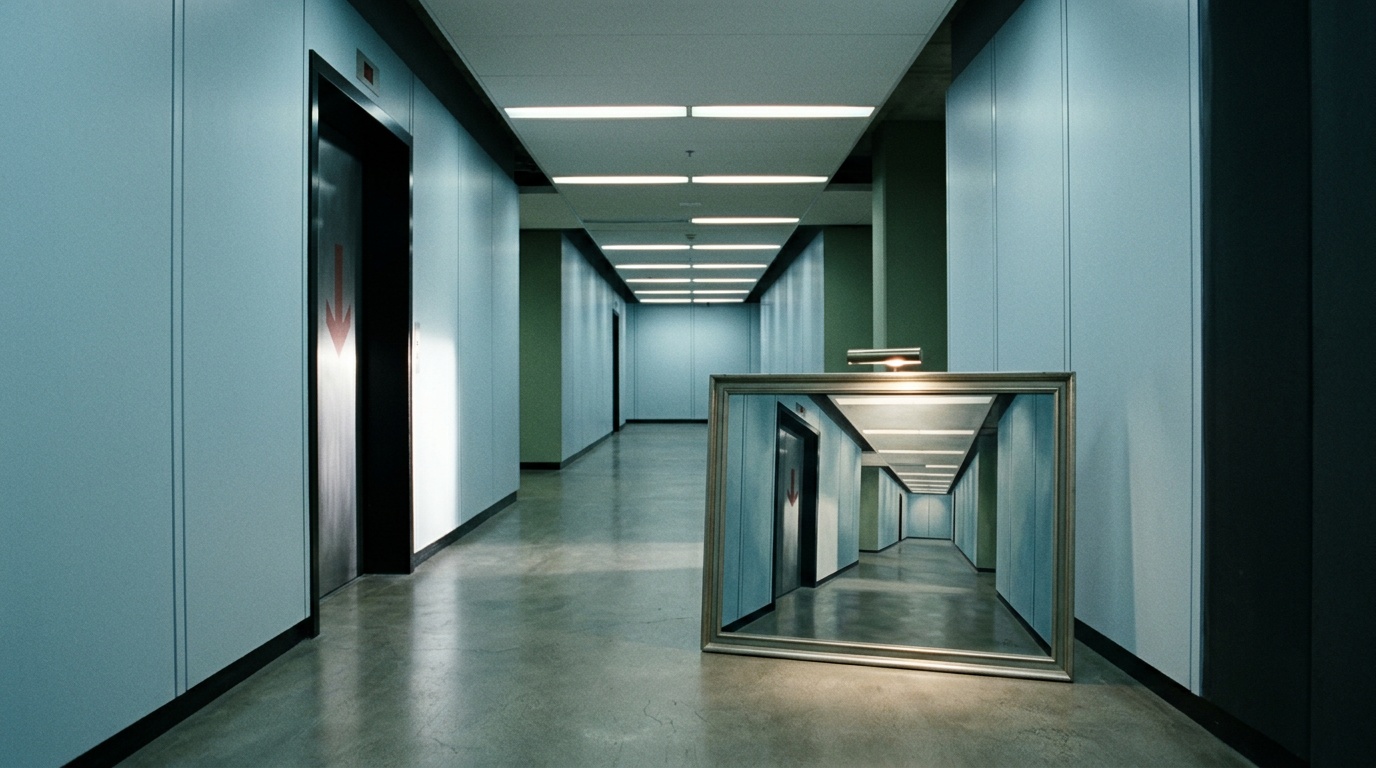
Irving's outie is reproducing a specific Lumon interior he has no conscious access to, meaning the severance chip cannot fully contain what happened to his innie on the testing floor. The architectural and directional precision of his paintings, including a black elevator with a red downward arrow, rules out coincidence. His position as the longest-tenured MDR employee, predating current protocols, makes him the most likely subject of early procedures that exposed the chip's containment limits.
How This Theory Works
Irving's outie is reproducing a specific Lumon interior he has no conscious access to, which means the severance chip is not fully containing what happened to his innie on the testing floor. The architectural match between his canvases and the corridor Milchick walks Ms. Casey through is too precise to be dismissed as coincidence or artistic invention. A hallway from imagination does not include a black elevator with a red downward arrow oriented toward descent. That detail maps onto a specific location Irving's outie cannot have visited.
The severance chip partitions memory by physical location. Innies descend to work; outies resume above. But Irving's hands are reproducing that hallway with repetitive precision that points to recollection rather than invention. Dozens of near-identical canvases suggest not a creative decision but an involuntary return to a single image his outie cannot process or set aside. The black ooze Irving's innie has hallucinated and the black paint he uses obsessively as an outie appear to be the same image arriving through two different channels, which is the clearest evidence that something is crossing the partition.
The question the evidence raises but does not resolve is mechanical: what specific condition during Irving's innie's testing floor visit would produce somatic memory transfer while leaving declarative memory suppressed? Irving predates the emotional response protocol for data refinement, making him the most plausible candidate for early or experimental procedures. If those procedures involved prolonged exposure, repetition, or a method the chip was not yet calibrated to contain, the compulsive painting is not a symptom of trauma in the loose sense. It is evidence that the chip's partition has a specific and reproducible failure mode, one Irving's outie is living out on canvas without knowing why.
Is this theory convincing?
Key Evidence
Identical hallway architectural match
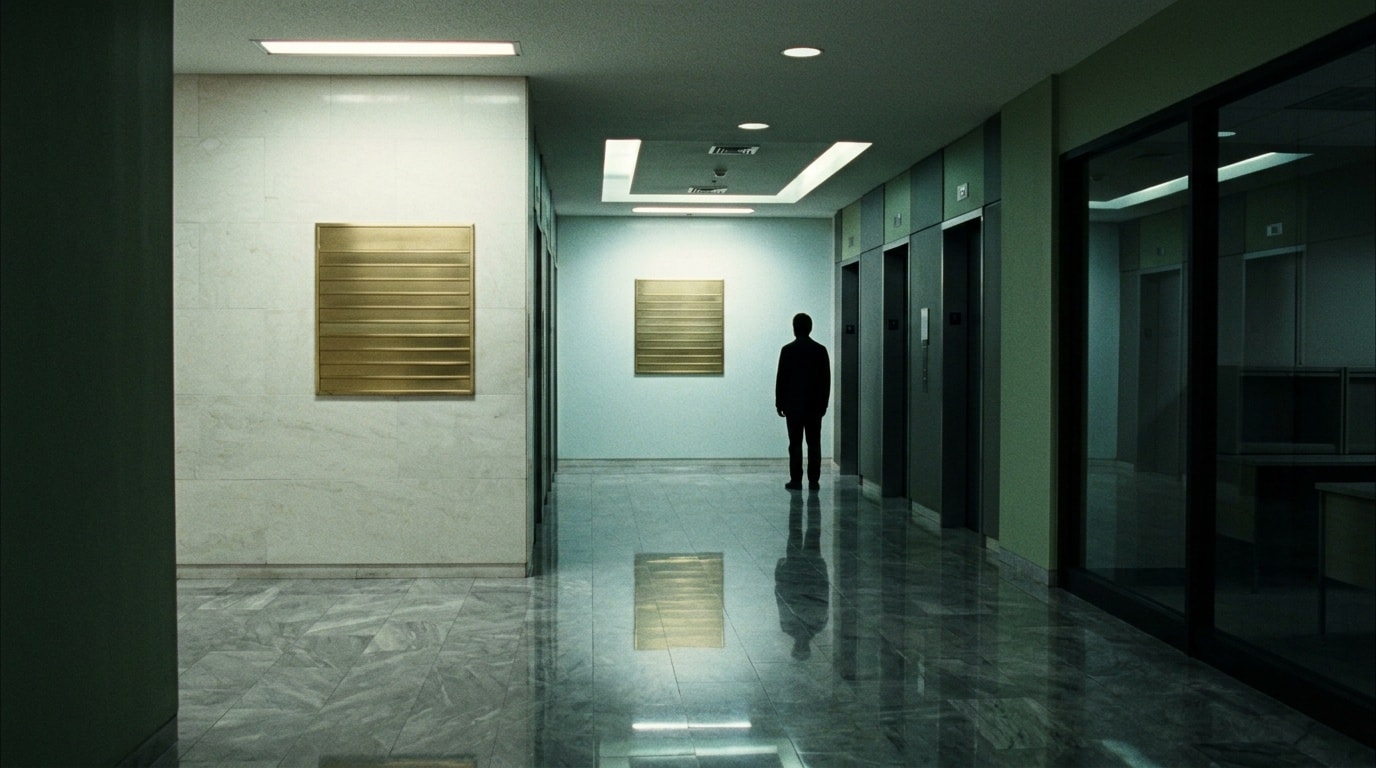
Irving's paintings depict a long dark hallway that viewers can directly compare to the corridor Milchick walks Ms. Casey through when escorting her to the testing floor elevator in this episode.
Dozens of compulsive identical canvases
Irving's outie apartment contains a series of paintings all depicting the same long dark hallway, and he begins yet another one in this episode, suggesting an obsessive, involuntary recurrence rather than artistic choice.
Red down arrow elevator detail
The paintings reportedly include a black elevator with a red downward arrow, matching the directional logic of the descent to the testing floor shown when Ms. Casey enters the elevator at the hallway's end.
Irving's anomalous MDR seniority
Irving is the longest-serving MDR employee and predates the emotional response protocol for data refinement, making him more likely than any other team member to have been subjected to early or experimental testing floor procedures.
Black ooze and black paint parallel
The black ooze that innie Irving has previously hallucinated corresponds to the black paint he uses obsessively as an outie, suggesting a single image or trauma crossing the severance boundary in two different forms.
Testing floor as disciplinary destination
Ms. Casey is sent down the hallway to the testing floor after being fired, establishing the corridor as a location associated with Lumon punishment or forced procedures, which would explain why a prior visit left a traumatic imprint.
Other Theories for S1E08
Gemma Never Died. She Was Severed.
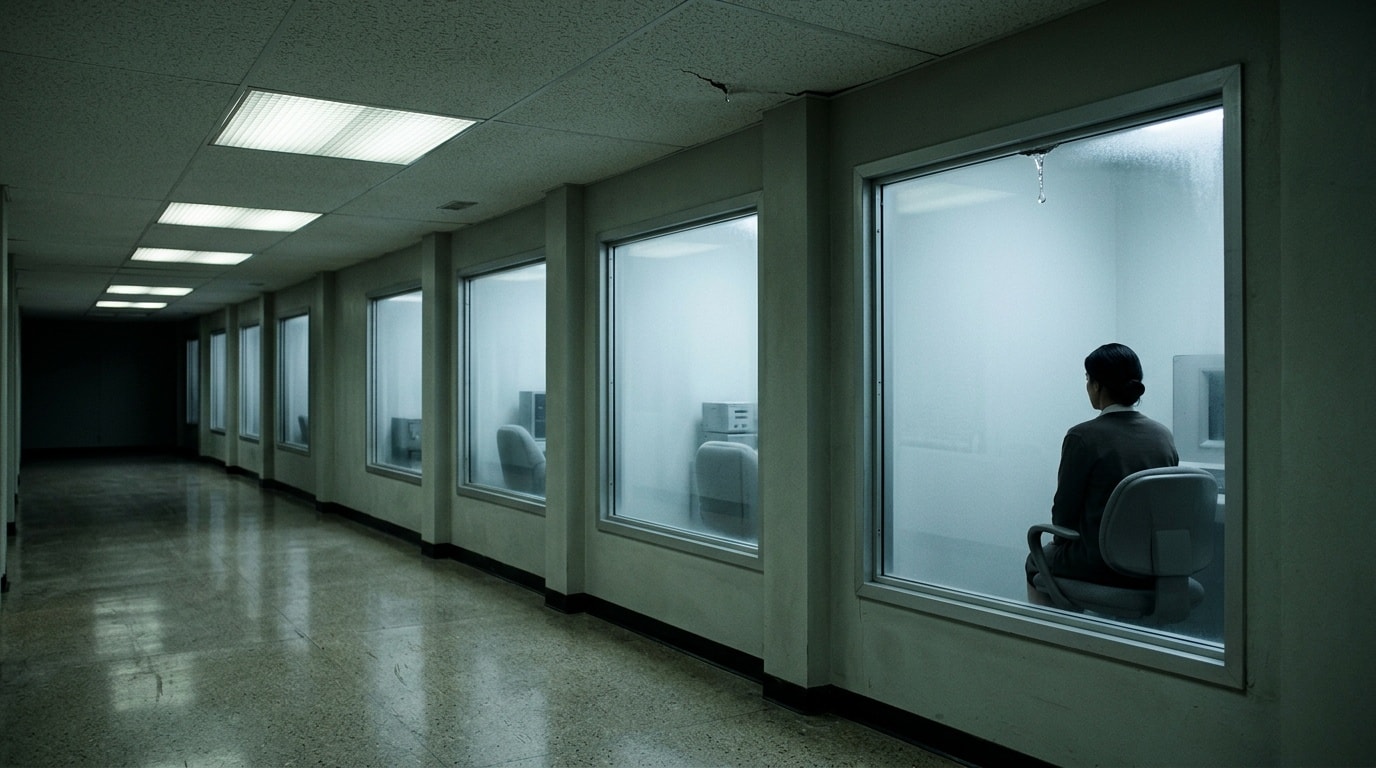
Lumon has not killed Gemma but is holding her in indefinite severance, compressing years of her life into 107 hours of innie consciousness while her husband grieves her death one floor above.
Milchick Applied Cobel's Lesson to Cobel
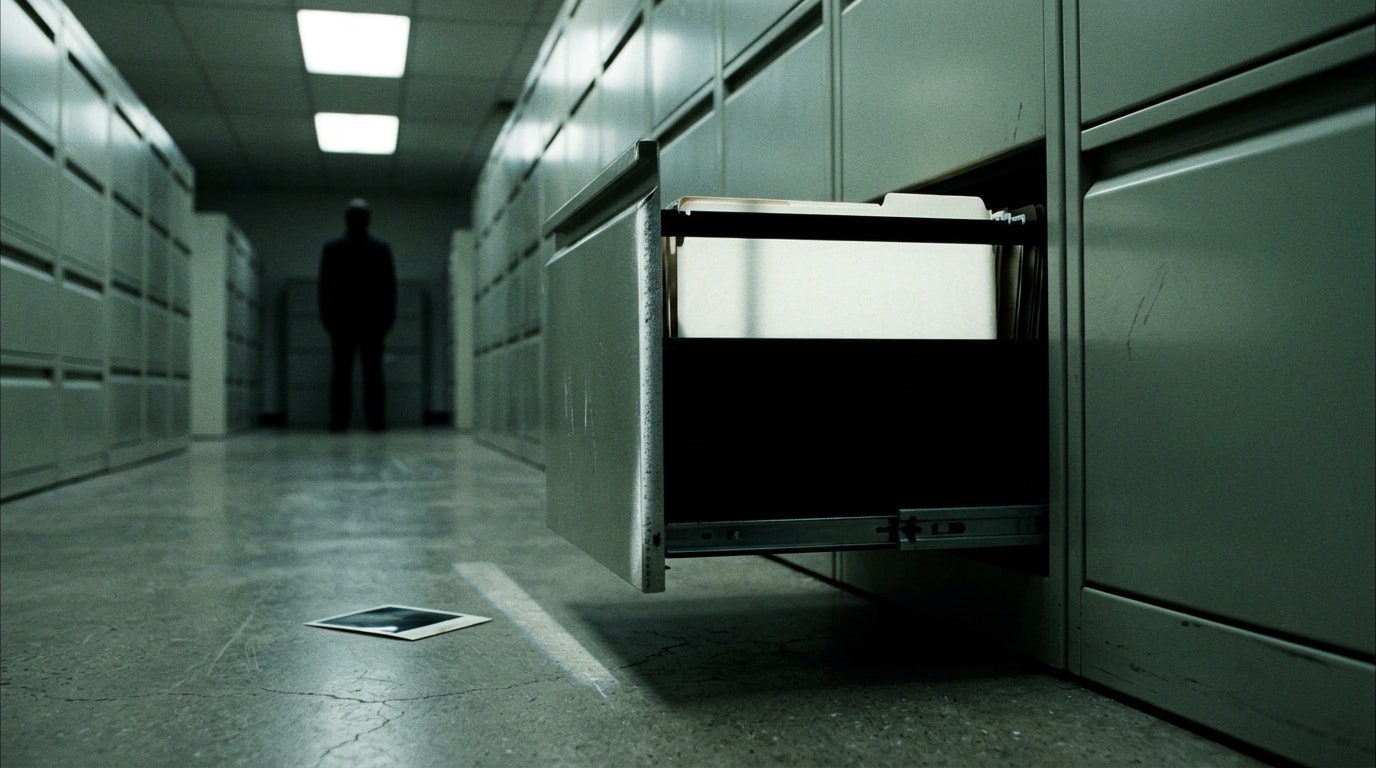
Cobel was not fired for breaking Lumon's rules but for treating her intelligence about MDR's instability as personal leverage rather than institutional property, and Milchick used that same logic to remove her.
Cobel Used Wellness Sessions as Chip Experiments
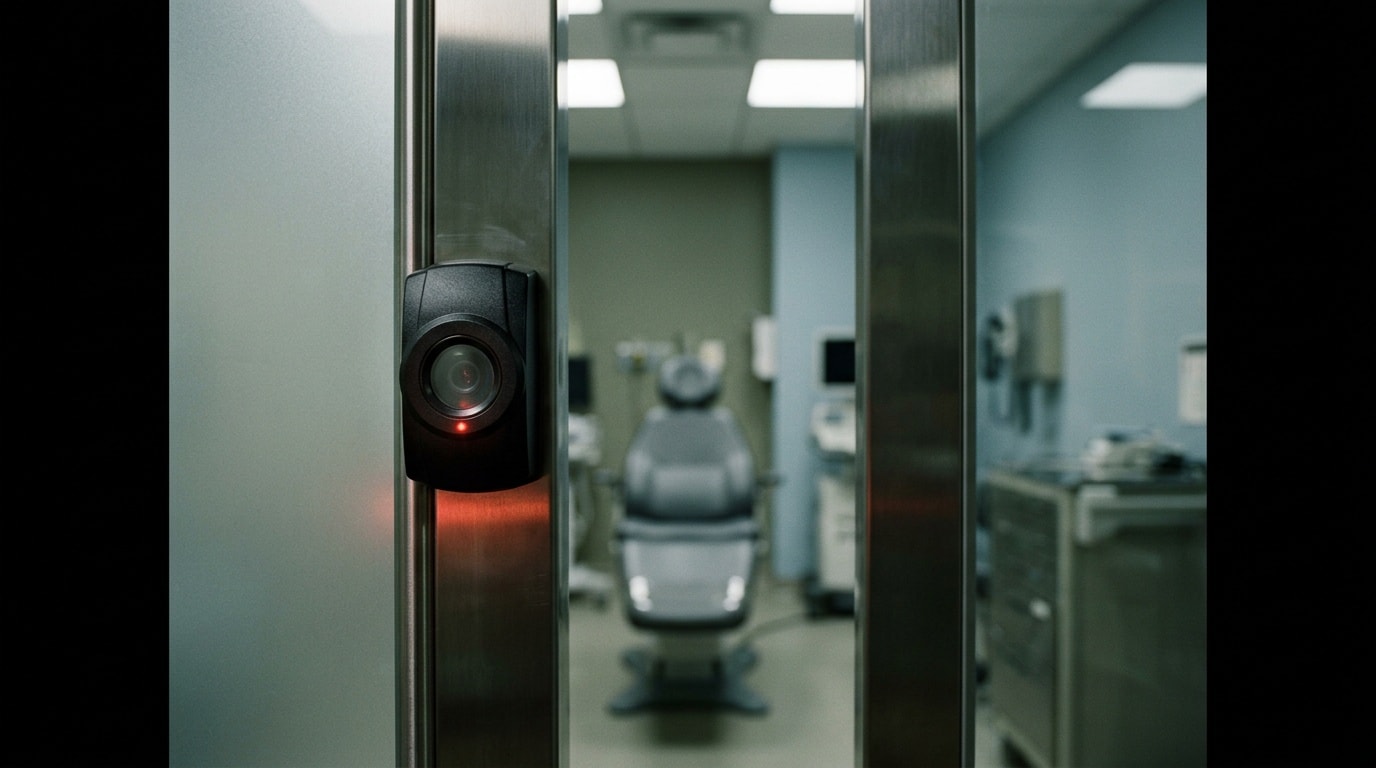
Cobel knew Ms.

Ms. Casey Watched Helly to Feel Alive
Ms.
Mark's Outie Is Already Walking Out
Mark's outie was moving toward quitting Lumon through covert encouragement from Cobel operating as Mrs.
The Waffle Party Is a Ritualized Lumon Ceremony
The waffle party is a ritualized Lumon ceremony engineered around each innie's individual desires, using personalized rewards to condition and leverage workers who cannot report the experience to their outie selves.
Irving's Apartment Hides a Lumon Connection
Lumon may be placing its severed employees in company-controlled housing, making outie autonomy an administered illusion rather than a protected condition.