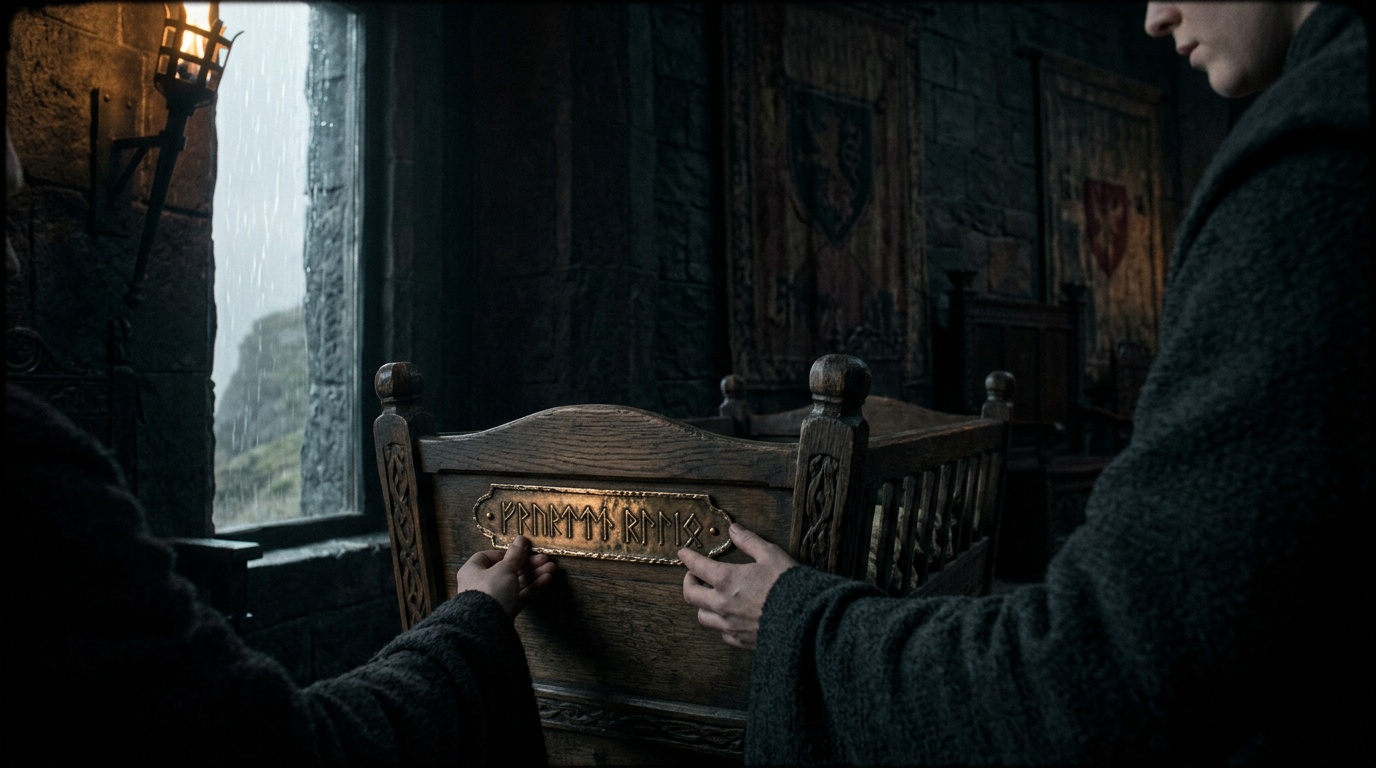
The Name Joffrey Is Laenor's Public Grief
THE THEORY
Laenor's choice of the name Joffrey is not grief seeking an outlet but refusal seeking a form: the one act of non-compliance with the marriage arrangement that cannot be punished because it cannot be proven. The show confirms the name but not the intent, which is precisely the condition Laenor required. By embedding his murdered lover's name into the royal succession, Laenor answered Criston Cole's impunity with the only permanence available to him.
How This Theory Works
Laenor names Rhaenyra's child Joffrey because he is not finished with Ser Joffrey Lonmouth, and he knows he never will be. The show has not confirmed this motivation. It is an inference. But the name itself carries almost no other plausible explanation: there is no Velaryon ancestor named Joffrey who would supply a dynastic reason, and Rhaenyra would have no personal attachment to the name. The only figure named Joffrey who mattered to either of them is the man who died on their wedding night.
What the theory approaches but will not quite say is this: Laenor is not merely grieving. He is refusing. The marriage arrangement depends on his compliance, on his willingness to absorb what happened and perform normalcy. Naming the child is the one act of non-compliance available to him that cannot be punished, because no one can prove intent. He is not confessing. He is insisting, in a register only those who already know can hear. The name is chosen precisely because it is deniable.
Criston Cole killed Lonmouth and faced no consequence. That impunity is the condition under which Laenor must live. The name Joffrey placed on a child of the royal succession is the structural answer to that impunity: Cole erased Lonmouth from the court's official memory, and Laenor embedded him into the line of succession. The grief is not private. It is disguised as something the court cannot touch.
Every time the child is addressed, every time succession is documented, the name travels with it. Laenor cannot publicly mourn Lonmouth, cannot acknowledge the relationship, cannot hold anyone accountable for what Cole did. The name is the only form of acknowledgment available to him that is also permanent, and he used it on the heir to the Iron Throne. The deeper implication is that Laenor understood exactly what he was doing, and did it anyway, knowing no one could stop him without admitting they understood the reference.
Is this theory convincing?
Key Evidence
Child Named After Murdered Lover
Laenor names Rhaenyra's newborn son Joffrey, the same name as his paramour Ser Joffrey Lonmouth who was killed by Criston Cole at the wedding feast in episode five.
No Dynastic Reason for Name
There is no notable Velaryon or Targaryen ancestor named Joffrey who would supply a conventional dynastic justification for the choice, making the tribute reading the only coherent explanation.
Marriage Arrangement Acknowledged Openly
This episode establishes that both Laenor and Rhaenyra understand their marriage is a performance of duty, with each maintaining private emotional lives, making the name a statement that Laenor's emotional life was shaped by Lonmouth's death.
Cole Escapes Punishment via Alicent
Criston Cole was not held accountable for killing Lonmouth at the feast, leaving Laenor with no public channel for grief or justice, which heightens the significance of the naming as his only available acknowledgment.
Lonmouth's Death Unaddressed at Court
The murder of Ser Joffrey Lonmouth was absorbed into the chaos of the wedding and never publicly attributed or punished, meaning the name Joffrey in the royal nursery is the closest the court comes to marking what happened.
Other Theories for S1E06
Alicent's Summons Is a Declaration of War
The summons is not a courtesy and not a tactical move to secure succession.

Daemon Killed Rhea to Reach Rhaenyra
Daemon did not simply kill Rhea to remarry.
The Green Cause Runs on Borrowed Conviction
The ideological coherence of the Green faction is a constructed artifact, not an organic political position.

Helaena's Cryptic Words Are Actual Prophecy
Helaena Targaryen carries genuine prophetic foresight through an inherited Targaryen gift she has learned no one around her can receive, and her apparent strangeness is the behavioral residue of that isolation rather than its cause.
Rhaenyra's Olive Branch Read as Weakness
Rhaenyra's betrothal offer was never meant to succeed.