
The Town Converts Through Open Wounds
THE THEORY
Fromville does not transform people uniformly. It identifies the specific unresolved grief or guilt a person has left structurally open and uses that opening as the channel of physiological entry. Fatima's conversion progressed through her perceptual bond with Smiley, a threshold she chose to cross. Boyd's conversion is progressing through his culpability in Abby's death, a threshold he has decided, on some level, not to close.
How This Theory Works
The numbers Kristi reads off Fatima's examination are not a warning. They are a verdict on a process that has already completed its foundational work. A heart rate of 19 beats per minute and a blood pressure of 53 over 23 are not compatible with human survival. The discolored veins on Fatima's abdomen are not a symptom to be monitored. They are the visible surface of a circulatory system that has already been restructured on non-human terms. The fact that Fatima is ambulatory, alert, and strategically functional at these readings does not mean she is winning against the process. It means the process is finished with the infrastructure stage and has moved on.
The cold sensation Fatima reported while seeing through Smiley's eyes is the entry point into the theory's larger architecture. She did not simply access his vision. She briefly inhabited his condition, and the overlap left a door open between her biology and his. Creatures run cold. Creatures fall dormant in daylight. Creatures do not operate on human circulatory terms. Fatima's physiology is not declining toward death. It is migrating toward that template. The bond with Smiley was the channel the town selected because it was the channel Fatima herself opened, through curiosity, through desperation, through the decision to reach across a perceptual threshold she understood was dangerous and crossed anyway. Mari's argument that this makes Fatima an asset is the theory's most damning data point. The ability to exert volitional control over a creature is not a power Fatima has acquired. It is a symptom of what she is becoming. If the town engineered this outcome, Smiley was never the subject. He was the vector. Fatima's investment in framing herself as the one who wields the power rather than the one being shaped into a weapon is not strength. It is the last human reflex operating before that reflex stops being available.
Boyd's case follows the same structural logic but enters through a different wound. His tremors and hallucinations are not two problems converging on a man under stress. They are one process that has selected its architecture inside him with specific precision. The town does not give Boyd generic sensory interference. It gives him Abby's hands. It gives him the gunshot. The content is not random. It is targeted at the exact event Boyd has never resolved his role in, and the timing of the tremors is not incidental either. Boyd's body shakes at the moments he tries to articulate what is happening to him, collapsing the boundary between the physical symptom and the perceptual intrusion in real time. Kristi asks directly whether the two share a cause. Boyd hesitates. That hesitation is not the pause of a man who lacks data. It is the pause of a man who suspects the answer is yes and cannot determine whether confirming it would be a relief or a condemnation.
The distinction between Fatima's case and Boyd's is not severity. It is consent architecture. Fatima crossed her threshold actively. She reached toward Smiley, experienced the cold, and survived the crossing without fully understanding what she had permitted. The town entered through a door she opened from her side. Boyd's door was left open by something he did before the town was involved, and the town is exploiting a structural vulnerability that has been present in him since Abby died. His tremors intensify under pressure. His visions invoke the specific death he carries responsibility for. A man fighting a supernatural process from outside himself fights it. Boyd does not fight. He endures, explains, and defers. That behavioral signature is not leadership under pressure. It is the posture of someone who has, at some level, granted the process a degree of legitimacy because he suspects he deserves it. That self-conviction is not incidental to what is happening to his body. It is the mechanism that keeps the door from closing.
Kristi's admission that she may have nothing to offer Boyd is not a statement about the limits of field medicine in a crisis. It is a statement about category. What is happening to both Fatima and Boyd does not belong to the domain medicine was built to address, because it is not deterioration. It is modification, and the modification is personalized. The town does not push a uniform process into every body it selects. It finds the guilt or grief a person has left structurally open and uses that specific opening as the channel. Fatima's wound was a chosen perceptual crossing. Boyd's wound is a death he believes he caused and has never closed. The process is the same. The architecture is bespoke.
Is this theory convincing?
Key Evidence
Vital Signs Incompatible With Life
Kristi's ultrasound and examination reveal Fatima's heart rate at 19 beats per minute and blood pressure at 53 over 23, readings that Kristi acknowledges would normally indicate she should already be dead.
Discolored Veins on Abdomen
Kristi and Mari observe discolored veins on Fatima's abdomen during the ultrasound examination, a visible physical change that Kristi says she would diagnose as varicose veins in a normal context but acknowledges they are well beyond a standard diagnosis.
Cold Sensation During Smiley Link
Fatima reports that when she was seeing through Smiley's eyes and stopping him from killing Kenny, she felt cold, a sensory overlap with a creature's physiology that she did not feel before the link.
Creatures Were Once Human
Fatima recalls Boyd's statement that the creatures used to be human, and directly voices her fear that she may be undergoing the same transformation, connecting her symptoms to the known origin of the Township's monsters.
Condition May Be an Asset
Mari argues that Fatima's deteriorating physical state may not be a bad thing because it allowed her to control a creature and save Kenny, framing the transformation as a potential weapon rather than a death sentence.
Daytime Hibernation Physiological Parallel
The creatures appear to exist in a dormant or reduced-activity state during daylight hours, and Fatima's drastically lowered heart rate and cold sensation are consistent with her body beginning to mirror that same daytime physiological state.
Other Theories for S4E08

Sophia Engineered Henry to Kill Victor
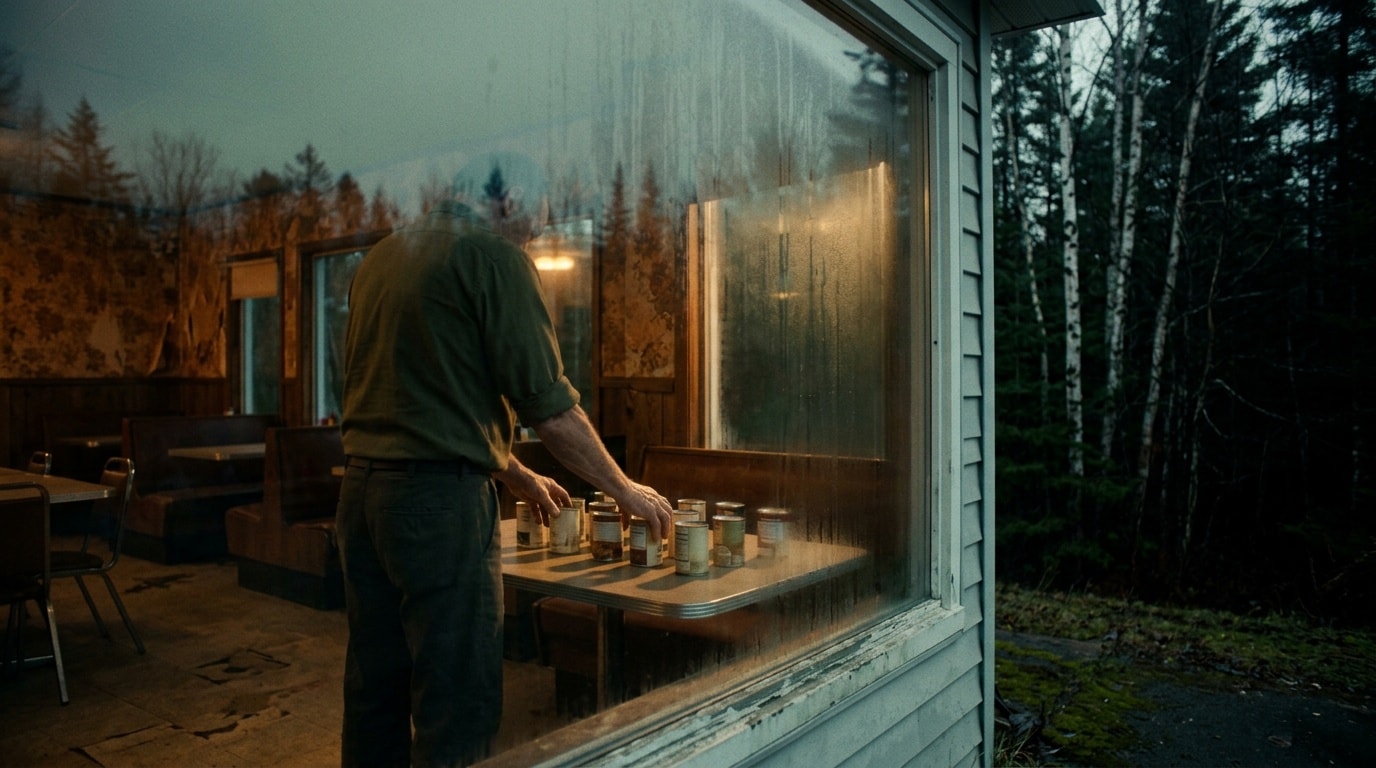
Henry's escalating visions are not a breakdown but a precision delivery system, initiated through blood contamination at the bar and calibrated to his specific grief inventory to make Victor the logical obstacle his vision-world demands he eliminate.
Victor Is Training His Own Replacement
Victor is the town's instrument for cycling its own survival logic forward, preparing Ethan not out of compassion but out of institutional compliance with a system that has already selected which child remains.

Boyd's Authority Is the Architecture of His Destruction
Boyd's hallucinations are not random psychological deterioration — they arrive with structural precision at command-critical moments, targeting the exact wound that cannot be treated or disclosed.

Tabitha Has Lived This Before
Tabitha is not a stranger to the Man in Yellow but a collaborator whose memory of their shared history is structurally suppressed at the start of each cycle, not accidentally lost.

Tabitha's Surrender Costs Her a Daughter
When Tabitha finally lets Victor teach Ethan how to survive alone, she is not accepting a precaution.

Jade's Hard Decisions Are the Real Exit
Jade believes escape from the town has always been gated behind a willingness to deliberately sacrifice lives, and that every failed attempt collapsed at that moral threshold rather than a tactical one.
Sophia Needs the Suit to Transform
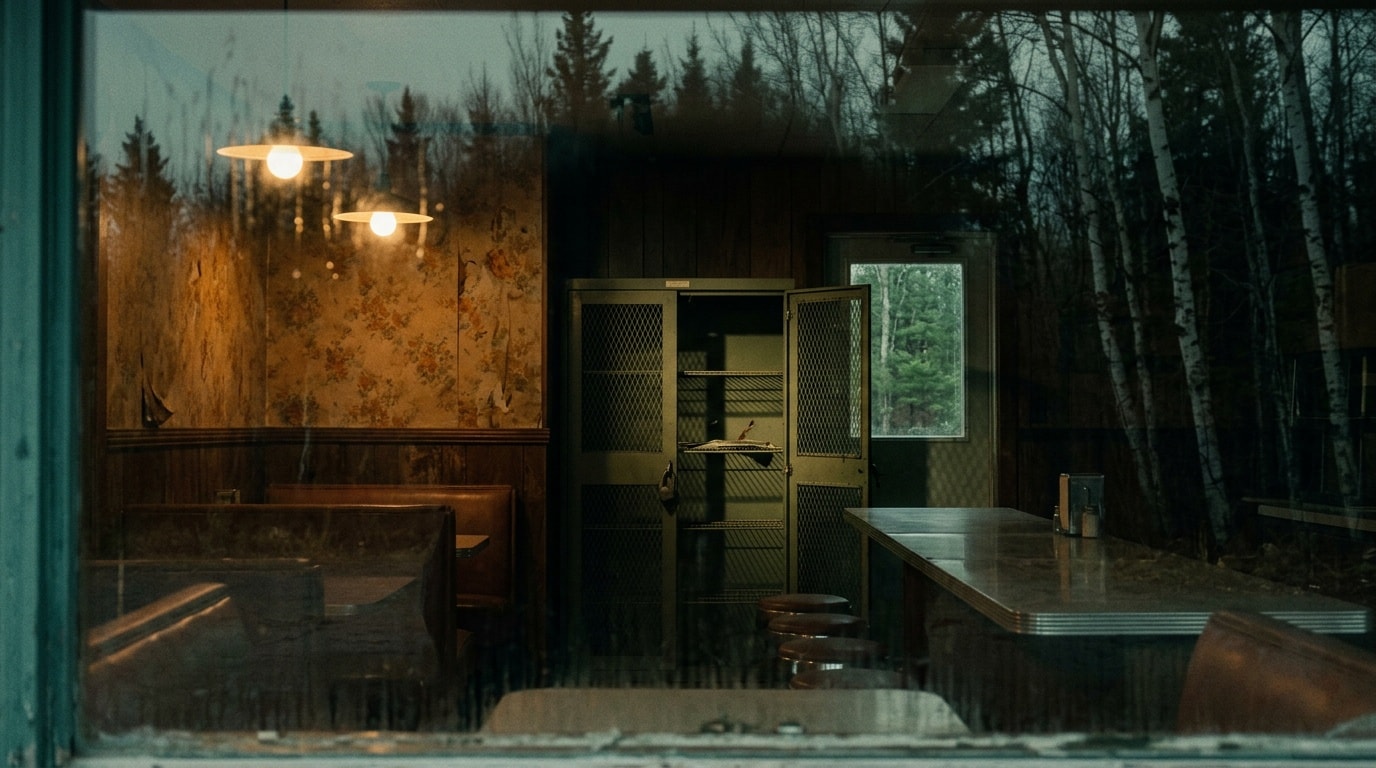
Sophia retrieved the yellow suit because she needs it to transform, not as a trophy or act of curiosity.

The Man in Yellow Cannot Dig Up the Bones — So He Is Making the Township Do It
The Man in Yellow is not warning the township away from the children's bones; he is steering them toward a specific method of retrieving those bones that will release him rather than the children.