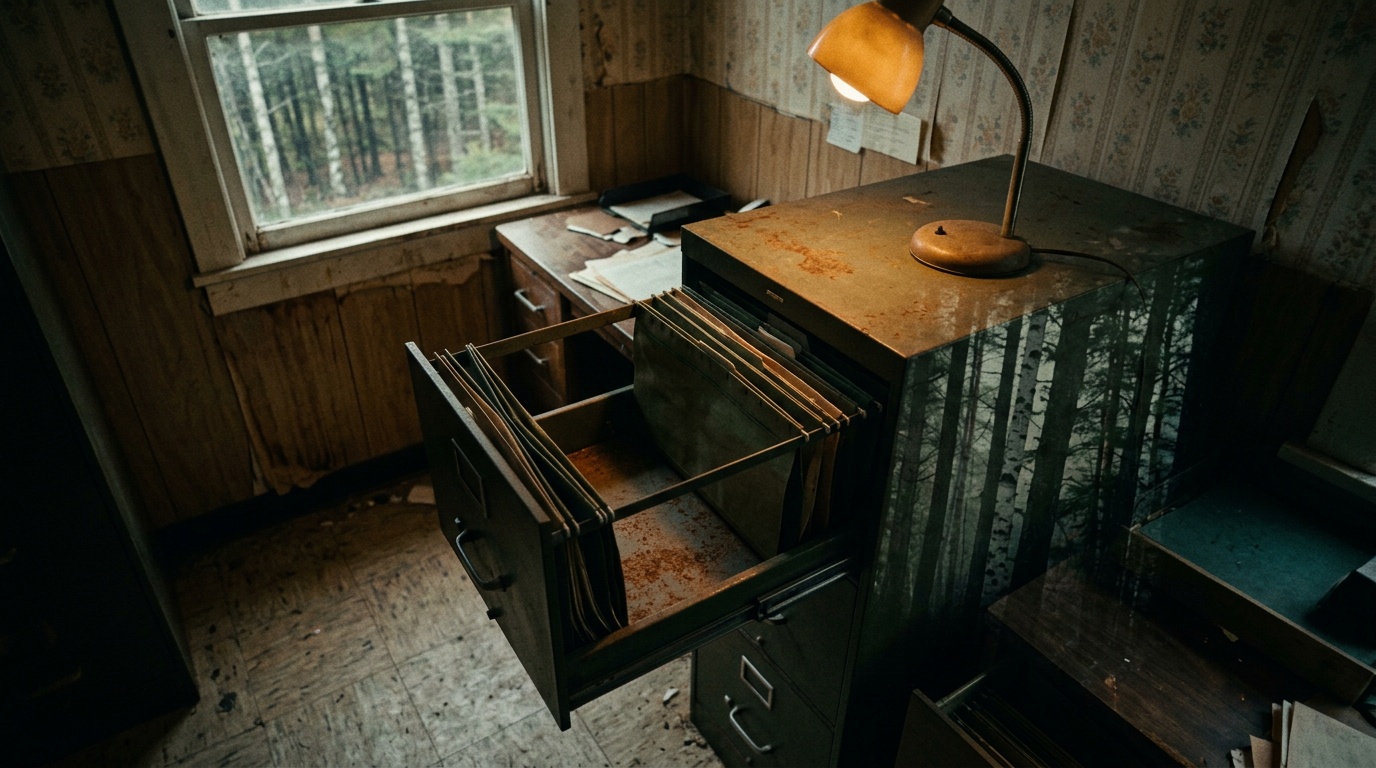
The Night Miranda Walked to the Lighthouse Rewired Victor's Every Silence Since
THE THEORY
On the night the town was destroyed, Victor's mother Miranda left him hidden in a cellar and walked to the lighthouse to free imprisoned children; his sister Eloise followed her and never returned. That single night, with Miranda's failed rescue and Eloise's disappearance, did not merely traumatize Victor. It taught him a lesson he has been living inside ever since: that pursuing this town's truth kills the people you love, and that the only survivable response is to manage what others are allowed to know.
How This Theory Works
The evidentiary anchor for everything that follows is a toy in a coat pocket. When Ethan finds it and hands it to Victor, the reaction is not nostalgia; it is a wound reopening in real time. The flashback confirms the specificity of the original scene: Miranda placing that toy in Victor's hands in a cellar outside of town, asking him to be brave, setting out on a deliberate errand she had chosen. She was not fleeing the catastrophe. She was moving toward it with a purpose. According to what Victor has since shared with Tabitha, that purpose was the lighthouse, where Miranda believed children were locked in the tower and needed freeing. Eloise, too young to stay still when her mother walked into danger, followed her. Victor, who obeyed the instruction to remain hidden, survived. The coat survived. The toy survived, undisturbed in its pocket for decades. Eloise did not come back, and neither did Miranda.
The biographical reconstruction that emerges from these converging records (Victor's flashback, Eloise's drawings of a tower, Victor's account to Tabitha) is precise enough to anchor a psychological argument. Miranda ran a protocol that night: hide the children, give them something to occupy their hands, do not let them see what is outside. She told Victor they were going home after the rescue, which means she believed completing the lighthouse mission was the condition for leaving. The protocol failed. Eloise ran toward what her mother ran toward, which is the exact movement Miranda's protocol was designed to prevent, and the tower took them both. Victor was left with the survival, the toy, and the knowledge of exactly what sequence of events had just concluded. He was also left, without knowing it yet, with the template for every act of concealment he would practice for the rest of his life.
The connection between that childhood catastrophe and Victor's present behavior is not merely thematic. It is structural, and the structure becomes visible the moment Jade confronts him in the diner. Victor had already identified the cave location for Tabitha, meaning the gap in what he shared with Jade was chosen, not accidental. When Jade states directly that every unexplained thing in the town connects back to Victor, Victor does not refute the claim. He leaves. That non-denial, from a man who selects his words with the care of someone who has had decades to consider them, is the most important beat in the exchange. Victor is not protecting himself from exposure. He is running a version of his mother's protocol: controlling what the person in front of him is allowed to know, withholding the precise piece of information most likely to send them toward the Caves, because the Caves lead to the lighthouse, and the lighthouse is what the symbol guards, and Eloise ran toward what Miranda ran toward. He has the longitudinal data on this sequence. Every iteration has ended the same way.
This reframes Victor's refusal of Ethan's drawing with uncomfortable precision. His stated reason, "pictures are for things that are gone," is not the private syntax of a reclusive man. It is a rule derived from catastrophe. Ethan is a child making pictures in a dangerous place at an adult's prompting, which is the structural arrangement Victor watched kill Eloise. Miranda told her daughter to draw while she went outside, and Eloise drew until she didn't, and then she ran. The car trunk full of Victor's own accumulated drawings is not an art project. It is a decades-long compulsive rehearsal of the last thing his sister was doing before she disappeared, a grief ritual he may never have consciously named, continued for so long that it has become indistinguishable from his personality. Refusing Ethan's drawing is a refusal to admit a living child into that ritual, and more urgently, a refusal to occupy the role he has been avoiding since childhood: the adult whose instruction a frightened child followed into danger.
This is where the two dimensions of the theory collapse into a single argument. Victor's silence about the cave location and Victor's buried grief over Eloise are not parallel observations. They are the same fact viewed from different distances. He does not believe that knowing the symbol's meaning protects anyone, because he watched his mother approach the lighthouse with exactly that conviction and the lighthouse took her. Tabitha's recurring pull toward the tower, her refusal to reenter the caves despite bringing Jade to their mouth, suggests the mechanism Miranda walked into is still running: that the children she went to free may still be there in whatever form the town keeps cycling back to, and that people who approach it believing they are close to going home do not return. When Victor tells Jade this place is his home and refuses the premise of escape, he is not expressing resignation. He is expressing the only stable conclusion available to someone who has spent a lifetime watching the lighthouse collect the people who move toward it. His silence is not an obstacle to understanding the town. It is his understanding of the town, expressed as the only protocol he knows how to run: the one his mother taught him, the one that saved him and failed everyone else.
Is this theory convincing?
Key Evidence
Symbol, Children, Creatures Same Location
Tabitha tells Jade that the mouth of the Caves is where she first saw the Children and the symbol, as well as the sleeping Creatures, establishing a single spatial nexus for three distinct supernatural phenomena.
Jade's Chaos Theory Argument
Jade explicitly invokes chaos theory to argue that the symbol and the Children appearing in the same location cannot be coincidental, framing the connection as a systemic rather than accidental relationship.
Victor Withheld Cave Symbol Location
Jade confronts Victor in the diner, pointing out that despite their deal, Victor told Jade about the symbol but deliberately omitted its presence in the Caves, which Victor had already identified for Tabitha.
All Strange Events Connect to Victor
Jade makes the direct assertion that all of the unexplained things they have witnessed in the town are connected to Victor, and Victor does not refute this claim before walking away.
Victor Refuses Ethan's Drawing
Victor declines Ethan's gift with the explanation that 'pictures are for things that are gone,' a statement that implies long familiarity with loss and knowledge of outcomes that others in the town do not possess.
Victor Deflects and Departs the Diner
When Jade presses Victor about why he withheld the cave information, Victor does not offer a substantive answer and instead physically removes himself from the confrontation, a pattern of evasion consistent with deliberate concealment.
Tabitha Refuses to Reenter Caves
Despite bringing Jade to the cave mouth to share what she saw, Tabitha refuses to go back inside, which limits the investigation and highlights how much the group depends on Victor to bridge the gap between the symbol's location and its meaning.
Other Theories for S2E08
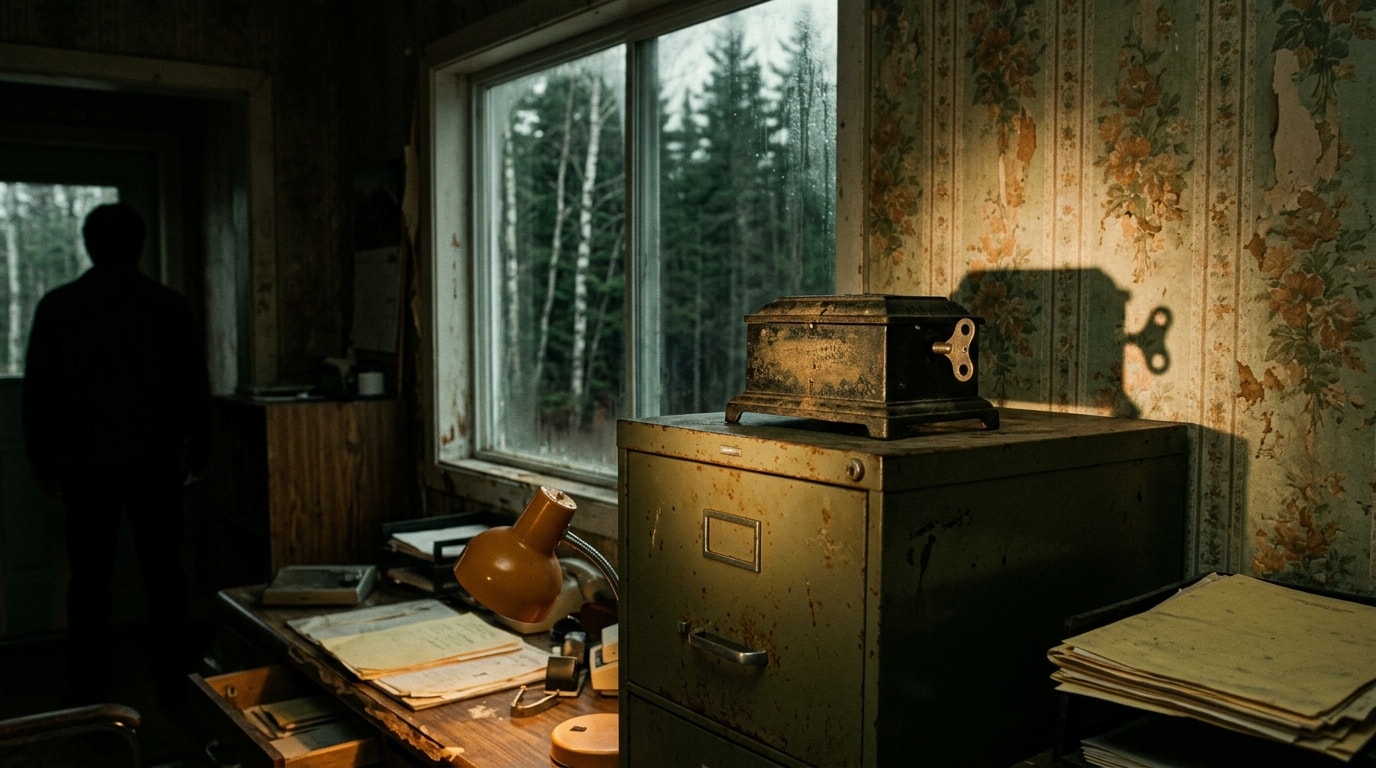
The Melody as Warning, Weapon, and Key
The music box is an active targeting mechanism that marks its recipients through dream contact, and the burn on Kenny's arm is evidence that being reached by the melody is indistinguishable from being selected by it.
Donna Is the System's Active Instrument, and Randall Has Moved to Extract Her
The town's orientation apparatus (Boyd, Donna, Father Khatri briefing newcomers in consistent sequence) is too structured to be improvised survivor wisdom, and Donna's three episodically precise appearances at sensitive interrogation moments confirm she functions as an active information suppressor rather than a fellow victim.
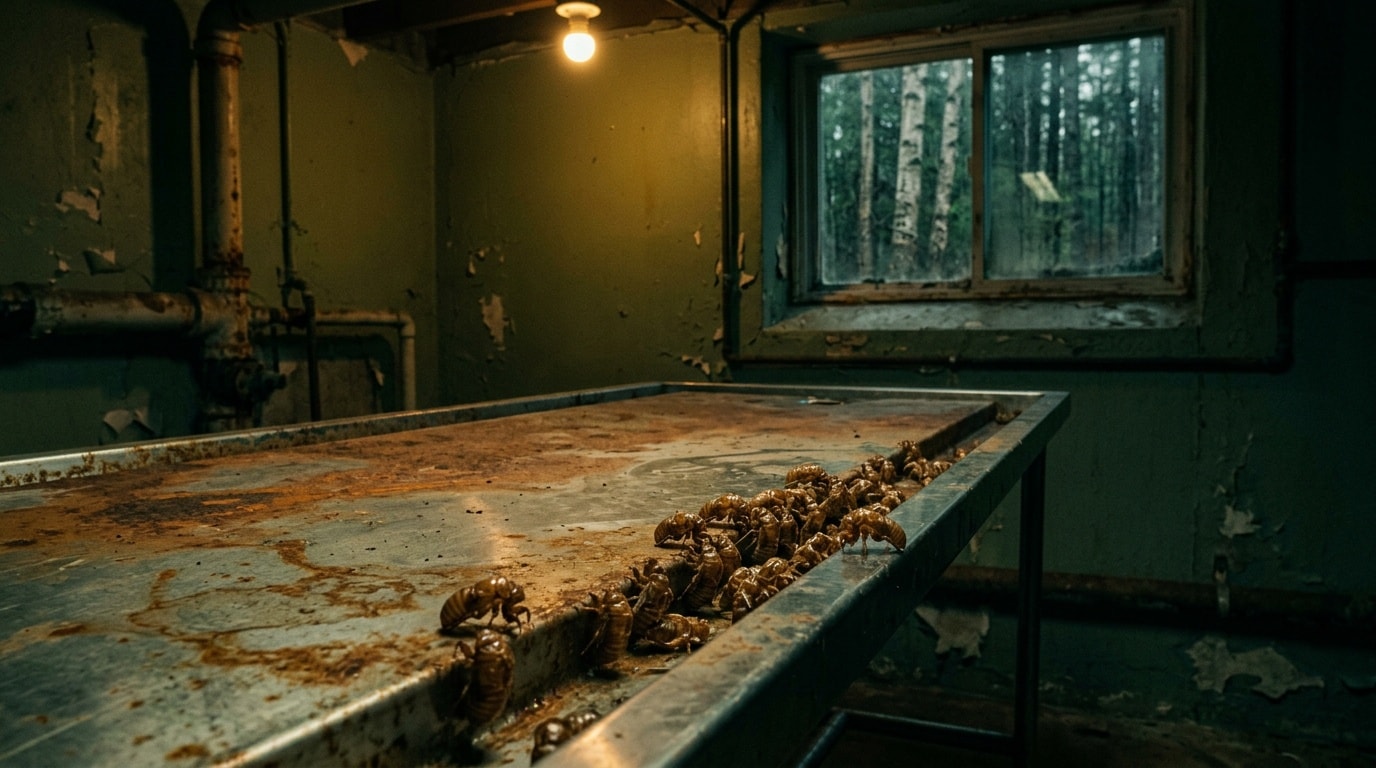
Cicadas as Transformed Parasitic Worms
The town's infection operates through a biological life cycle, and the cicadas appearing in Kenny's nightmare and across the creature's corpse mark the moment the parasitic worms previously extracted from inside the creature completed a transformation into a form that cannot be contained.

Stopping the Melody Could End the Curse
The voice in Kenny's dream positions stopping the music box's melody as the single conditional that changes the town's outcome, and the rhyme's framing, 'no one here is free' followed immediately by that condition, implies the melody sustains captivity rather than preventing harm.