Khatri's Ghost Is Boyd's Own Mind
THE THEORY
Boyd's visions of Father Khatri are not supernatural contact but a self-generated moral tribunal, produced by guilt and potentially accelerated by worm-induced cognitive deterioration. The Khatri figure reveals nothing Boyd does not already know and speaks in Boyd's own register, confirming the vision as a projection of his conscience rather than an external force. If Boyd can only confront his own culpability by hallucinating a dead man's permission, his authority as Fromfield's de facto leader is collapsing in precisely the domain he has always claimed as his strength.
How This Theory Works
Boyd is not receiving guidance from Father Khatri. He is staging a moral trial for himself and casting a dead man as the prosecutor because he cannot bear to be both defendant and judge.
The content of the vision confirms this. Khatri reveals nothing Boyd does not already know. He presses Boyd on the moral cost of secrecy, specifically whether Boyd will tell Kenny the truth about his father's death and about Sara. This is the question Boyd has been circling. The vision dramatizes his conscience rather than delivering information from outside it. The Khatri figure even adopts Boyd's own sardonic register, a detail that collapses the distance between the two men entirely. Boyd is not being addressed. He is talking to himself in a voice he finds harder to dismiss than his own.
The worm infection adds a physiological dimension that makes the hallucination harder to romanticize. Boyd's symptoms are visible and worsening. Kristi asks about cognitive impairment. Boyd himself raises his father's mental decline, which is not an idle reference. The show plants the possibility that the infection is beginning to degrade his mind, which would make the Khatri vision a neurological symptom as much as a psychological one. The cause may be guilt, or it may be the worms, but either way the vision points inward rather than outward.
This is what separates Boyd's experience from the genuine supernatural contact the show has established elsewhere. Sara describes the Boy in White as a distinct, purposeful presence that delivers real guidance she could not have generated herself. The Khatri vision offers no such externality. It brings Boyd nothing he did not already carry.
The sharpest implication is not that Boyd is hallucinating but that he has lost the capacity to distinguish his own moral reasoning from an authoritative external voice, and that he requires the fiction of Khatri's presence in order to take his own conscience seriously. A man who can only hold himself accountable by hallucinating a dead priest is not a man whose judgment should anchor a community's survival. Boyd has not been broken by Fromfield's monsters or its landscape. He is being unmade by the weight of what he already knows and refuses to say aloud without a ghost's permission.
Is this theory convincing?
Key Evidence
Khatri Appears at Boyd's Desk
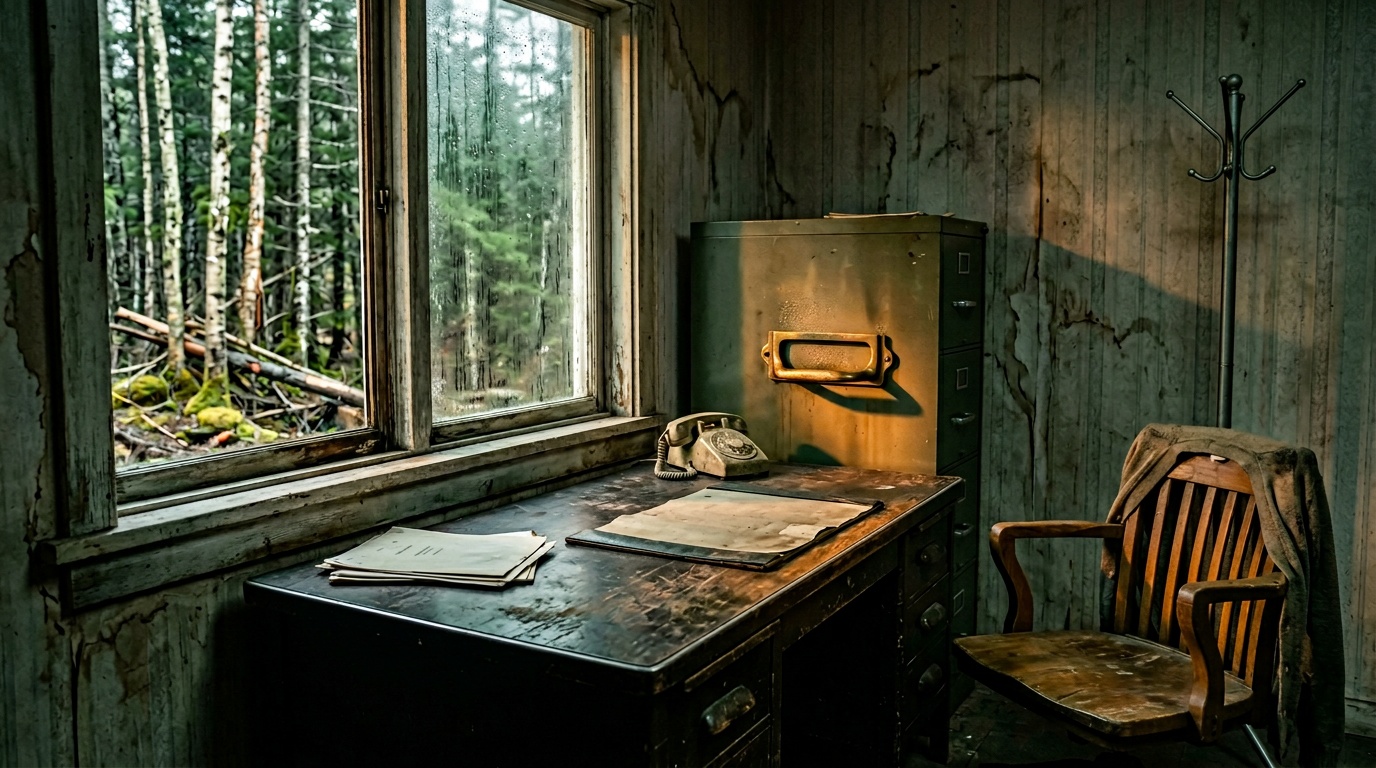
Boyd exits the bathroom to find Father Khatri, who is long dead, sitting at his desk, prompting immediate shock that signals the encounter is a hallucination or dream rather than genuine contact.
Vision Mirrors Boyd's Inner Conflict
The Khatri figure presses Boyd on whether to reveal the truth about his father's death to Kenny, a dilemma entirely internal to Boyd, suggesting the vision externalizes his own guilt rather than delivering new supernatural information.
Boyd Recognizes It as Hallucination
Boyd's behavior during the encounter indicates he understands he is not speaking to the real Khatri, yet continues the conversation, implying awareness of the vision's internal origin.
Khatri Matches Boyd's Mocking Tone
The vision of Khatri adopts a tone that mirrors Boyd's own sardonic register, reinforcing the reading that the figure is a projection of Boyd's consciousness rather than an autonomous supernatural entity.
Worm Infection and Cognitive Symptoms
Kristi examines Boyd this episode and asks about cognitive impairment; Boyd himself raises his father's mental decline, and the visible worms beneath his skin raise the possibility that the infection is generating the hallucination.
Contrast With Boy in White Contact
Sara describes the Boy in White as a distinct, purposeful presence offering real guidance, which sets a baseline for genuine supernatural contact and makes Boyd's Khatri vision look comparatively self-generated by contrast.
Other Theories for S2E04
Boyd's Body Is Being Claimed by the Town
Something the town introduced into Boyd during his passage through the forest with Sara is now spreading through him in a sequence that mirrors his father's mysterious decline.
Boyd's Slip Destroys the Deputy Role He Created
Boyd accidentally confirms Sara's multiple forest kills while trying to rhetorically suppress them, and the timing is catastrophic: the admission lands at the exact moment Kenny's newly accepted deputyship is most symbolically charged.
The Town Transmits Through Fractured Minds That Know How to Keep Quiet
The town's actionable intelligence does not distribute freely; it moves through a narrowly qualified class of receivers who meet two sequential conditions: psychological fracture that opens the channel, and the behavioral discipline to hold received information privately rather than diffusing it as alarm.
Fromville Is an Extraction System, and Jim Matthews Is Its Assigned Interlocutor
Fromville was not built to contain its residents but to extract authentic reactions from subjects who cannot fake them, a distinction that reframes every strange feature of the town as deliberate experimental architecture.
Sara Killed Bing-Qian, Not the Creatures
Boyd knows Sara killed Bing-Qian at the clinic and has actively concealed this from Kenny, not out of debt or protective instinct, but because confessing would expose how long he has known and destroy the authority his relationship with Kenny grants him.
Sara's Unique Bond With the Town's Trees
The theory holds that Sara possesses a singular supernatural connection to the town that allowed the tree to transport her directly back to the Church basement.