
The Creatures Are Fluent in the Town's Rules -- and in Ours
THE THEORY
The creatures did not simply survive Kelly; they engineered her survival by deploying two interlocking competencies: a fluency with the town's rules that allowed them to hold her body at the precise threshold between death and function, and a fluency with human infrastructure demonstrated by the theft and repurposing of Kenny's iron trap rod. The colonists' compulsion to investigate and solve impossible survivals is not an incidental response to these scenarios; it is their purpose. The open question the evidence cannot yet close is whether the creatures authored this script or are themselves following one.
How This Theory Works
The creatures need Kelly to be found. Every other reading of her survival is less precise than that one. The rod placement kept her conscious, upright, and capable of speech at exactly the threshold where she could report what happened to Brian. She was pinned to a tree, not discarded. She was given a message to carry — they wanted to play — and then held in place until someone would come to carry it for her. The play is not with Kelly. It is with the people who pull the rod free, move her back inside the walls, and dedicate their remaining energy to understanding what they just witnessed.
The iron rod sharpens this beyond a theory about anatomical knowledge. When Kenny checks his trap and confirms the rod is missing, the creatures' competency expands from biological to infrastructural. They did not find a stick. They located a human-made object in the forest, assessed its functional value as an instrument capable of pinning without killing, retrieved it, and deployed it with enough precision to achieve a specific endpoint: a living, pain-free, suffering victim who could speak. That sequence is not improvisation. It requires prior knowledge of the trap's existence, prior knowledge of the rod's properties, and prior knowledge of the outcome the scenario required. The creatures are not scavenging human tools. They are infiltrating human systems to stage scenarios that have predetermined conclusions.
Kelly's complete absence of pain is the evidence that forces the theory's hardest question. A metal rod driven through a human skull does not produce a conscious, pain-free person. The show has not yet provided the mechanism that explains her condition, and that gap is not incidental. It is the operative space where the two available explanations diverge completely. Either the creatures carry a preserving power they apply selectively, suppressing death and pain as a deliberate act, or they understand the town's rules well enough to use those rules as instruments, positioning Kelly's body inside a threshold the town itself enforces. These are not equivalent. One locates the agency entirely in the creatures. The other locates it in a system the creatures have learned to operate, which means someone or something established that system before them. Boyd's condition (entities moving beneath his skin, his blood declared Martin's blood after a single slash) confirms that Kelly is not an anomaly. The town permits impossible biological states with regularity, and the source of each one traces back to the creatures or their proxies. The pattern is not ambient. It is administered.
The colonists' response completes the mechanism. Every impossible body the town produces becomes a problem the survivors feel compelled to solve. They investigate, theorize, and exhaust their resources trying to understand what the rules are, which is precisely the behavior that keeps them engaged with a system the creatures already understand completely. The compulsion to investigate anomalies is not a character flaw or a narrative convenience. It is the control mechanism. Each delivered survivor, each impossible wound, each pain-free report of what the creatures said and did, functions as a steering instrument: orienting attention, directing movement, and drawing the colonists deeper into fluency with a logic that was never designed to help them escape it. The creatures are not using Kelly's survival as cruelty toward her. They are using her as infrastructure.
Where the evidence cannot resolve, and where the theory's most productive tension lives, is whether the creatures designed this architecture or inherited it. The theatrical quality of the Kelly scenario, the verbal declaration of intent before action, the selection of a prop from human inventory for a scenario with a specific required endpoint: these details are consistent with sophisticated predators who have had a long time to learn. But they are equally consistent with actors executing a script they did not write. If the town's rules about survival are not the creatures' invention but a system they have been trained to operate within, then the question of authorship recedes to something older and more structural than creature intelligence. The rod taken from Kenny's trap may be the clearest evidence that the creatures are integrating human presence into an existing framework, which implies the framework was waiting for human presence to arrive.
Is this theory convincing?
Key Evidence
Kelly Reports No Pain at All
Kelly tells Ellis directly that the metal rod driven through her head does not hurt, which is physiologically impossible under normal conditions.
Creatures Stage Kelly as Witness
Kelly recounts that the creatures dragged her and Brian out, pinned her to the tree, and explicitly made her watch as they killed Brian, framing her survival as intentional staging.
Iron Rod Pinned Through Living Skull
Ellis and Kenny find Kelly conscious and gasping, with the iron trap rod driven through her head and pinning her to a tree, a wound that should be immediately fatal.
Creatures Announce Intent to Play
Kelly reports the creatures told her they wanted to play with her, suggesting the elaborate staging of her injury was purposeful rather than a byproduct of violence.
Boyd's Worms Mirror Town's Body Rules
Boyd examines his arm in the mirror trying to detect worms moving beneath his skin, a condition passed by Martin's slash, showing the town allows impossible biological states beyond Kelly's case.
Town's Pattern of Miraculous Survival
Kelly's inexplicable survival joins a prior pattern of the town sustaining life beyond normal limits, suggesting a systemic property of the place rather than a one-time anomaly.
Anatomical Precision as Knowledge
The rod's placement kept Kelly alive, conscious, and capable of speech, implying the creatures understand human anatomy well enough to cause maximum suffering without causing death.
Other Theories for S2E03
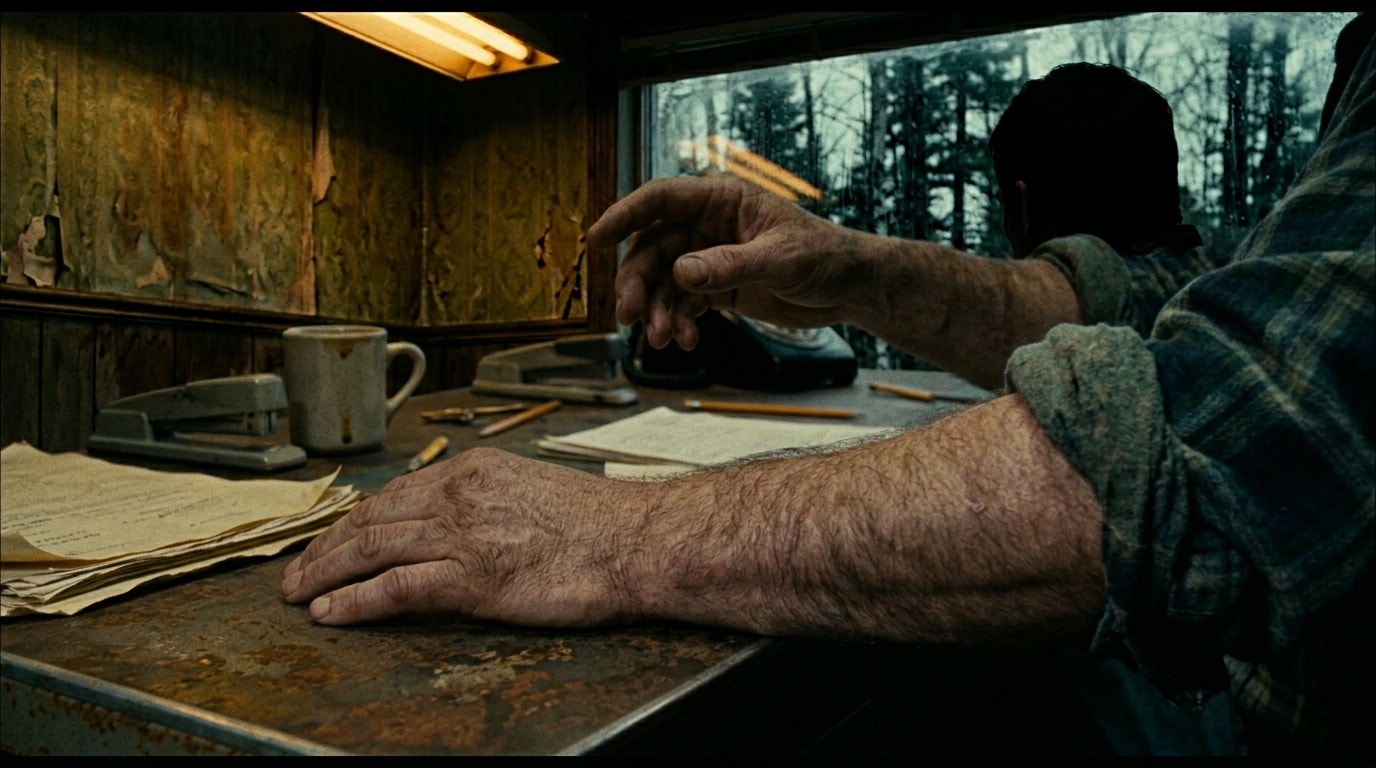
Boyd Is Withholding on Two Tracks at Once, and Cannot Cleanly Separate Them
Boyd returned from the Farway Tree carrying two distinct concealments: a physical one about what the tree may have put into his body, and an informational one about what he knows or suspects regarding Sara's fate.

Tabitha Sees What Others Cannot
Tabitha's perception of entities invisible to those around her is not an emergent gift but a function the town has assigned to her as a monitoring system indexed to Ethan's manipulation of the block structures.
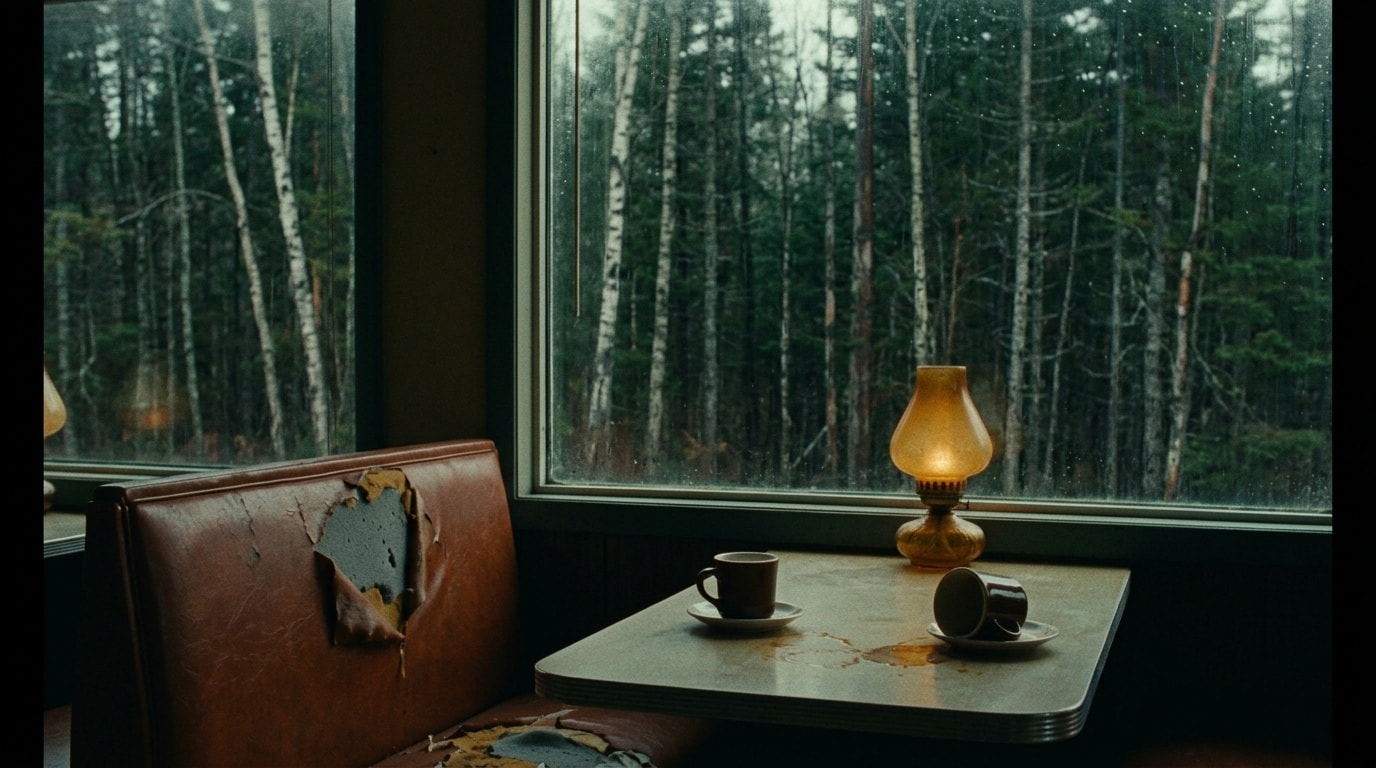
Brian Kelly's Name Splits Across Two Strangers
The town has reconstructed Boyd's most specific military trauma by splitting the name Corporal Brian Kelly across two bus passengers and then staging Brian's death in front of Kelly, mirroring the exact relational structure of Boyd's Iraq wound.

Victor's Memories Are the Town's Secrets
Victor's refusal to discuss the symbol, his unanswered silence on whether he wants to escape, and his panic over his ransacked journal collectively point to something the show has not confirmed but the evidence requires: Victor does not withhold knowledge out of fear or trauma but because he has, consciously or not, accepted the town as the condition of his existence.