The Town Runs on a Designed System -- and Someone Is Still Operating It
THE THEORY
The town's supernatural architecture is not a natural phenomenon that residents are learning to survive. It is a rule-bound containment or orchestration system with three distinct layers of evidence: a physical infrastructure of deliberately placed talismans, a human custodian who routes individuals through the system's required sequence, and a creature-side information discipline that actively manages what its human contact is permitted to know. An unseen designer built this system and, through Victor and the selective voices, continues to operate it.
How This Theory Works
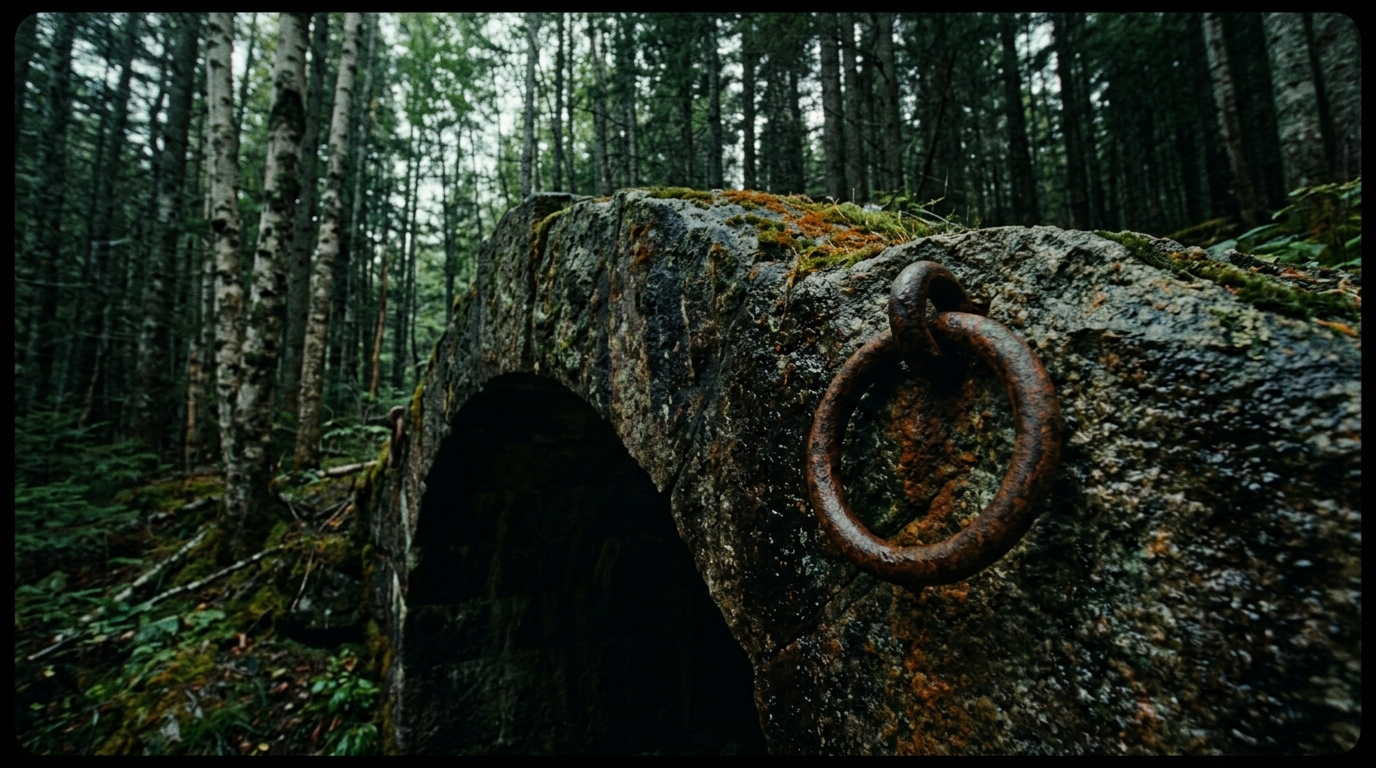
The stone structure is where the argument begins, because it is the layer that cannot be explained away as coincidence or adaptation. Boyd did not find a natural curiosity in those woods. He found talismans embedded directly into constructed stone walls, all bearing matching symbols, in a specific hidden location. Someone who understood what the creatures respond to, and what they are compelled to honor, built that cache. The creatures confirmed the structure's function by converging on it and then vanishing without attacking Boyd, which means they recognized a boundary they were bound to respect. Their subsequent behavioral shift from shrieking to whispering after the talismans were retrieved is not a sign of retreat. It is a tactical recalibration by entities that perceive structural constraints and modify their approach when those constraints change. Pure instinct does not recalibrate. The talisman system works not through mystical repulsion but through an architecture of compulsion, and someone designed that architecture with enough precision that its gaps (like a failed window at Colony House) can be found and exploited without breaking the underlying rule.
Victor is the evidence that the system still has a human operator. His behavior during the Colony House attack does not resemble rescue. He guided Julie to a specific tree, pushed her inside, announced that something was starting without naming what it was or where she was going, and then went somewhere else entirely. The detail that breaks the rescue interpretation is his refusal to enter the tree himself. If the goal was mutual escape, the tree was available to both of them. His remaining outside means one of two things: the destination was intended for Julie specifically and not for him, or he had a separate task that required him to stay. Both readings require foreknowledge of what the tree does, of what Julie was meant to experience, and of what role he was meant to play after placing her. The phrase "it's starting" is not an expression of fear. It is a status report delivered by someone tracking a sequence he already understood.
The drawings confirm the pattern extends beyond this single event. Victor had in his possession a drawing of Boyd in the woods during a moment no one apparently witnessed. He observed it, recorded it, and said nothing until the image was found. This is not the behavior of a traumatized survivor hoarding scraps of knowledge for self-protection. It is the behavior of someone monitoring individuals through specific situations without intervening and without identifying himself as a witness. The custodian does not protect people from the town's sequence. He ensures they move through it in the order the system requires. The residents Victor appears to help are not being rescued. They are being placed.
Sara's managed ignorance completes the picture on the creature side and confirms that information discipline is being enforced across the system, not just at the physical and human layers. Boyd's test of Sara is not about measuring what she knows. It is about locating the shape of what she was denied. He knows the creatures shifted from shrieking to whispering after the talismans appeared, and he tests Sara against that specific correlation. She says no. That denial is the data point: the voices transmitted enough to make Sara a credible point of contact while withholding the one piece of behavioral history that most directly ties creature conduct to the talisman system. Whatever speaks to Sara had reason to keep that correlation hidden from her specifically. She is not an incomplete receiver. She is a curated one, granted enough access to function and to believe in the connection while being denied the knowledge that would let her understand what the voices are doing through her.
Taken together, these three layers, the constructed stone infrastructure, Victor's routing behavior, and the selective gap in Sara's access, point toward a single conclusion that no individual layer can sustain alone. The town's mechanics are not operating autonomously. They are being managed. The talisman system required someone who understood creature compulsion well enough to build a cache that creatures themselves would be bound to honor. Victor requires someone who trained or positioned him as a custodian with enough foreknowledge to place specific people into specific experiences at specific moments. Sara's curated ignorance requires someone on the creature side exercising editorial control over what she receives, which means the voices are not simply the creatures speaking freely: they are communications being shaped. The 96 days of safety after the talismans were retrieved, the Colony House attack as a gap-exploitation rather than a rule-override, the dogs that led Boyd to the stone structure as if marking it: none of these are accidents. They are the visible surface of a system whose architect has not yet been identified but whose fingerprints are distributed across every layer of the town's operation.
Is this theory convincing?
Key Evidence
Boyd Follows Dogs Into Woods
Boyd encountered dogs in the woods during his investigation and noted they must have an owner, following them toward the location where he would discover the talismans.
Creatures Converge Then Vanish
After Boyd stumbled into the stone area in the woods, the creatures descended on it but then disappeared without attacking him, revealing the location's protective property.
Talismans Embedded in Stone Walls
Boyd found an underground stone structure with talismans embedded directly into the walls, all bearing the same symbols, suggesting deliberate placement rather than natural occurrence.
Shrieking to Whispering Behavioral Shift
Boyd tells Sara that the creatures shrieked all night until the town found the talismans, after which they began to whisper instead, marking a documented change in hunting behavior.
Ninety-Six Days Without Deaths
The 96 days without any deaths in the town directly corresponds to the period since Boyd retrieved the talismans, establishing a clear causal relationship between possession and protection.
Talismans as Rules Not Magic
The creatures' documented adaptation from shrieking to whispering supports the reading that the talismans do not repel the creatures through mystical force alone but rather enforce a boundary the creatures are structurally compelled to respect.
Unknown Creator of Talisman Cache
The deliberate embedding of talismans in a specific stone structure points to someone who understood the creatures' rules well enough to exploit them, raising the question of who built the cache and why it was left there.
Other Theories for S1E08
Khatri's Faith Buys Sara Her Life
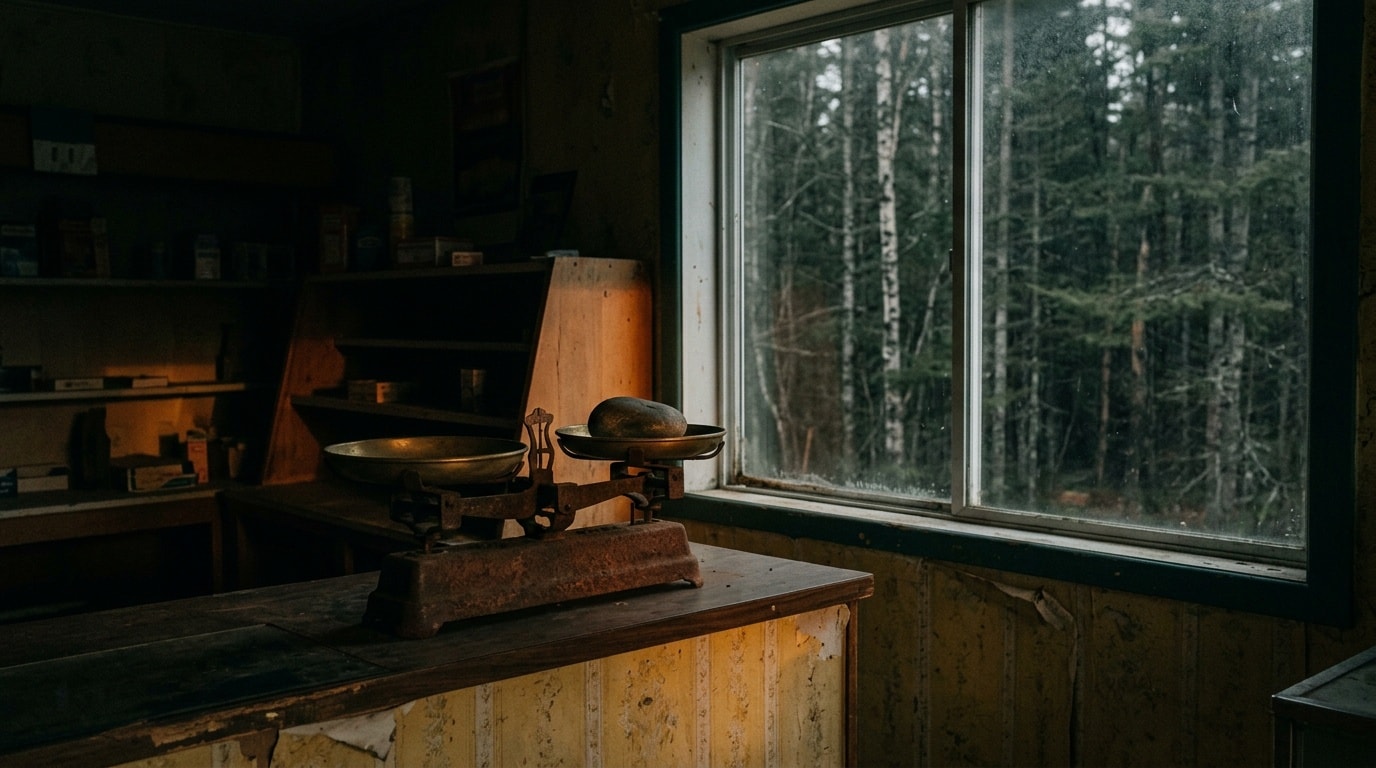
Boyd keeps Sara alive solely because Father Khatri believed she could help the town find a way home.
Crows and Fallen Trees Mark Entry Points
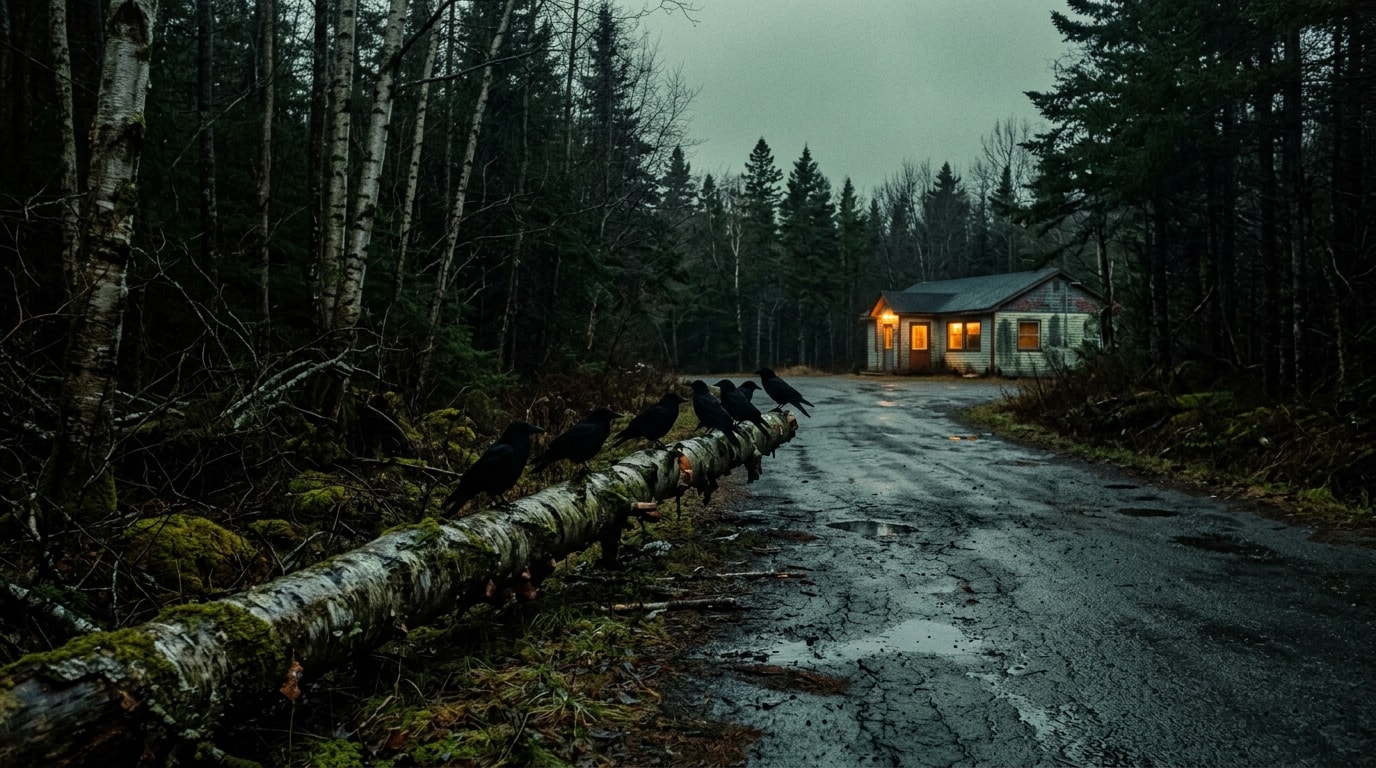
The fallen tree blocking the road functions as a consistent trigger for transport into the town, with Boyd's arrival flashback confirming the same mechanism that brought the Matthews family.