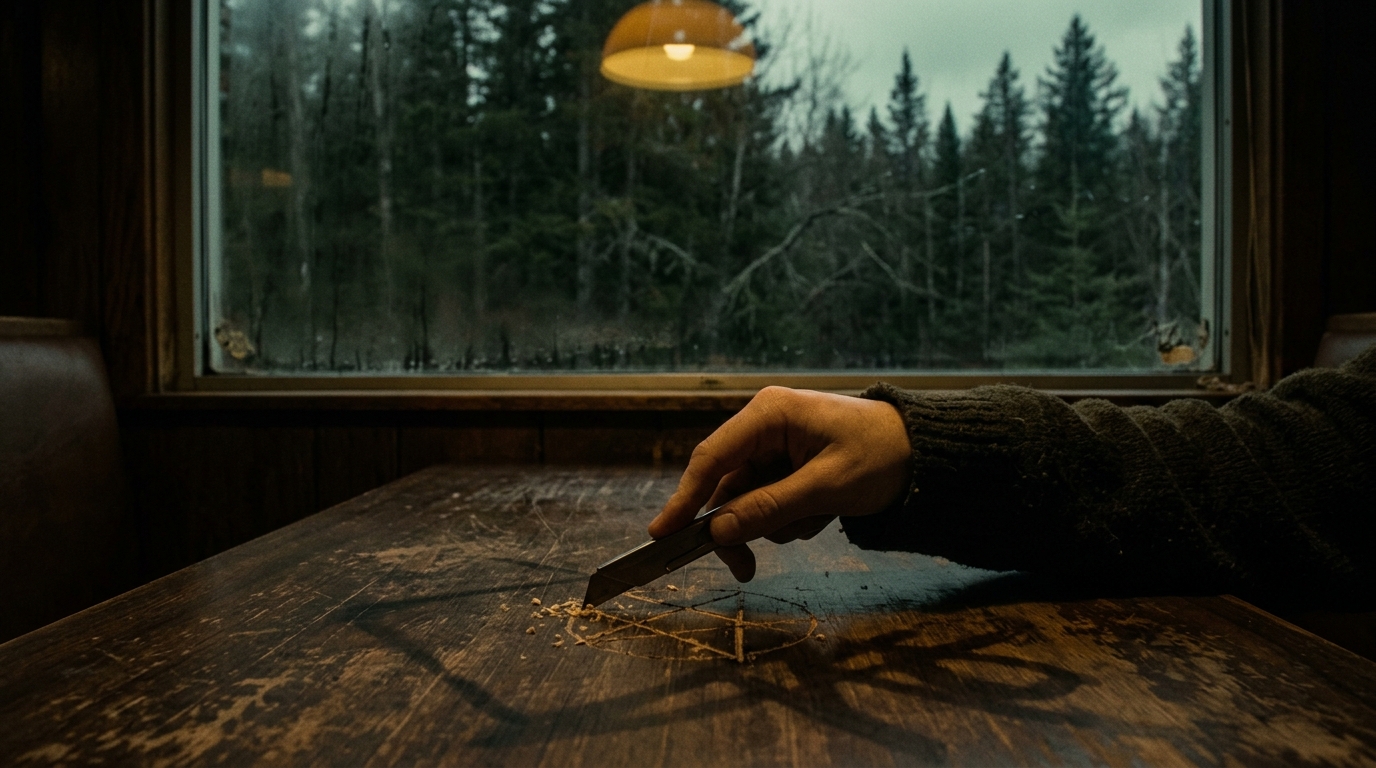
The Symbol Won't Let Jade Go
THE THEORY
The symbol Jade cannot stop drawing is not an object of his investigation but a mechanism operating on him, one that originated in a hallucination and has since colonized his cognition below the threshold of conscious choice. The compulsion has progressed far enough that Jade now actively conceals it, presenting measured intellectual analysis to others while alone he fills books and threatens walls. Every claim he makes about the symbol is testimony from someone who is no longer a disinterested observer of it.
How This Theory Works
Jade is not investigating the symbol. The symbol is using Jade to investigate itself.
The compulsion began with a hallucination, which means Jade's first contact with the symbol bypassed his conscious mind entirely. What followed was not curiosity taking an obsessive turn. It was a process already underway before Jade had any intellectual relationship to the material at all. The volume of repetition, the exhausted paper supply, the readiness to move to walls: these are not the behaviors of a man who has become too interested. They are the behaviors of a man who has lost the capacity to stop.
The defensive anger when Kenny interrupts is the more precise tell. Disrupting a hobby produces embarrassment. Disrupting a compulsion produces something closer to threat response. Jade's affect in that moment is not the affect of someone caught doing something strange. It is the affect of someone whose necessary activity has been obstructed. The Town operates on its residents through infiltration of perception rather than direct confrontation, and the symbol appears to be doing exactly that: not commanding Jade overtly, but occupying him from the inside, making its reproduction feel like a requirement he cannot articulate and cannot ignore.
What presses hardest on the rest of the narrative is the split Jade maintains between that private state and his public presentation. The compulsion happens behind a closed door during a party. The version of Jade who speaks to others about the symbol sounds measured, analytical, like someone working a problem rather than being worked by one. He has already learned, or been conditioned, to conceal the extent of the compulsion before anyone knew to ask him about it. That concealment is not incidental. A person who would have drawn on the walls if the book had run out is not in a position to offer neutral analysis, and yet neutral analysis is precisely what he performs.
Every explanation Jade gives about the symbol should be read as testimony from someone whose relationship to that symbol is no longer voluntary. The intellectual framing is real, but it is downstream of something he cannot account for and has already stopped trying to control. The question is not what the symbol means. The question is what it wants from the person it has chosen to keep drawing it.
Is this theory convincing?
Key Evidence
Jade Filling Kenny's Entire Book
Kenny finds Jade hidden in his room having drawn the mysterious symbol repeatedly throughout an entire book, depleting all available paper before resorting to borrowing Kenny's.
Walls Comment Reveals Compulsion Scale
Jade snaps at Kenny that if he hadn't used the book, he would have drawn on the walls, revealing the compulsion has grown beyond any normal investigative interest.
Symbol Originates in Hallucination
The symbol Jade cannot stop drawing first appeared to him during a hallucination, connecting the compulsive behavior directly to a supernatural or Town-induced experience.
Defensive Anger When Interrupted
Jade responds to Kenny's admonishment with sharp, disproportionate anger, consistent with someone whose compulsive activity has been disrupted rather than someone caught in an embarrassing hobby.
Isolation During Party Night
While Colony House holds a party and the rest of the Town prepares for the night, Jade remains alone in his room drawing — the social withdrawal underscores how consuming the fixation has become.
Other Theories for S1E07
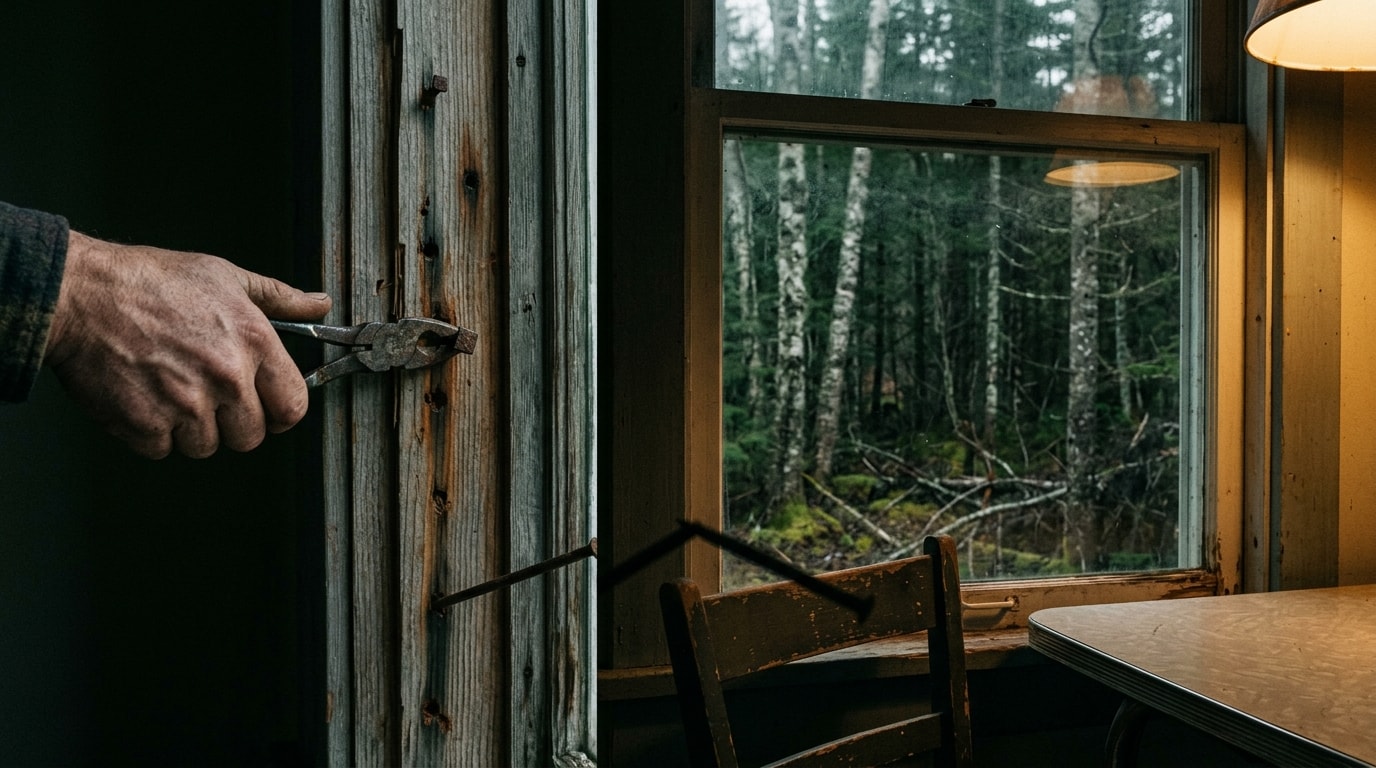
Jasmine's Farewell Was the Trap
The creature Kevin calls Jasmine exploits his loneliness and desire for connection through a calculated emotional performance, convincing him to pry the nails from his window and let her inside Colony House.
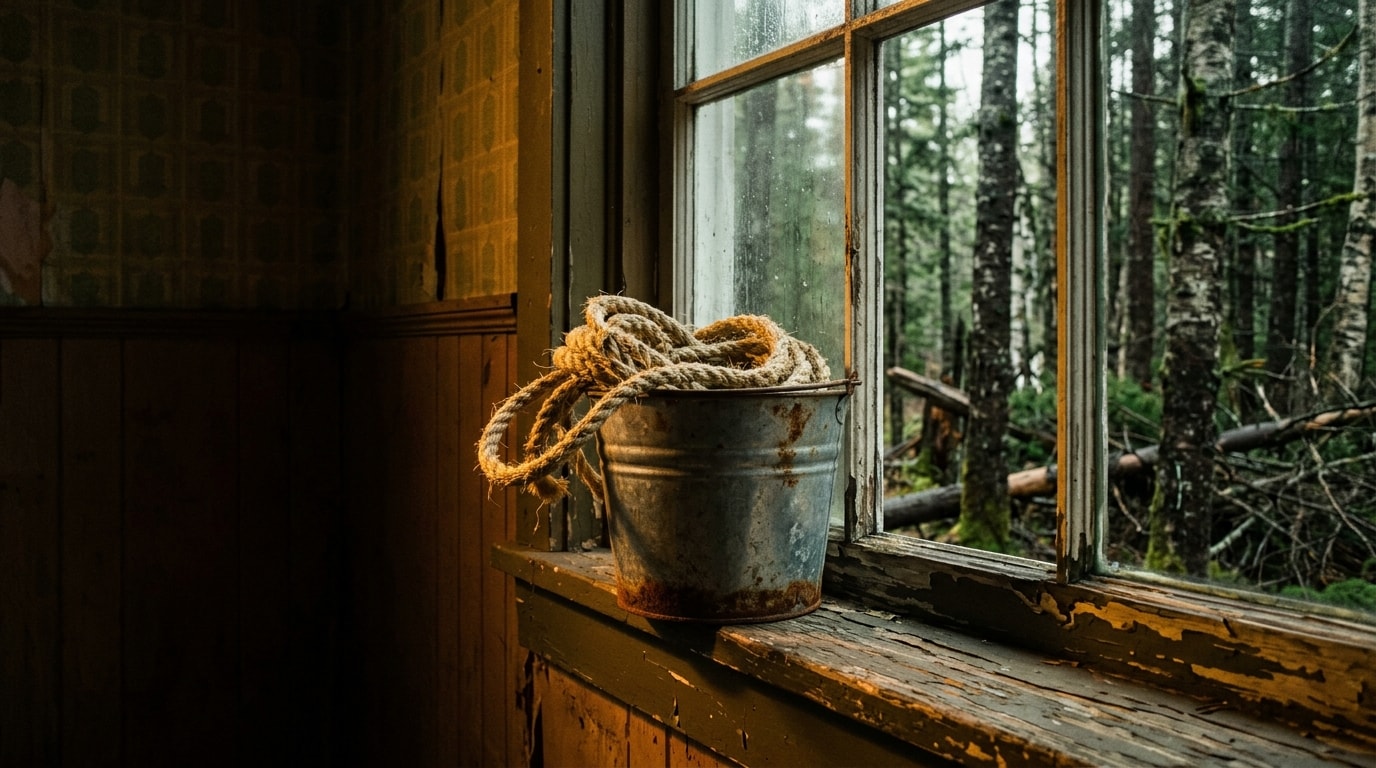
Victor's Preparation Was the Boy in White's Instructions, Executed in Advance
Victor's pre-rigged rope, staged lunchbox, and wrapped pictures were not the products of trauma-sharpened instinct but the observable outputs of advance instructions received from the Boy in White, a navigator with precise knowledge of the Town's geography and event cycles.
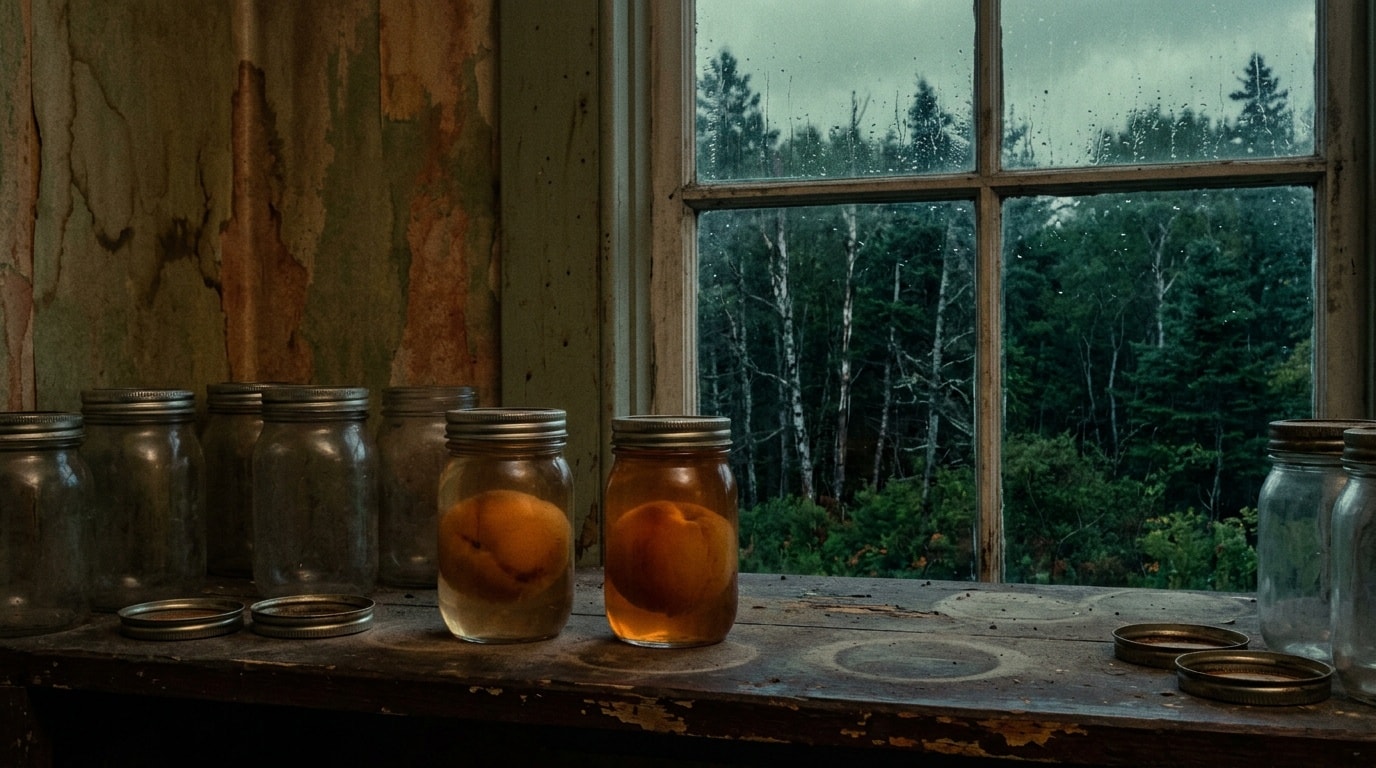
The Pantry Runs Dry for the First Time
The peaches running out for the first time in Victor's decades of captivity is not a mundane shortage but evidence that the town has lost, or abandoned, a capability it previously maintained without interruption.
The Creatures Know Everyone's Name
The creatures' specific knowledge of residents' names indicates they are operating as agents of the same intelligence that recruits people into the town through voices and compulsions.
Julie's Quiet Feelings for Fatima
Julie's feelings for Fatima are not emerging gradually but are already formed, evidenced by an unprompted verbal admission of dependency before any crisis has created a reason for it, and by a staged reaction of visible unease when Stacey kisses Fatima at the party.
Khatri as Catalyst for Boyd's Purpose
This theory holds that Father Khatri was not sent to the Town to be its savior himself, but to redirect Boyd toward that role by presenting him with choices that force action.