
Naming Things as Survival in Colony House
THE THEORY
Trudy's habit of naming her possessions is not eccentricity or generic coping. It is a grief practice organized around a specific lost person, with the pillow 'Meredith' functioning as a surrogate presence for someone she can no longer reach. The naming philosophy she teaches Julie is a survival doctrine developed under conditions designed to dissolve individual identity, and the urgency with which she retrieves the pillow confirms that what is at stake is not an object but the last portable form of a relationship.
How This Theory Works
Trudy's naming habit is not a quirk and not a coping mechanism in the generic sense. It is grief management through object conversion, and the theory's central claim is that 'Meredith' is a real person Trudy has already lost inside the town or to the town's logic, and that she has transferred whatever remains of that relationship into the pillow in order to keep carrying it.
When Trudy tells Julie that the things that matter should always have names, she is not offering folksy wisdom. She is describing a practice she has refined under conditions designed to make such practices feel absurd. The naming habit is a considered philosophy because she has had to fight for it. That framing suggests it was not always there. It was built.
Within Colony House, individual ownership is systematically dissolved. Trudy wears clothes from Julie's suitcase without apparent conflict. The communal ethos of the house erodes the boundaries that ordinarily define a self. Against that erasure, naming is the only form of resistance still available. An unnamed pillow belongs to no one. A pillow called Meredith belongs to Trudy, and belongs also to Meredith, whoever that is. Trudy has converted her material surroundings into a web of named attachments because named things cannot be fully taken away even when the objects themselves can.
The security blanket framing is the theory's sharpest key. Security blankets are not comfort objects in the abstract. They are substitutes for a specific absent presence, originally a caregiver, later whoever the child has learned to depend on. Trudy retrieving 'Meredith' from Julie's room with enough urgency to make the trip is not attachment to the pillow. It is the behavior of someone managing a loss that has no other container. She is not keeping the pillow. She is keeping the person.
Is this theory convincing?
Key Evidence
Pillow Named 'Meredith'
Trudy refers to her pillow by the name 'Meredith' and describes it as a security blanket, treating the name as an essential part of what makes the object matter to her.
Things That Matter Have Names
Trudy explicitly states her philosophy to Julie: the things that matter should always have names, framing the naming habit as a deliberate and considered practice rather than eccentricity.
Reclaiming the Pillow
Trudy arrives specifically to retrieve her pillow from Julie, demonstrating that the named object carries enough emotional weight to prompt active effort to recover it.
Colony House Shared Clothing
Trudy is seen wearing clothes taken from Julie's suitcase, illustrating the communal erasure of personal ownership that makes Trudy's private naming rituals a way of preserving individual identity.
Naming as Emotional Personalization
Trudy's assignment of a human name to an inanimate object suggests she is building surrogate emotional connections to fill the absence of normal human bonds and personal autonomy.
Other Theories for S1E04

Victor Was Kept, Not Spared: His Silence Is the System Working Correctly
Victor survived the town's prior selection event not by accident but by design: the town retained him as a receiver, and everything he does in the present is a survival architecture built on the single lesson that emerged from the root cellar: invisibility works.
Are We Being Punished? Tabitha's Guilt
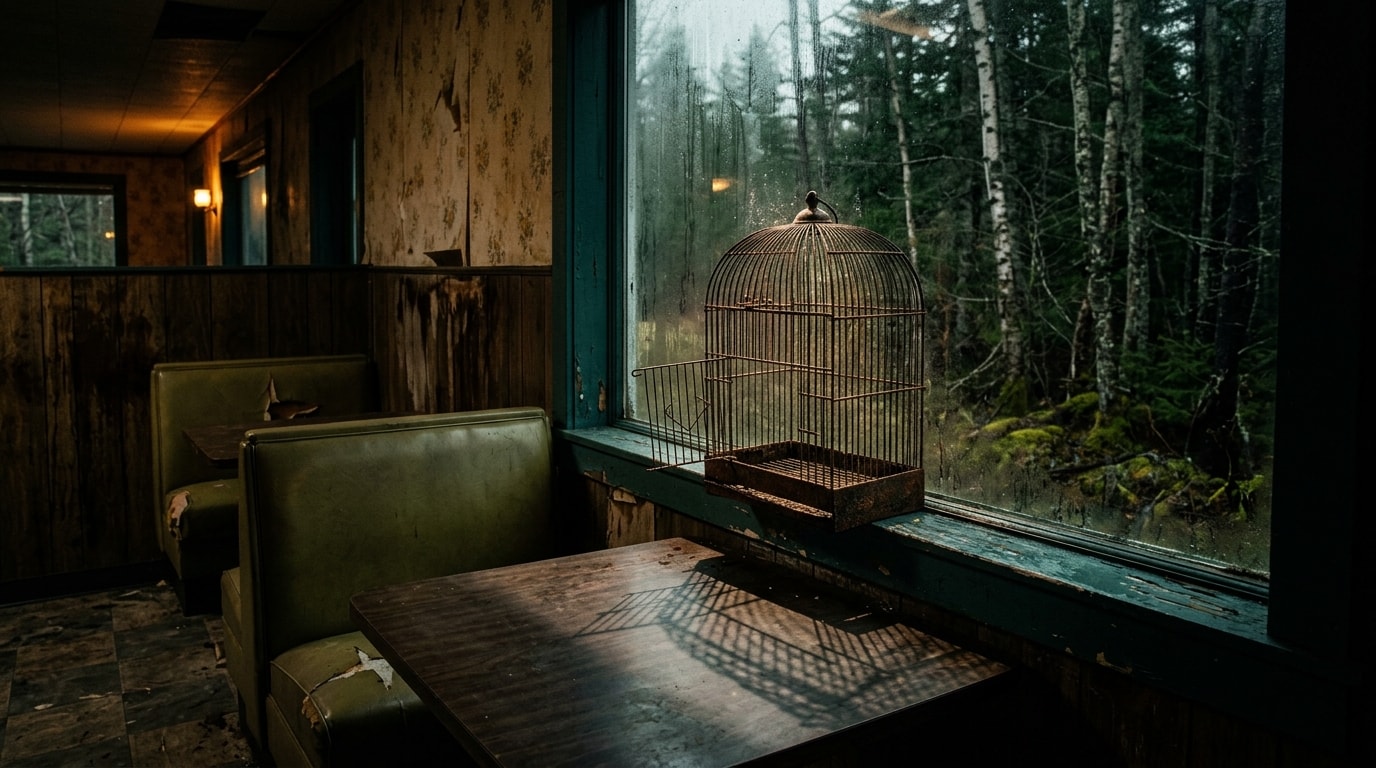
Tabitha has privately concluded that the town is punishing her specifically, most likely for her failure around Thomas's death, and her drive to hold the family together functions as penance rather than survival instinct.

America's Roads Feed the Town
The town is not a regional trap that unlucky travelers stumble into.
Unexplained Signals as the Town's Voice
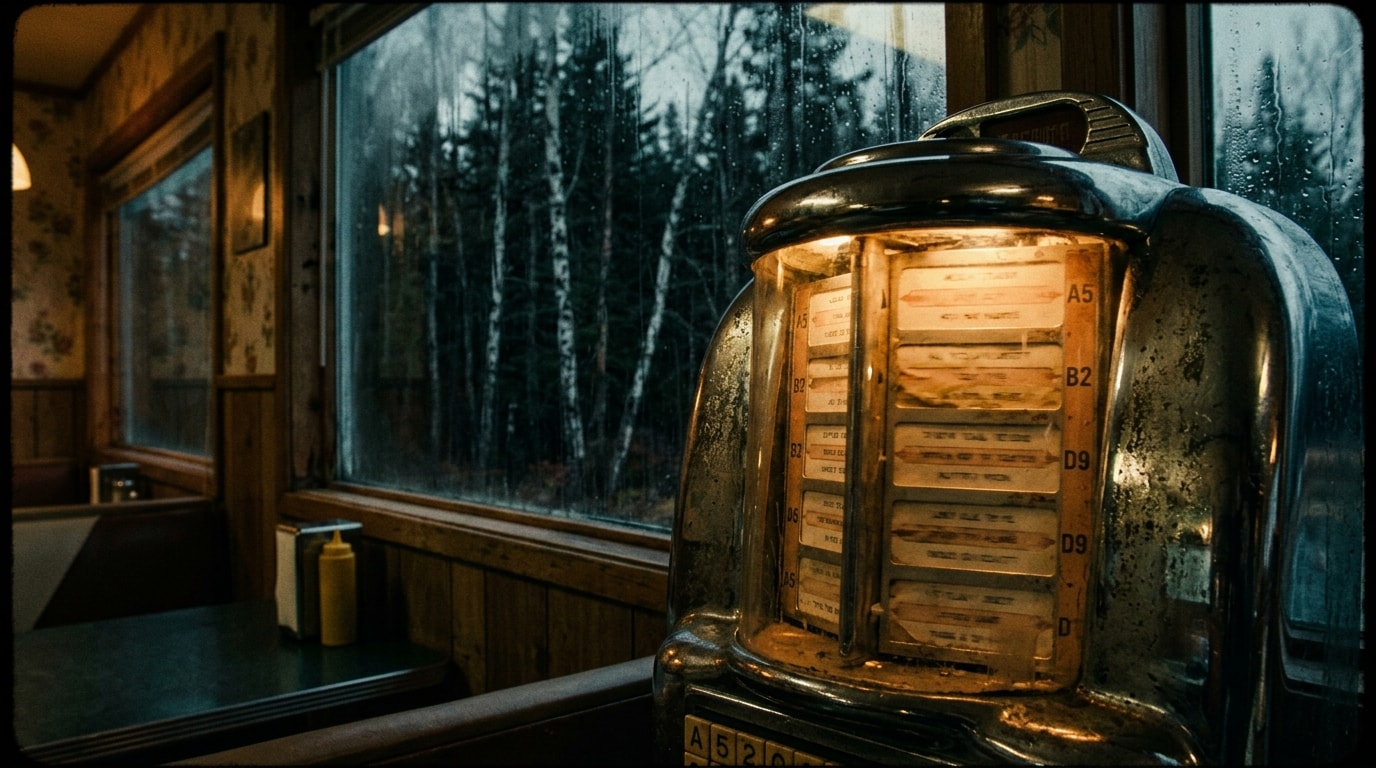
The jukebox and radio activations are the town registering cognitive thresholds, not mechanical malfunctions or ambient supernatural noise.

Victor's Recruitment Is Diagnostic: Ethan's Grief Is His Qualifying Credential
Victor's attention to Ethan is not protective instinct but the conclusion of a decades-long diagnostic process.