
Steph Harper's Canadian ID Is the Proof Her Vault Authority Was Never Legitimate
THE THEORY
Steph Harper holds administrative authority over Vaults 32 and 33 as the two-century payoff of a survival strategy her dying mother dictated to her at a Canadian internment camp — a strategy already operational before she crossed the border. The concealed Canadian identification document she has never surfaced is the on-screen proof that her current identity is fabricated and actively maintained, not the silence of a grateful refugee but the discipline of someone who entered under false pretenses and intends to keep it that way. The show has given us the origin and the outcome but not the two centuries in between, and that gap is what makes her the most dangerous unresolved figure in the narrative.
How This Theory Works
The anchor is the document she has never shown anyone. Steph Harper has administered Vault 32 long enough to become the person its residents structure their entire existence around, and in all that time her Canadian identification has remained concealed. This is not the silence of assimilation or the natural privacy of a traumatized survivor. It is the maintained silence of someone who entered under a fabricated identity and continues, across decades, to choose not to surface it. The vault dwellers who gasped when Chet revealed her age were not simply surprised by a number. They were registering, without the vocabulary to name it, that the woman who has governed the whole of their known world had been keeping the most basic fact of herself from them. That concealment is the condition under which everything else has to be reread.
The origin of that concealment is already on screen, delivered at the moment of maximum psychological force. Joan Harper's final words to her daughter at the Uranium City Internment Camp were not maternal comfort. They were a mission briefing, issued at the precise moment when grief and terror would have made them land with the weight of commandments: forget your faith, abandon your morals, stop seeing Americans as human beings, find the highest branch and cling to it against the coming flood. The doctrine was not abstract. It was installed into Steph at the moment Joan was dying, under fire from U.S. forces, in a camp that was itself proof of what America did to people it classified as expendable. Joan was not asking Steph to survive. She was asking Steph to become something that could survive — and she specified, with precision, what that required: the dehumanization of the people Steph would have to use.
The border guard established that the doctrine was already operational before Steph reached vault society. When a guard catcalled her and demanded her passport on the trek into America, she stabbed him without hesitation. There is no agonizing in that sequence, no moment of moral calculation. The instruction had already been absorbed. A woman who can cross that threshold without friction is not someone executing a plan she remembers receiving. She is someone for whom the plan has become the architecture of perception. That is what makes the Lucky 38 flashback so precise. When Cooper Howard tells the maid asking about Vault-Tec to speak to Hank MacLean, Steph smiles and wheels the unconscious Hank out of the room. Read against Joan's directive to use people without scruple, that smile is not gratitude. It is recognition — the expression of someone who has just identified the mechanism she needs and is already moving to operate it.
The compulsive scrubbing is the show's most unsettling psychological notation. The Canada flashbacks do not surface as neutral history. They surface as nightmares, and Steph wakes from them to scrub her gums raw and bloody. That compulsion is not guilt interrupting the mission. It is the mission's cost — evidence that whatever Joan constructed inside her daughter is still running, still exacting a toll across two centuries, still pointed outward at the people sleeping in the vaults below her. It is also, critically, pointed inward. The scrubbing suggests Steph is aware, at some level beneath articulation, of the equation she inhabits: the people who trust her with their lives are the Americans her mother told her not to see as human. She has found the highest branch. She is clinging to it. The question the show has not yet forced her to answer is whether she knows what she is clinging to it over.
The mechanistic gap between the Lucky 38 and the overseer's chair is where the theory becomes most uncomfortable — and most unresolved. The show has established the origin with precision: Joan's doctrine, the border killing, the Vault-Tec inquiry, the Hank referral, the smile. It has established the outcome with equal precision: two centuries of administrative authority, a concealed identity, a community that does not know who governs it. What it has not provided is the mechanism. Did Steph infiltrate Vault-Tec's hiring pipeline through Hank MacLean? Did she enter a vault before the bombs fell, already embedded? Did she exploit post-war chaos to claim authority that was never formally granted? Each possibility carries a different implication for how many of her decisions as overseer were strategic rather than administrative, and none of them has been closed off. The show has framed her as neither hero nor villain, which is precisely why she is dangerous: she is a figure exercising total authority over sealed human communities, drawn by her own origin story to regard those communities through the lens her mother gave her, and the narrative has not yet decided whether to make her answer for it.
Is this theory convincing?
Key Evidence
Vault Dwellers Shocked by Her Age
Other vault dwellers gasped when Chet revealed that Steph is 200 years old, confirming this is not common knowledge inside the vault and that her true history has been concealed from the community she governs.
Uranium City Internment Camp Escape
The episode's opening flashback shows a young Steph and her mother Joan fleeing the Uranium City Internment Camp in Canada while being fired upon by U.S. forces, establishing her pre-war origins as a prisoner of American military operations.
Joan's Strategic Survival Directive
Joan tells the dying Steph to forget her faith and morals, to stop seeing Americans as human beings, and to find the highest branch and cling to it against the coming flood, framing Steph's entire subsequent life as the execution of a survival strategy rather than organic ambition.
Border Guard Killed Without Hesitation
On her trek into America, Steph stabs the border guard who catcalls her and demands her passport, demonstrating that she had already internalized her mother's instruction to use violence without moral scruple before she ever reached vault society.
Lucky 38 Maid Asks About Vault-Tec
A pre-war Las Vegas flashback places Steph as a maid at the Lucky 38, where she asks Cooper Howard how a minimum-wage worker can get into a vault and then asks how to get a job at Vault-Tec, directly after Cooper points her toward Hank MacLean.
Smile After Hank Referral
After Cooper tells Steph to ask Hank MacLean about Vault-Tec employment, she smiles and wheels the unconscious Hank out of the room, a reaction that reads as deliberate recognition of an opportunity rather than a polite thank-you.
Traumatic Memories Surface While Sleeping
The episode reveals the Canada flashbacks are Steph's own traumatic memories surfacing during sleep, framed by shots of her waking in her vault bed and scrubbing her gums bloody, confirming the pre-war events are her lived experience carried into the present.
Other Theories for S2E07

Steph Harper: Canadian Refugee Who Killed to Survive
Steph Harper's authority over Vault 32 may be inseparable from a moral framework her mother installed at gunpoint: dehumanize Americans to survive, and accept God's pre-issued forgiveness for the harm that requires.
Lucy's Pragmatism May Doom Her to Hank's Path
Lucy's decision to leave the mainframe intact, made with full knowledge that the chips cause irreversible memory loss, reveals that she has not rejected her father's utilitarian logic but suspended it, and suspension with the infrastructure still running is the first structural step toward becoming him.
Joan's Last Words Made Steph a Weapon
Joan Harper's dying instruction to Steph was a deliberate moral reprogramming that replaced Catholic conscience with a framework in which Americans are not fully human and therefore cannot be wronged, and every ruthless choice Steph has made since crossing the border runs on that installed architecture.
Woody's Glasses Prove Steph Killed Him
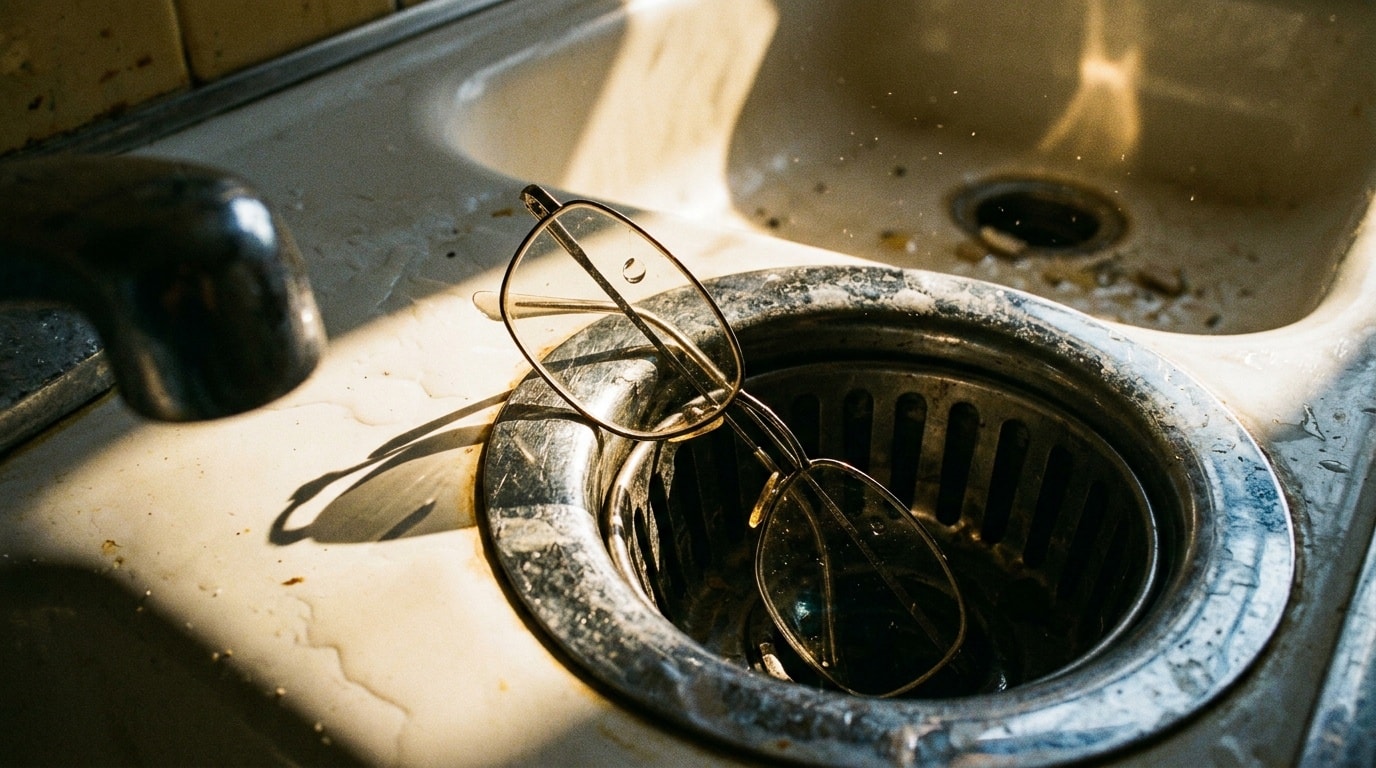
Steph killed Woody and tried to destroy the evidence, and the glasses lodged in the garbage disposal of her shared sink are the physical proof of that act.

Cooper Howard Is House's Two-Century Contingency Plan
Robert House did not simply build a casino that could be reactivated by the right power source — he built a delivery system with a human component, and Cooper Howard is that component.
The Ghoul Already Knew Who Had the Diode
The Ghoul identified Maximus as carrying the cold fusion diode before the scene gave him any access to that information, implying his pre-war memories as Cooper Howard gave him both knowledge of the device and a reason to track its reappearance.

Hank Turned Lucy's Mercy Against Her
Hank deliberately staged the conditions under which Lucy would encounter the brainwashed legionary, then deployed a pre-prepared Legion argument at the moment of maximum emotional impact, exploiting her genuine moral concern to make mind-control feel like protection.
The Ghoul Recognizes His Own Lost Idealism
When Maximus invokes Lucy's goodness as the reason to trust the diode handoff, the Ghoul does something he never does: he accepts a moral argument instead of a tactical one, smiles without speaking, and walks away from an object he has personal investment in.