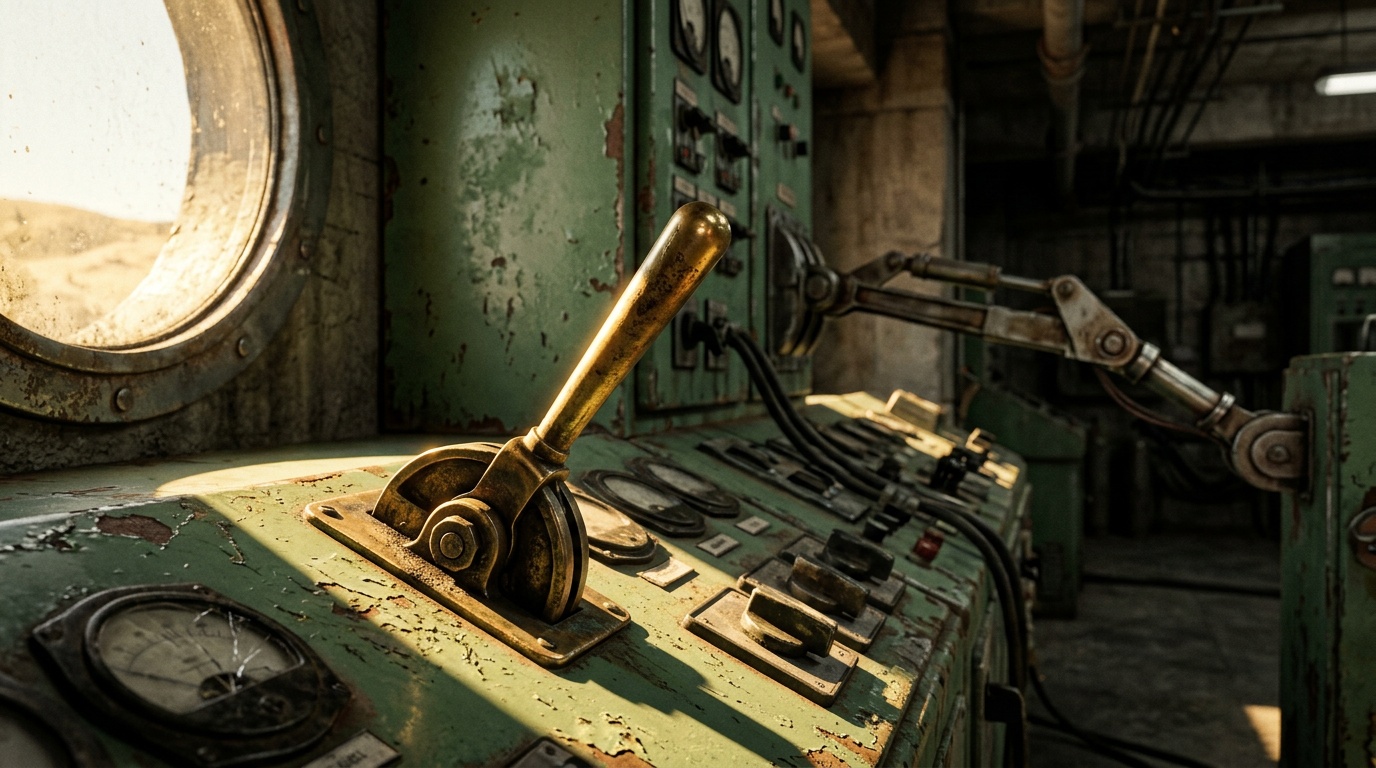
Maximus Starts a War to Save Children
THE THEORY
Maximus's killing of Harkness is not the arrival of the good man his father hoped for. It is the act that ignites the Brotherhood civil war Quintus warned him about, making his moral emergence and his greatest catastrophic failure the same event. The children he refused to let Harkness execute will be caught inside the war zone his refusal created, which means his father's inherited value survives the killing and annihilates itself in the aftermath.
How This Theory Works
Maximus killing Paladin Harkness is simultaneously his first truly autonomous moral act and the trigger for a Brotherhood civil war, which means moral clarity and structural catastrophe are not just inseparable here but identical. The episode refuses to let the act be triumphant, and that refusal is the argument.
Quintus explicitly told Maximus earlier in the same scene that killing Harkness would ignite war with the Commonwealth chapter. Maximus absorbed that warning and then used the super sledge Harkness had just given him to crush the paladin's helmet. The weapon functions as a gift and becomes the instrument of its giver's death. Maximus did not act in ignorance. He understood the consequences and chose anyway, which is precisely what distinguishes this from any previous Brotherhood-directed violence he has committed. What the show has not confirmed, and what the episode's refusal to frame the aftermath as triumph quietly insists upon, is whether Maximus chose from his father's inherited moral code or from the hair-trigger lethal capacity the Brotherhood spent years installing in him, now redirected by a different emotional target. The distinction matters enormously. It cannot be resolved from the outside of his face.
The connection to his father's moral legacy runs through the specific target of his protection: children. Not soldiers. Not assets. Ghoul children running conveyor belts in a soda factory. The Brotherhood's doctrine treated their ghoul status as sufficient justification for elimination. Maximus's rejection of that logic is the inherited value the show has tracked across two seasons. But the structural parallel to the Legion's civil war, which Lucy witnesses in the same episode, forecloses any clean reading of this as moral progress. The Legion is also fracturing over an unresolvable succession dispute, with corpses accumulating on the dividing line. Maximus has placed himself in an analogous position: the act that feels like clarity from inside may be, from outside, just another man with a weapon making an irreversible choice that breaks an already fragile institution.
The hardest implication is this: if the Brotherhood civil war ignites, the children Maximus protected will be caught inside the war zone he authored. The Sunset Sarsaparilla factory sits at the center of the institutional collapse his refusal set in motion. His father's inherited value survives the moment of the killing and destroys itself in the aftermath. Maximus's act of protection contains its own negation. The show has already established, through the Legion parallel, that succession fractures produce bodies on the dividing line. The children he refused to let Harkness kill become hostages to the collapse his refusal created, and he cannot claim the moral high ground that justified his choice once their safety depends on the stability he shattered. This is the specific shape of moral tragedy the show has been assembling since its treatment of the NCR: the people who care most about protecting something become the mechanism of its destruction, and they will not know it until the bodies are already there.
Is this theory convincing?
Key Evidence
Harkness's Own Weapon Used Against Him
Maximus kills Paladin Harkness using the rocket-powered super sledge Harkness had just given him, making the gift the instrument of the giver's death and underscoring the irreversibility of Maximus's choice.
Quintus's Civil War Warning Ignored
Earlier in the same episode, Quintus explicitly told Maximus that killing Harkness would in all likelihood ignite war with the Commonwealth Brotherhood, meaning Maximus acted with full knowledge of the structural consequence.
Ghoul Children as the Moral Trigger
Harkness moved to execute the non-feral ghoul children working in Thaddeus's Sunset Sarsaparilla factory, and it was specifically the targeting of children that caused Maximus to break from Brotherhood doctrine.
Maximus Registers the Ramifications
Immediately after Harkness's armor hits the ground, Maximus's expression shifts to one of recognition, suggesting the show is deliberately not framing this as triumphant liberation but as the birth of an irreversible consequence.
Legion Civil War Structural Parallel
In the same episode, Lucy witnesses the Legion fracturing into two hostile camps over an unresolvable succession dispute, constructing a direct structural parallel to the Brotherhood fracture Maximus has just triggered.
Father's Moral Legacy Inherited
Multiple readings connect Maximus's choice to the moral code of his father, suggesting the act of protecting children against institutional doctrine is the specific value Joseph MacLean hoped would survive in his son.
Brotherhood Instrument Turned Inward
Quintus had warned that Maximus lacked the foresight to understand strategic consequences, and Maximus's killing of Harkness enacts exactly the impulsive, consequential violence Quintus feared while also being the autonomous moral act prior Brotherhood conditioning suppressed.
Other Theories for S2E03
House Already Knew Cooper Was Coming
Robert House approached Cooper Howard already knowing he had been sent to kill him, which means the encounter was not a chance meeting but a controlled demonstration of intelligence superiority designed to neutralize an assassin without violence.
The Ghoul Confesses to Dogmeat Because Dogmeat Cannot Be a Witness
The Ghoul's Ship of Theseus monologue is not a man searching for himself but a man announcing, in the only setting where announcement is safe, that he has already stopped searching.
The Ghoul's Good Deeds Are Not Accidents
The Ghoul still has a working moral framework.
The Ghoul's Rescue May Have United the Legion
The Ghoul's destruction of the barrier between the two Legion factions likely ended the stalemate that kept both sides neutralized, giving whichever Legion controls the succession paper the conditions to consolidate into a unified force.
Thaddeus Is Not Turning Into a Ghoul
Thaddeus is not undergoing ghoulification but FEV-driven transformation toward something the Brotherhood is institutionally incapable of processing in one of their own.
Cooper Derailed House Before the Bombs Fell
Cooper Howard actively sabotaged Robert House's acquisition of cold fusion technology before the Great War, an intervention that may have served Vault-Tec's control agenda whether Cooper intended it or not.