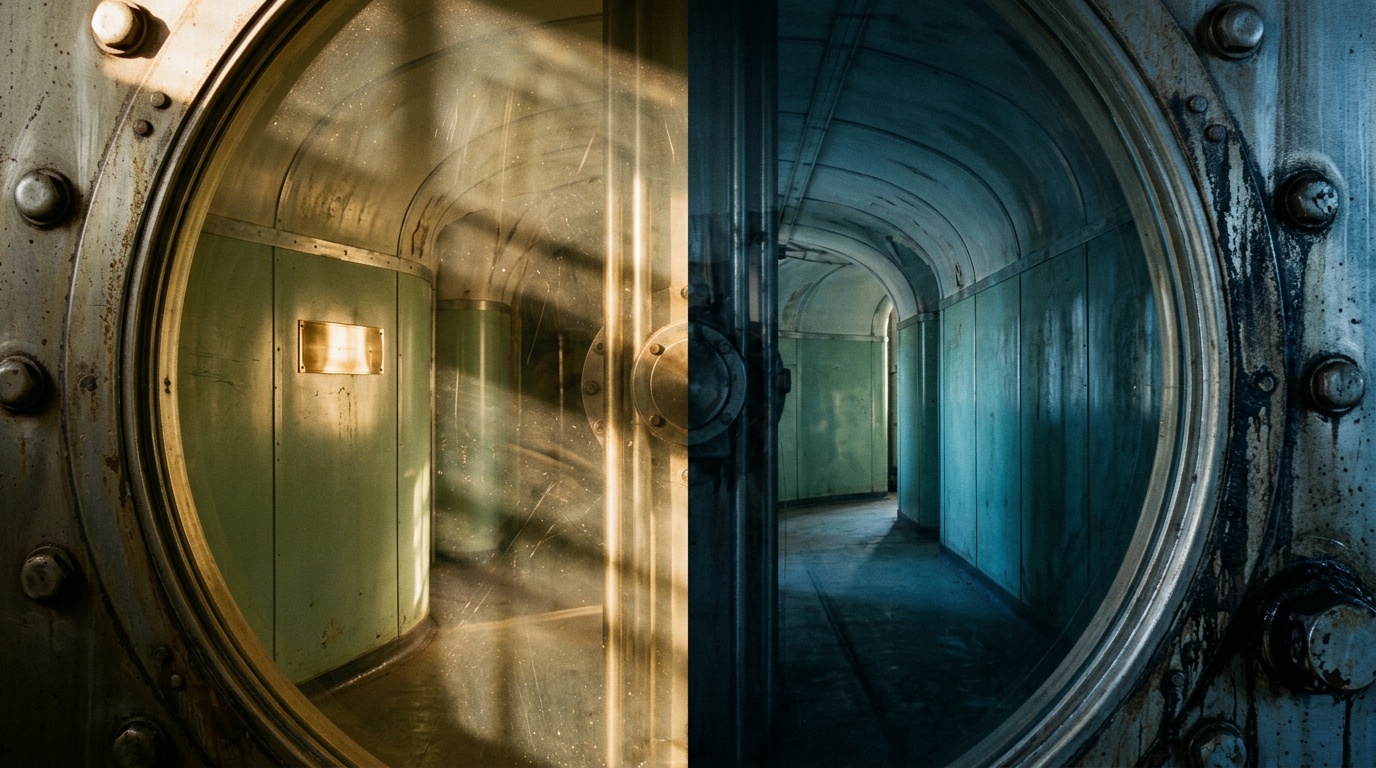
Vault 31 Runs Two Systems Against Vault 33: A Doctrine That Lies and a Pipeline That Enforces It
THE THEORY
Vault 31 has maintained control over Vault 33 through two interlocking mechanisms operating in parallel: an overseer pipeline that installs Vault 31 agents as every successive administrator in Vault 33's history, and a Reclamation Day doctrine kept in active circulation despite Vault 31 administrators knowing that the civilization it promised to restore had already risen and been destroyed. Betty's overnight erasure of Vault 32 and Lucy's ignorance of Shady Sands are not separate phenomena — they are the operational and ideological faces of the same generational control apparatus. Neither system could sustain the enclosure without the other.
How This Theory Works
The sharpest version of this claim is that Vault 33 has never been a community governed by elected overseers. It has been a managed enclosure administered by external agents of Vault 31, using two instruments in concert: a manufactured doctrine that told residents why they were sealed inside, and a recurring institutional appointment that ensured no insider would ever be positioned to falsify the doctrine against surface evidence. Betty's cleanup and Lucy's blindspot are the same operation running on different tracks. Remove either one and the system collapses.
Start with the operational track. Norm's analysis of inter-vault trade records establishes that every overseer in Vault 33's recorded history originated from Vault 31 — Betty is not an exception but the current instance of a multigenerational pattern. This means the apparatus placing her in that seat has been doing so across the entire lifespan of Vault 33's leadership, long enough to constitute policy rather than coincidence. When Betty is elected, she does not acquire the authority to conduct the Vault 32 cleanup. That authority was already within her remit before the votes were counted. The election is not the mechanism of her power; it is the performance that makes her power appear locally legitimate. The speed and completeness of what follows confirms this: between the night Norm discovers the corpses and the morning Betty announces resettlement, every body, every blood stain, and every piece of physical evidence in Vault 32 has been removed and the vault refurbished. That is not an improvised crisis response. It is the output of a protocol that has been rehearsed, resourced, and ready to execute — a suppression procedure administered on schedule by the current instance of the same recurring appointment.
The physical evidence of what was suppressed sharpens the stakes considerably. The Vault 32 dwellers did not die scattered throughout their vault. Their corpses were concentrated at the single inter-vault threshold between Vaults 32 and 31, with the words 'WE KNOW WHAT'S IN THERE' written in blood on the wall beside them. Two things are embedded in that image. First, whatever enforcement mechanism Vault 31 deploys at that door was already operational before Betty arrived — she did not build the system, she administers it. Second, the message confirms that the information lockdown has a documented failure mode: a prior population independently reconstructed enough of the truth to identify Vault 31 as the node that mattered, and died at its threshold before they could act on that knowledge. Betty's resettlement order converts the site of that mass death into occupied residential space, making the question of what happened there structurally unanswerable without displacing the people she just moved in. The crime scene does not disappear. It gets lived in. Her claim that Rose MacLean's Pip-Boy was buried with her body follows the identical operational logic: the single object that could verify who opened Vault 32 from the outside is placed beyond examination by institutional authority before the question of who opened it can be formally raised. These are not coincidental timing. They are the same suppression move applied to two different categories of evidence.
The ideological track is what makes the operational track necessary. The Reclamation Day doctrine — the claim that civilization has not yet been rebuilt on the surface and that Vault 33's purpose is to emerge and restore it — was not a plan that became obsolete. It was obsolete before it was ever taught. The civilization it promised to rebuild already existed, succeeded for generations, housed over 34,000 people at Shady Sands, and was destroyed. Lucy's visible shock at a billboard bearing that population figure is not a failure of her curiosity. It is evidence of a curated blindspot, actively maintained inside the vault across the entire span of her education by people who had access to surface history and chose to withhold it. Teaching dwellers that civilization has not yet been rebuilt, when it demonstrably was, is not an administrative lag. It is the deliberate perpetuation of a false premise that justifies continued enclosure and manufactured consent for a door that stays sealed. The doctrine does not describe the surface world. It describes a surface world that never existed, constructed specifically to make Vault 33 residents believe their restraint is purposeful rather than enforced.
The two tracks interlock in a way that makes each one's logic visible only through the other. The doctrine alone cannot hold if native leadership is ever in a position to cross-reference it against trade contacts, wanderers, or archived logs — which is precisely what the overseer pipeline prevents. Every time Vault 33 might develop a leadership class with enough institutional memory to ask the right questions, a Vault 31 agent is already seated at the overseer's desk with both the authority and the protocol to prevent those questions from reaching an answer. Conversely, the overseer pipeline alone cannot explain why Vault 33 residents never press toward that inter-vault door in organized numbers, never demand surface access, never ask why Reclamation Day keeps not arriving. The doctrine is what manufactures the patience. Steph's inability to report anything about Vault 31 except that it had better mashed potatoes, mirroring Hank's deflection word for word, looks less like ignorance and more like training — people who either do not know what Vault 31 actually is, or have been coached on what not to say, producing the same uniformity of non-answer regardless. Hank's departure to the surface the moment the vault's integrity is compromised is not a father's instinct. It is a Vault 31 asset evacuating a compromised installation before the remaining dwellers finish reading what was written on those walls. The doctrine manufactured consent for the enclosure. The pipeline enforced it. Betty's overnight cleanup and Lucy's ignorance of Shady Sands are not separate stories — they are the same generational apparatus operating simultaneously on its two necessary registers.
Is this theory convincing?
Key Evidence
Blood Message at the Inter-Vault Door
Norm and Chet discover the corpses of Vault 32 dwellers piled at the inter-vault door between Vaults 32 and 31, with the words 'WE KNOW WHAT'S IN THERE' written in blood, indicating the dwellers died while attempting to breach the sealed passage to Vault 31.
Overnight Cleanup of Vault 32
Between the night Norm discovers the corpses and blood message and the morning Betty announces her resettlement campaign, every dead body, blood stain, and piece of physical evidence in Vault 32 has been completely removed and the vault refurbished.
Betty's Immediate Resettlement Order
Betty's first act as the newly elected overseer is to announce a campaign moving Vault 33 residents into the freshly cleaned Vault 32, effectively occupying the site of the mass death before any investigation can occur.
All Overseers Sourced from Vault 31
Norm's analysis of inter-vault trade records reveals that every overseer in Vault 33's history, including Betty, originated from Vault 31, connecting the authority figure conducting the cleanup directly to whatever Vault 31 contains.
Pip-Boy Burial Claim
Betty tells Norm that Rose MacLean's Pip-Boy, the device used to open Vault 32 from the outside, was buried with her body, placing the one piece of evidence that could verify who opened the vault beyond any possibility of examination.
Dwellers Died at a Single Threshold
The corpses were found concentrated at the specific inter-vault door between Vaults 32 and 31 rather than scattered throughout Vault 32, indicating the dwellers were stopped or killed precisely at the point of contact with Vault 31.
Other Theories for S1E05
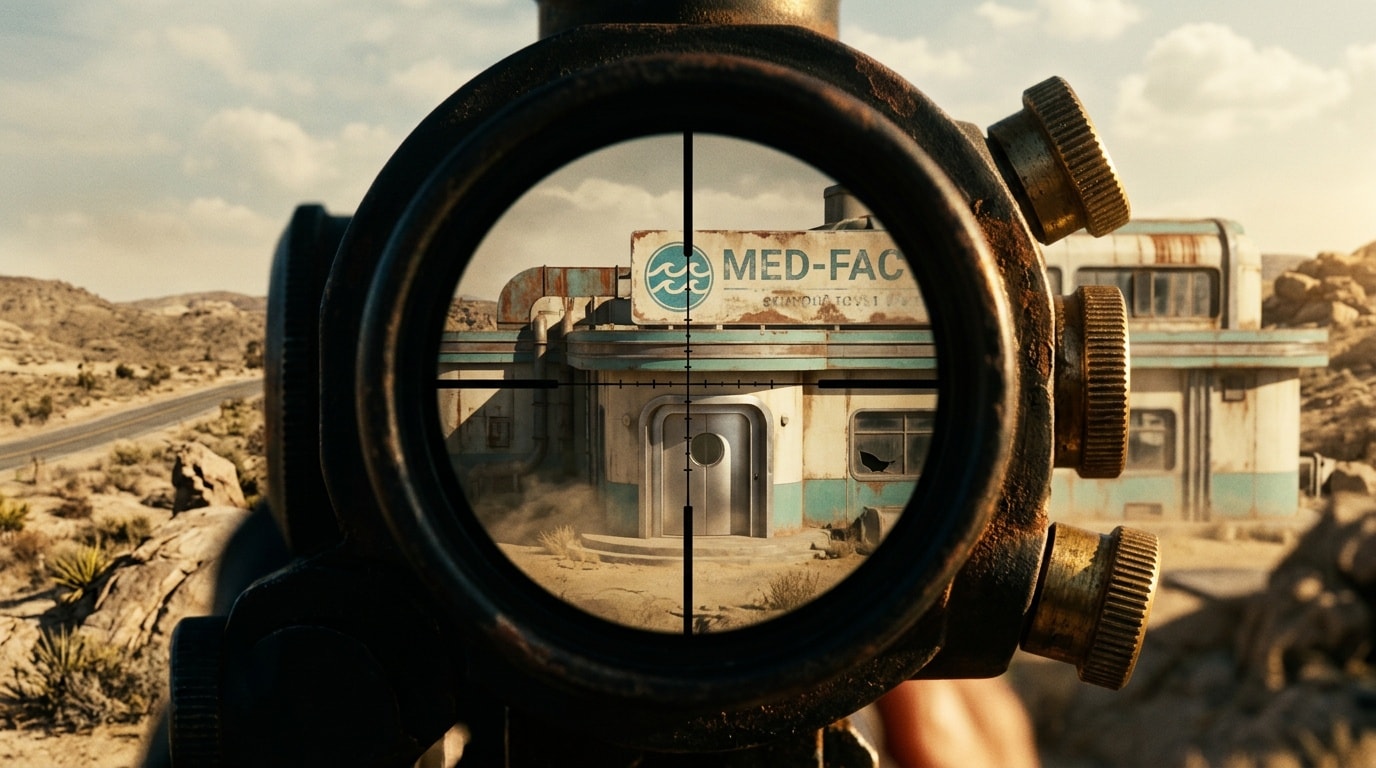
Vault-Tec Built Traps to Hunt Surface Dwellers
Vault-Tec's population management program did not end when the bombs fell.
Lucy Already Knows Maximus Is Lying
Lucy's immediate, casual identification of Maximus's false name is not a minor beat before trust is established, it is evidence that their entire alliance is built on her deliberate choice to proceed with a liar she has already clocked.
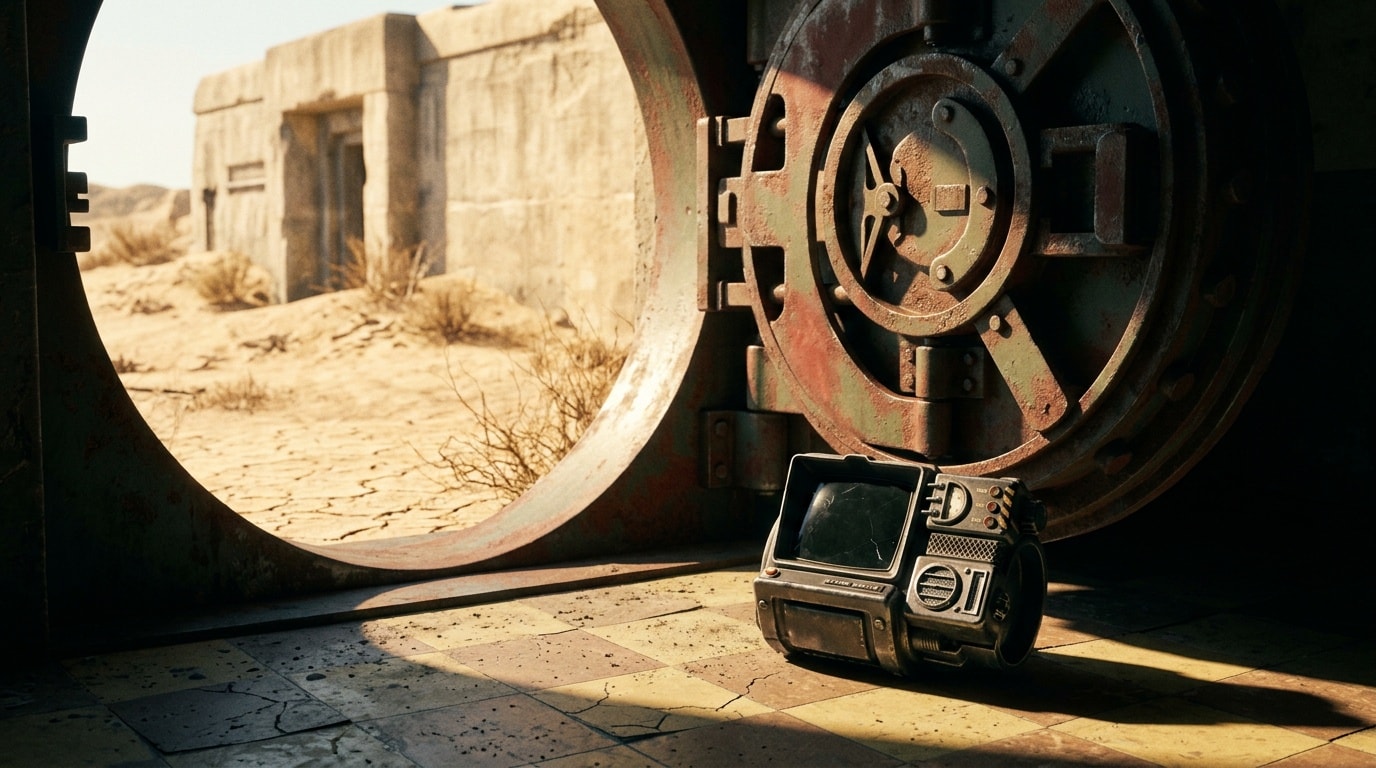
The Vault 32 Massacre Was a Containment Operation, and Betty Knows How It Was Done
The residents of Vault 32 died at the inter-vault threshold because they identified that Vault 31 controls surrounding vaults through embedded overseer placements and tried to breach the source directly.

Betty Lied About the Buried Pip-Boy
Betty's claim that Lucy's mother was buried with her Pip-Boy is a lie, because a raider used that registered device to open Vault 32 from the outside.

Maximus Witnessed the NCR's Deliberate Destruction
Maximus survived the deliberate post-war nuclear destruction of Shady Sands as a child and was subsequently recruited into the Brotherhood of Steel, the organization most structurally positioned to benefit from his grief and his silence.