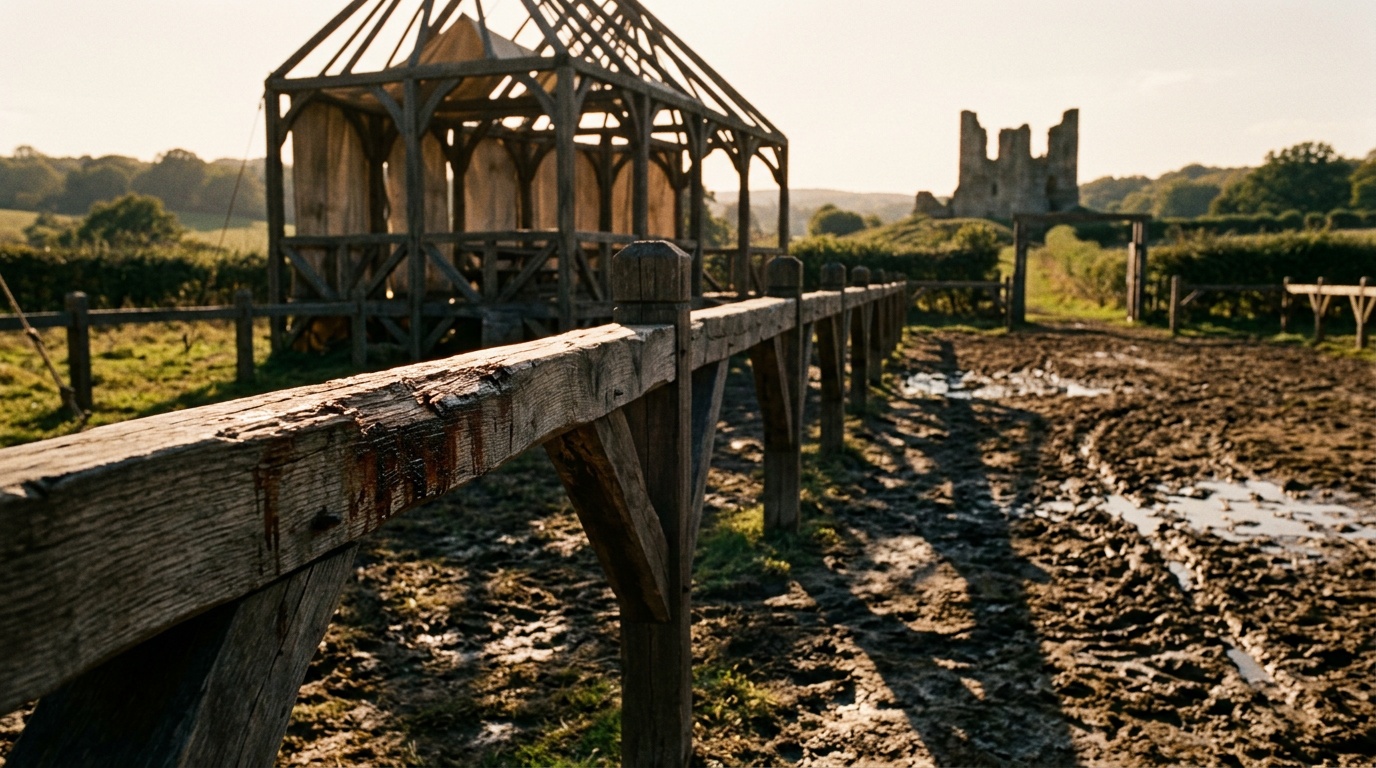
Baelor Built a Closed Honor System With One Unguarded Entrance, and Dunk's Survival Was Its Contemptuous Remainder
THE THEORY
Baelor Targaryen engineered institutional safety into what he presented as personal sacrifice, placing himself against oath-bound Kingsguard who could not harm him while his champions absorbed lethal risk against unsworn opponents. His death was the structural consequence of the one threat his design could not account for: a brother inside his own line, carrying no oath. Dunk's survival was not the justice side of that equation but its contemptuous inversion; a hedge knight of no consequence left standing while better men died for a fraud.
How This Theory Works
Baelor Targaryen did not arrange a trial of combat. He arranged a performance of sacrifice in which he bore none of the mortal weight. Lyonel Baratheon's charge is not grief dressed as philosophy: it is the precise claim that Baelor engineered his own safety into the structure of an act presented as selfless. He assigned himself to face Kingsguard knights whose oaths barred them from killing him, then placed his champions (Lyonel, Hardyng, Beesbury, and the others) against opponents carrying no such constraint. Two of those champions died. Baelor did not fight. The arrangement was not a tactical oversight or a reasonable reading of honor's obligations. It was a design, and a man of Baelor's standing and deliberation understood exactly what the Kingsguard's oaths meant for his personal survival. His champions were not allies sharing his risk. They were the actual risk-bearers, recruited to absorb the danger his station let him redirect. Lyonel's fury is the fury of a man who recognized, after the dead were counted, that he had been used as insulation by someone collecting the reputation of courage without purchasing it.
The armor that did not fit and the brother who swung without intent are not incidental details. They are the specific class of threat Baelor's strategy was structurally blind to: dangers originating inside his own formation, from men his plan never needed to account for. He had sealed himself against every threat he could name and assign outward. Maekar carried no oath, answered to no institutional constraint, and occupied the one position in the formation Baelor's design left open. The borrowed armor protected nothing because it was never meant to protect against a brother. Baelor's death was not tragic irony. It was the predictable shape of the gap his closed system left unguarded: a single entrance, inside the bloodline, where honor's architecture did not reach.
Lyonel's charge, then, has two prongs that cannot be separated. The first is that Baelor's strategy was fraudulent, a managed performance of sacrifice in which the performer bore no actual cost. The second is that Dunk's survival was not the reward side of the divine ledger. It was the mockery. Lyonel says this explicitly, and the episode offers nothing to refute him: the gods did not vindicate a hedge knight of no birth, no house, and no political consequence. They demonstrated contempt for everyone who treated the proceeding as a legitimate test of justice, by leaving the least consequential man standing while princes and lords fell for his sake. Hardyng and Beesbury died. Baelor died. Dunk walked away. The absurdity of that arithmetic is not endorsement. It is the gods' answer to a fraud: a conclusion so disproportionate it mocks the premise.
Valarr sharpens the knife. He does not accuse Dunk of wrongdoing at the funeral pyre. He simply asks why the gods would take his father (a man who had it in him to be the greatest king since Aegon the Conqueror) and spare this man. Dunk admits he has been asking himself the same question. That shared uncertainty is the episode's most uncomfortable beat, and it is uncomfortable precisely because neither man can locate a principle that resolves it. Lyonel fills the vacuum with mockery, and the episode provides no counter-argument, no theological consolation, no act of Dunk's that earns his survival retrospectively. The mockery interpretation is not one reading among several. It is the only reading the episode leaves standing.
The sharpest implication the episode encodes but refuses to state is that Dunk does not believe Lyonel is wrong. He sits under a tree asking Maekar whether he could have spared a prince by sacrificing his foot; not the question a man asks who believes he deserved to win, but the question a man asks who suspects his survival was arbitrary and is searching for a retroactive moral cost that would make it feel earned. He is not processing grief. He is trying to buy back legitimacy he does not think he actually has. His interior state is not humble gratitude. It is a private, unspoken agreement with Lyonel's verdict, combined with the unbearable need to find a way to mean something inside a cosmic joke. Dunk cannot counter the charge that his victory was contemptuous rather than just, because the charge is correct, and somewhere, under the tree, at the pyre, in the silence after Valarr walks away, he knows it.
Is this theory convincing?
Key Evidence
Lyonel Names the Asymmetric Risk
Lyonel explicitly states that all five champions, including himself, risked their lives while Baelor arranged to face Kingsguard knights who were sworn by oath not to harm him, making the danger entirely one-sided.
Two Champions Died, Baelor Did Not Fight
Lyonel names Hardyng and Beesbury as men who died in the trial, using their deaths to underscore that the arrangement Baelor designed cost others everything while originally costing him nothing.
Lyonel Calls It Divine Punishment
Lyonel frames Baelor's death as punishment from the gods for designing a fraudulent trial, arguing that divine favor does not extend to those who construct the appearance of honor rather than its substance.
Maekar's Fatal Blow From Within
Baelor was killed by his own brother Maekar, a man fighting on his side, which is structurally consistent with Lyonel's charge that Baelor's strategy only accounted for external threats, leaving him exposed to the one danger inside his own formation.
Borrowed Armor That Did Not Fit
Valarr reveals that Baelor fought in his son's armor because he brought none of his own, and that the poor fit may have contributed to his death, suggesting Baelor entered the trial without adequate personal preparation despite engineering its structure.
Other Theories for S1E06
Maekar's Conversation with Dunk Is a Single Political Act in Two Moves
Maekar Targaryen already knows he will rule, and his private conversation with Dunk after Baelor's death is not grief or candor.
Egg Already Inherited What Dunk Cannot Fix
The knife scene establishes that Egg's Targaryen inheritance is not latent but already operational, activated at the mirror before Maekar's silent presence stops what the show refuses to resolve.
Arlan Died Before He Could Knight Dunk
Dunk's question to the dying Arlan is not a grievance about affection but a confession that he cannot confirm his own knighting occurred.
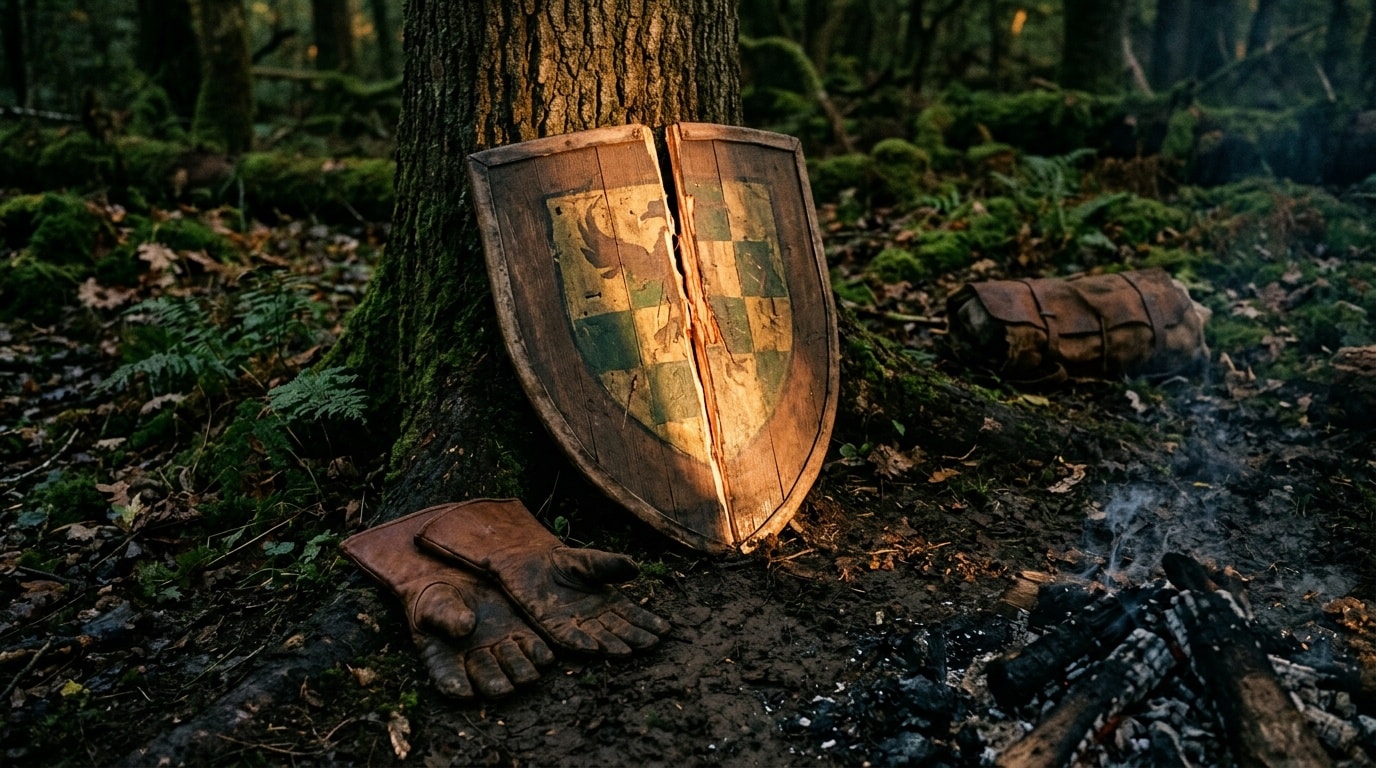
Broken Shield, Broken Self
Dunk's refusal of Maekar's offer was not independence.
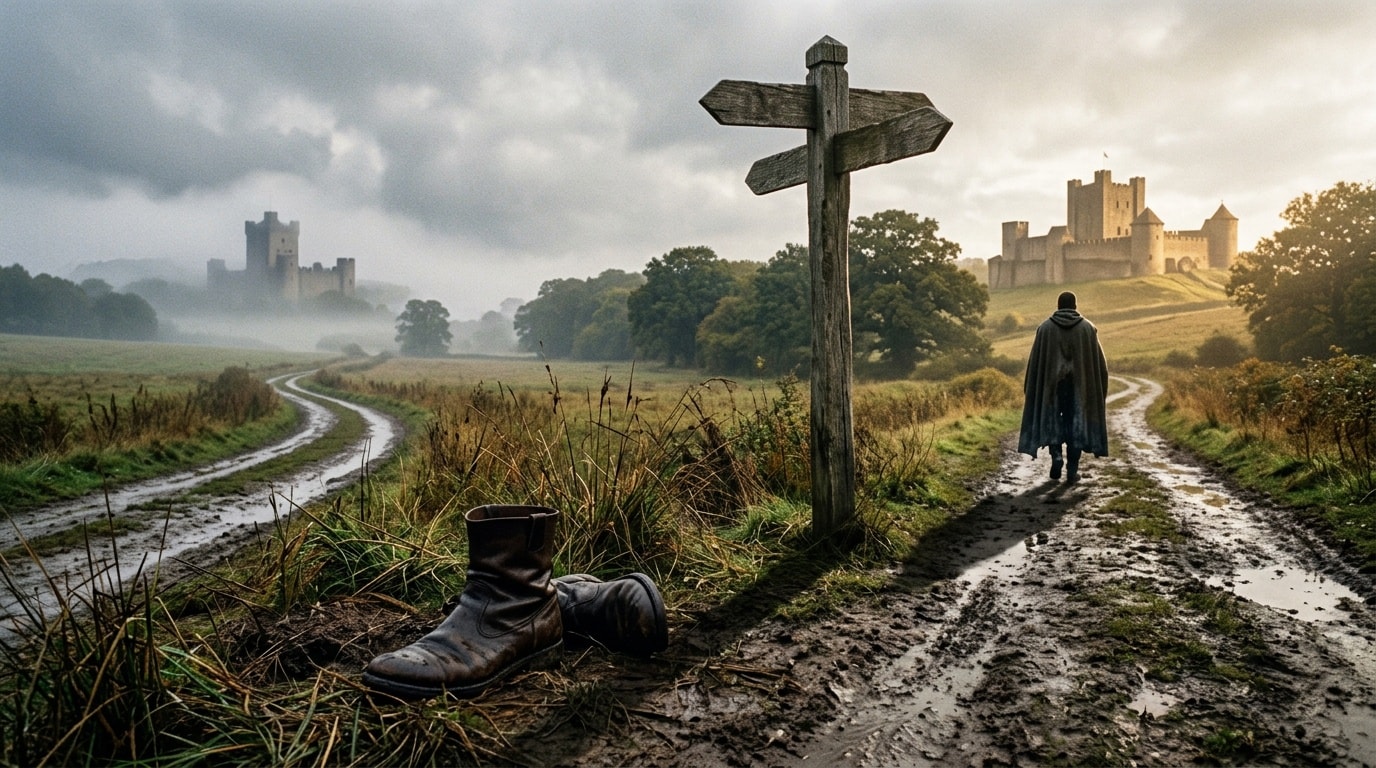
Dunk's Foot Will Save the Realm
The show has already named Dunk's foot as a potential instrument of history, and it is deliberately refusing to close that claim.

Arlan's Phrase Encodes the Season's True Stakes
The show is positioning Maekar as the character who is actually right.