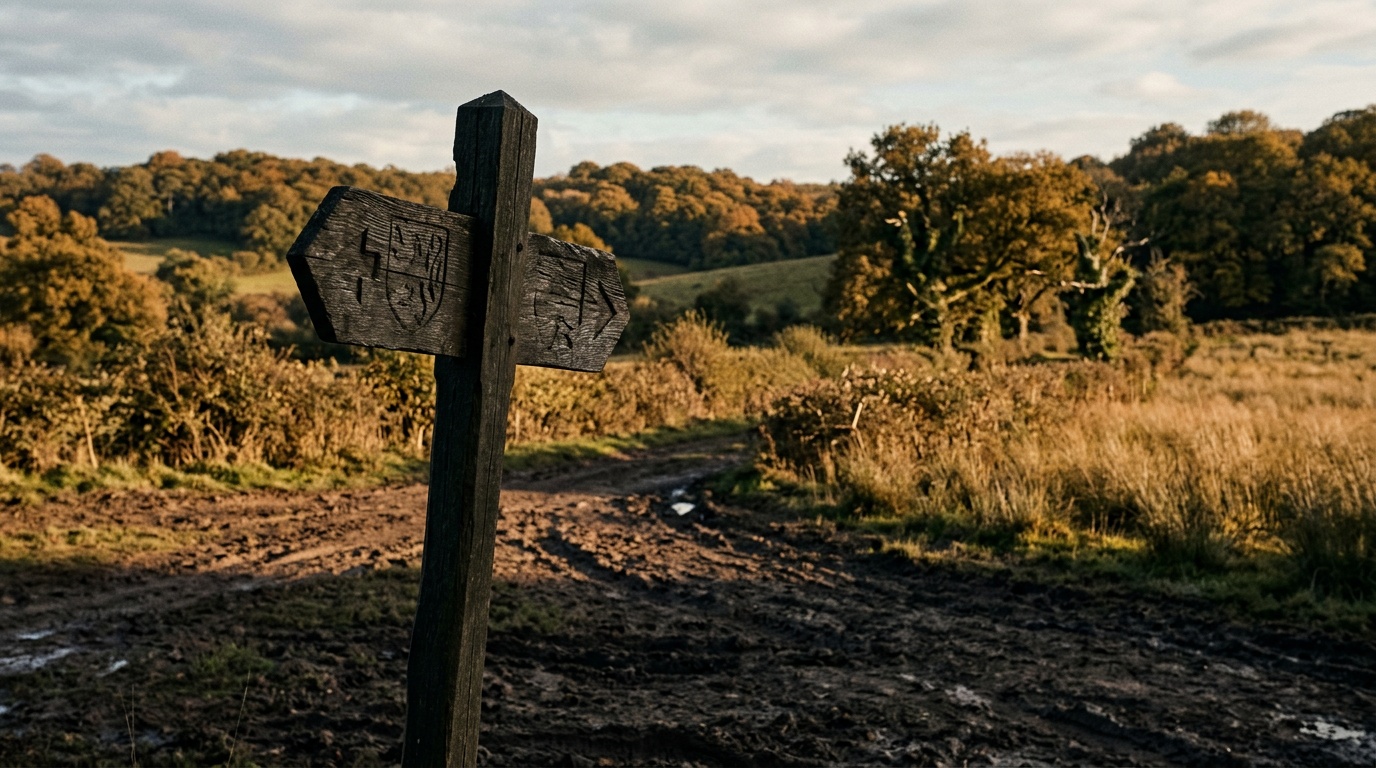
Dunk's Knightly Identity Is a Fabrication Built Layer by Layer from Necessity
THE THEORY
Every element of Dunk's claim to knighthood (the dubbing, the credentials, and the name itself) was self-issued in moments of necessity with no external verification available. The show withholds the one scene that would settle the question of legitimacy, a deliberate structural gap that reframes Dunk's entire arc as an act of ongoing self-authorization. Westeros has no institutional mechanism capable of exposing the construction.
How This Theory Works
The sharpest piece of evidence the show provides is not something it shows; it is something it withholds. The episode takes care to depict Dunk at the graveside, Dunk holding Arlan's sword, Dunk resolving to enter the tourney as a knight. The one thing it does not show is the dubbing. This is not an omission produced by pacing or economy. Every surrounding detail is present. The ceremony, the single act that would transform Dunk's claim from assertion into fact, is absent, and its absence is framed by everything the episode chooses to include. What remains is a young man alone on a road who decided to be something, and no scene exists to confirm that anything more than that decision occurred.
Dunk's account to Plummer makes the structural problem explicit. Ser Arlan is dead. The knighting happened on the road with no one else present. Dunk himself acknowledges, in a line played for humor but doing serious argumentative work, that only a robin witnessed the ceremony. The comedy is the point: the detail strips the dubbing of every institutional weight a knighting is supposed to carry while simultaneously illustrating that no mechanism exists in this world to distinguish a ceremony Arlan performed from one Dunk simply decided had taken place after Arlan was gone. Plummer's skepticism is the institutional response to exactly this kind of unfalsifiable claim. He has never heard of Ser Arlan of Pennytree, and his conditional admission of Dunk to the tourney rests on whether another knight can vouch for Arlan's existence, not for the knighting itself. Verification of the master is not verification of the ceremony. Dunk clears the bar, but only barely, and on grounds that do not touch the central question.
The material evidence compounds rather than resolves the problem. Dunk's swordbelt is a rope. His armor is borrowed. These details function in the episode as markers of poverty, but they are also markers of illegitimacy: the visible absence of the material inheritance a genuine squire receiving a genuine knighthood would carry forward. A knighted man who trained under a traveling hedge knight for years might plausibly own little. But the specific combination of no witnesses, no documentation, a dead master, borrowed equipment, and a rope belt accumulates into something more than circumstantial. It describes a person assembling the appearance of knighthood from whatever is available rather than a person who has been conferred a status and is simply struggling with its material expression.
The naming scene closes the loop. When the bald boy presses Dunk for his name as a knight, there is a visible hesitation: not the pause of a man reaching for a memory but the lag of a person constructing an answer. The name Ser Duncan the Tall is not retrieved; it is assembled. The raw material comes from Lyonel Baratheon's earlier admonishment that the gods gave Dunk tallness and he should be tall. Dunk absorbs that instruction and converts it into a surname the instant he requires one. Another man tells Dunk what he is; Dunk immediately turns that description into a credential. The closed loop this creates is the theory's most damning element: the legend of Ser Duncan the Tall begins not with a name Dunk carried into the tournament but with a name he invented under questioning from a child, built from an observation someone else made about his body. Every layer of the identity, the dubbing, the lineage, the name, was generated by Dunk alone, for Dunk, in sequential moments where he had no alternative.
What the show is constructing around this protagonist is not a story about a humble knight of genuine but undocumented status. It is a story about a person performing the existence of someone who has the right to perform knighthood, and doing so with enough conviction and physical presence that the performance holds. The world of Westeros has no reliable mechanism for exposing the construction. Plummer's scrutiny is the closest thing to institutional verification the episode presents, and Dunk passes it on a technicality. If the knighting was fabricated, whether through outright invention or through Dunk's retrospective transformation of a deathbed wish into a completed act, the series is built on a foundational lie that will never be formally disproved, because the only witness is dead and the only other one was a bird.
Is this theory convincing?
Key Evidence
No Witness to the Dubbing
Dunk tells Plummer that Ser Arlan knighted him on his deathbed on the road with no one else present, making the claim structurally unfalsifiable and dependent entirely on Dunk's own testimony.
The Robin as Sole Witness
Dunk himself acknowledges that only a robin was present during the supposed knighting ceremony, a detail framed as comedic but which strips the event of any institutional or human verification.
No Onscreen Knighting Shown
The episode depicts Dunk burying Arlan, holding his sword, and resolving to enter the tourney, but never shows the dubbing itself, a deliberate structural gap that leaves the claim unconfirmed.
Plummer's Pointed Skepticism
The games master openly doubts Dunk's knighthood, saying he has never heard of Ser Arlan of Pennytree, and only conditionally allows entry if another knight can vouch for Arlan's existence, not for the knighting itself.
Rope Belt as Visual Marker
Dunk's swordbelt is a length of rope, a visual detail that signals to other characters and the audience that his claim to knighthood lacks the material basis expected of even a minor knight.
Dunk's Self-Made Resolution
The episode shows Dunk holding Arlan's sword and resolving on his own, with no ceremony shown, to enter the tourney as a knight, framing the decision as a personal act of will rather than a conferred status.
Convenient Deathbed Framing
The circular structure of Dunk's account to Plummer, a dying master, a lone road, a convenient sword, matches the opening burial scene in ways that highlight how neatly the story closes off any possibility of contradiction.
Other Theories for S1E01
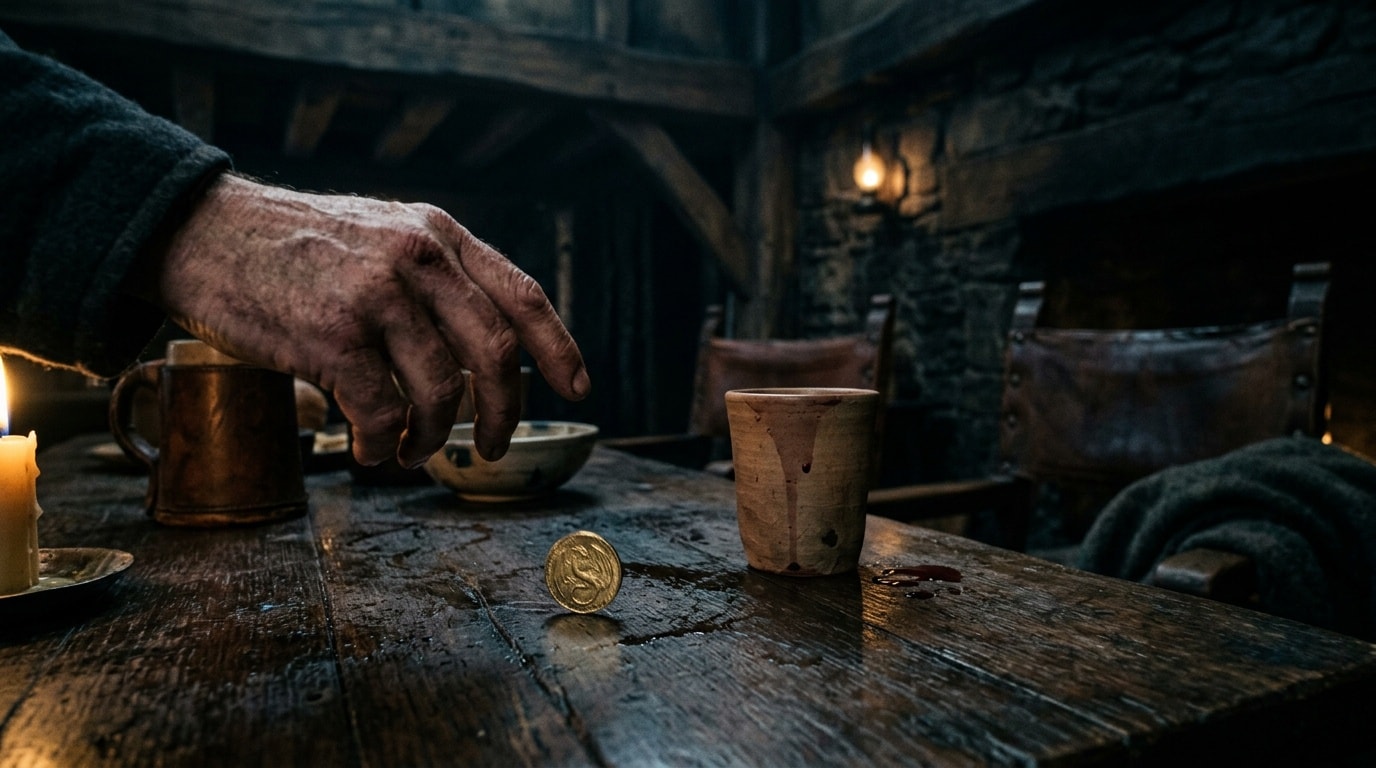
The Drunkard Who Dreamed of Dunk
The terrified nobleman at the inn is Daeron Targaryen, and his panic upon seeing Dunk is not madness but the recognition of a man he has already watched come to catastrophe in his sleep.
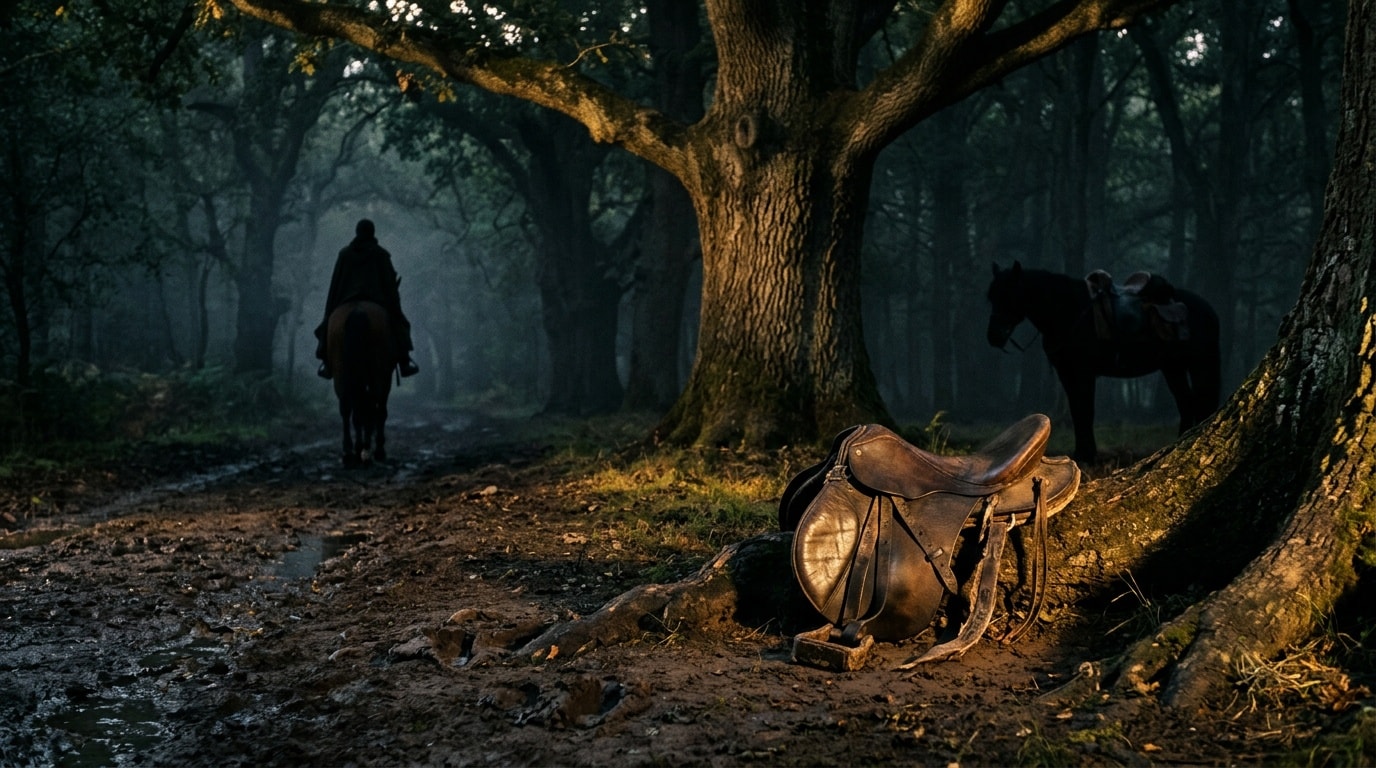
Egg Engineers the Debt That Makes Dunk's Refusal Impossible
Egg's recruitment of Dunk as his knight operates on two interlocking layers: a performed lower station that controls Dunk's reading of him, and a structural trap that forces Dunk's own confession about Ser Arlan to do the closing work.